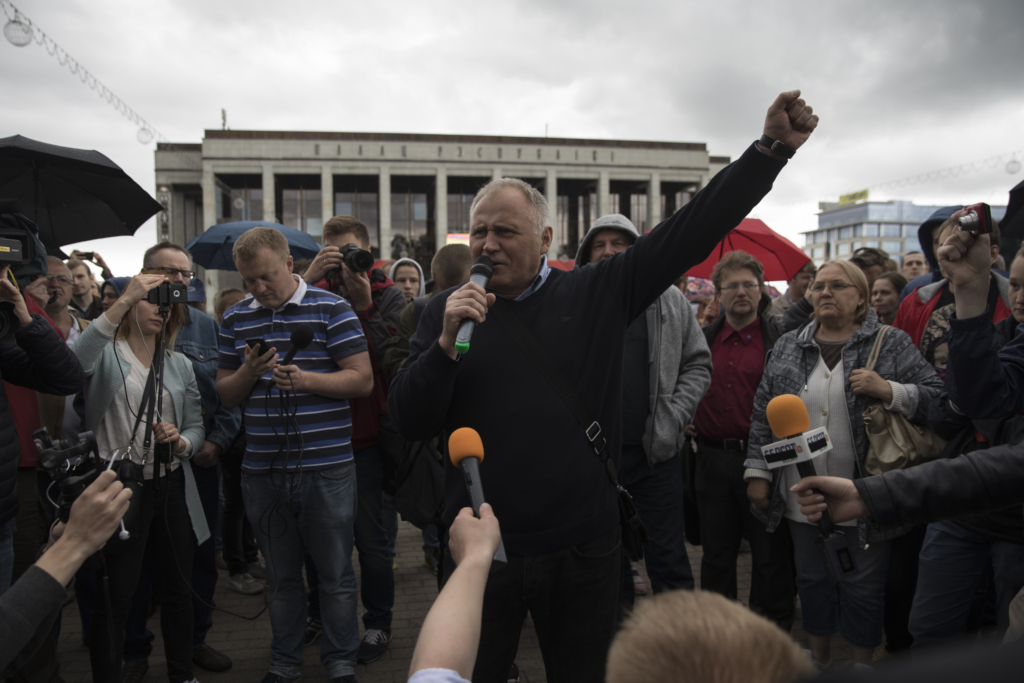
The release of Belarusian opposition politician Mikalai Statkevich, a long-time critic of the government, comes after a period of severe health decline while imprisoned, raising concerns about the treatment of political prisoners in Belarus and highlighting the ongoing repression of dissent. Statkevich, 69, was released on February 19, 2026, following a stroke and hospitalization, according to his wife, Marina Adamovich. His case underscores a broader pattern of politically motivated detentions and the deteriorating human rights situation within the country, prompting calls for accountability from international organizations like Amnesty International.
Statkevich’s journey through the Belarusian penal system has been marked by periods of imprisonment, release, and re-arrest, demonstrating the precarious position of opposition figures in Belarus. Initially arrested in May 2020, he was sentenced to 14 years imprisonment on charges of “organization of mass unrest” – charges widely considered politically motivated. A brief release in September 2025, reportedly as part of a political deal, was short-lived, with Statkevich forcibly disappeared after refusing exile and secretly returned to a penal colony. This cycle of detention and re-imprisonment exemplifies the Belarusian authorities’ strategy of suppressing opposition voices, even when attempting to negotiate their removal from the country.
The circumstances surrounding Statkevich’s release, following a stroke suffered on January 21, 2026, have drawn sharp criticism. Amnesty International’s Eastern Europe and Central Asia Director, Marie Struthers, stated, “Our relief at Mikalai Statkevich’s release is tempered by our indignation at the profound injustice and personal injury he has suffered during years behind bars serving an unfounded prison sentence, much of it in prolonged isolation.” Struthers emphasized that releasing a prisoner of conscience after a debilitating health crisis is not an act of justice, but rather a stark admission of the injustice inherent in his initial detention. The prolonged isolation Statkevich endured is considered a violation of international prohibitions against torture and ill-treatment.
A History of Repression and Political Imprisonment
Mikalai Statkevich has been a prominent figure in the Belarusian opposition for decades, having run as a presidential candidate in the past. His consistent criticism of the government, led by President Alexander Lukashenko, has made him a frequent target of authorities. The 2020 presidential election, widely disputed and condemned internationally, triggered widespread protests and a subsequent crackdown on dissent, leading to Statkevich’s arrest. The Belarusian government has consistently denied allegations of political repression, maintaining that those detained have violated the law.
The case of Mikalai Statkevich is not isolated. As of February 20, 2026, the Belarusian Human Rights Centre Viasna reports that 1,144 individuals are currently considered political prisoners in Belarus. Viasna acknowledges that this number is likely an underestimate, as the Belarusian authorities actively restrict access to information about detentions. This ongoing repression extends beyond high-profile opposition leaders to include activists, journalists, and ordinary citizens who express dissenting views. The organization has documented a pattern of arbitrary arrests, unfair trials, and harsh prison conditions.
The Belarusian government’s actions have drawn condemnation from international bodies and governments around the world. The United States, the European Union, and other nations have imposed sanctions on Belarusian officials and entities in response to the human rights abuses. Yet, these measures have had limited impact on the government’s policies. The political climate in Belarus remains highly restrictive, with limited space for independent media, civil society organizations, or political opposition.
The Impact of Isolation and Deteriorating Health
During his imprisonment, Statkevich was reportedly held in prolonged isolation, a practice condemned by human rights organizations as a form of psychological torture. Prolonged isolation can have severe consequences for mental and physical health, leading to anxiety, depression, and cognitive impairment. Reports also indicate that Statkevich contracted COVID-19 multiple times while incarcerated, further exacerbating his health problems. The lack of adequate medical care in Belarusian prisons is a recurring concern raised by human rights groups.
The stroke Statkevich suffered in January 2026 underscores the potential long-term health consequences of imprisonment and inadequate medical attention. While the full extent of his health challenges remains unclear, his wife has expressed concerns about his ability to recover fully. The incident raises questions about the responsibility of the Belarusian authorities for the well-being of political prisoners and the demand for independent monitoring of prison conditions.
Calls for Accountability and Release of Other Prisoners
Amnesty International and other human rights organizations are calling for the immediate and unconditional release of all political prisoners in Belarus, including prominent human rights defenders such as Nasta Loika, Marfa Rabkova, Valiantsin Stefanovich, and Vital Chopik. They are also demanding that the Belarusian authorities end the practice of imprisoning individuals for peacefully exercising their rights to freedom of expression, association, and assembly.
Marie Struthers emphasized the need for accountability, stating, “The Belarusian authorities have committed egregious violations. They must fully comply with their international human rights obligations, and those responsible for violating them must be held to account.” This call for accountability reflects a growing international consensus that those responsible for human rights abuses in Belarus must be brought to justice. However, achieving accountability remains a significant challenge, given the lack of independent judicial institutions and the government’s control over the legal system.
The release of Mikalai Statkevich, while a positive development, is seen as an insufficient step towards addressing the broader human rights crisis in Belarus. The international community continues to pressure the Belarusian government to respect human rights and fundamental freedoms, but the situation remains deeply concerning. The ongoing detention of hundreds of political prisoners and the suppression of dissent demonstrate the urgent need for continued scrutiny and advocacy.
The Belarusian government has not yet responded to the specific criticisms raised by Amnesty International regarding Statkevich’s case or the broader human rights situation in the country. However, officials have previously defended their actions as necessary to maintain stability and prevent unrest. The government maintains that it is committed to upholding the rule of law, but critics argue that the legal system is used as a tool to suppress political opposition.
Looking ahead, the situation in Belarus remains uncertain. The country faces significant political and economic challenges, and the government’s response to dissent is likely to continue to be repressive. The international community will need to remain engaged and continue to advocate for human rights and fundamental freedoms in Belarus. The case of Mikalai Statkevich serves as a stark reminder of the human cost of political repression and the importance of holding those responsible accountable.
The next key development to watch will be any further announcements regarding the health and well-being of Mikalai Statkevich, as well as any potential changes in the Belarusian government’s approach to political prisoners. Readers are encouraged to share their thoughts and perspectives on this important issue in the comments section below.