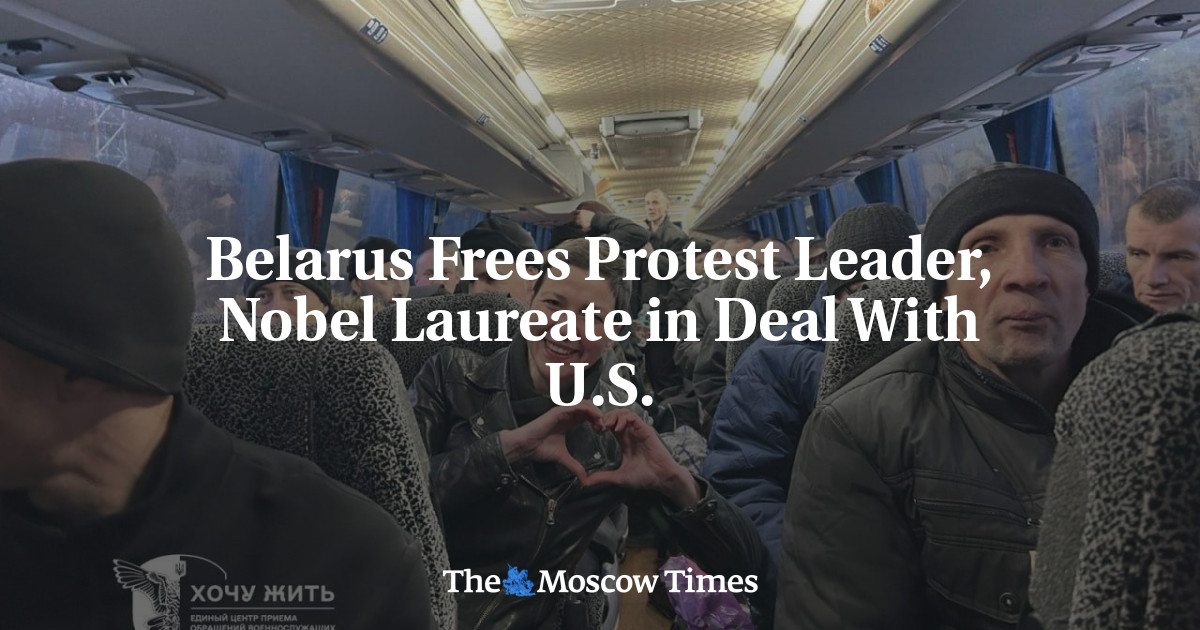
Belarus Releases Prominent Political Prisoners in Exchange for sanctions Relief
Belarusian authorities have released several high-profile political prisoners, including Nobel peace Prize laureate Ales Bialiatski, former presidential candidate Viktar Babaryka, and prominent opposition figure Maria Kalesnikava. This move comes as the United States lifts some sanctions imposed on Minsk, signaling a potential thaw in relations.
This advancement marks a critically important shift following a period of intense repression against dissent in Belarus. Let’s break down what happened, why it matters, and what it could mean for the future.
A Wave of Releases & Sanctions Adjustments
On Saturday, Belarusian President Alexander Lukashenko‘s office announced the release of the prisoners.The move is directly linked to the U.S.decision to lift sanctions on the Belarusian potash industry,a key economic sector. Washington is also working to ease other restrictions on Belarus.
The released prisoners had been convicted on charges widely considered politically motivated, including espionage, terrorism, and extremism. Citizens of the U.S. and Latvia were also among those freed.
Here’s a closer look at the individuals released:
* Maria Kalesnikava (43): Sentenced to 11 years in prison in 2021 for her role in leading protests against lukashenko’s disputed 2020 re-election. She bravely refused exile, even tearing up her passport at the border, and endured prolonged isolation.
* Ales Bialiatski (63): awarded the Nobel Peace Prize in 2022, Bialiatski received a 10-year sentence in 2023.This was widely seen as retaliation for his long-standing criticism of the Lukashenko regime.
* Viktar Babaryka: A former banker who attempted to challenge Lukashenko in the 2020 presidential election, he was afterward jailed.
The Context: 2020 Protests and Subsequent Crackdown
The releases follow the 2020 presidential election, which sparked massive protests across Belarus. Hundreds of thousands of Belarusians took to the streets, demanding free and fair elections. Lukashenko’s government responded with a brutal crackdown, arresting thousands and employing widespread violence against demonstrators.
Since then, the regime has systematically targeted critics, often charging them with “extremism” and imposing lengthy prison sentences.As of November 2025, rights groups like Viasna estimate that at least 1,200 people remain political prisoners in Belarus.
A Changing Dynamic with the U.S.
Belarus has been actively seeking to improve its relationship with the United States,notably as Donald Trump’s return to office earlier this year.This has led to a series of prisoner releases, including opposition leader Siarhei Tsikhanouski in recent months.
This shift suggests a strategic calculation by Lukashenko’s government. By releasing political prisoners and engaging with the U.S., Minsk hopes to secure economic relief and possibly lessen international isolation.
What This Means for You & The Future of Belarus
The release of these prominent figures is a positive step, but it’s crucial to remember that many others remain imprisoned. Kalesnikava herself emphasized this in a video statement after arriving in Ukraine, expressing her hope for the eventual freedom of all political prisoners.
Bialiatski, speaking from Vilnius, affirmed that the fight for democracy in Belarus continues, even with the recognition afforded by the Nobel Prize.
here’s what you should watch for:
* Further Sanctions Relief: Will the U.S. continue to ease sanctions on Belarus?
* Continued Prisoner Releases: Will more political prisoners be freed?
* Political Reforms: Will Lukashenko’s government take steps towards genuine political reform and free and fair elections?
* Belarus’s Geopolitical Alignment: How will Belarus navigate its relationship with Russia amidst these changing dynamics?
This situation is evolving rapidly. While the releases offer a glimmer of hope, the future of Belarus remains uncertain. It’s vital to stay informed and support organizations working to promote human rights and democracy in the country.
Resources:
Related reading