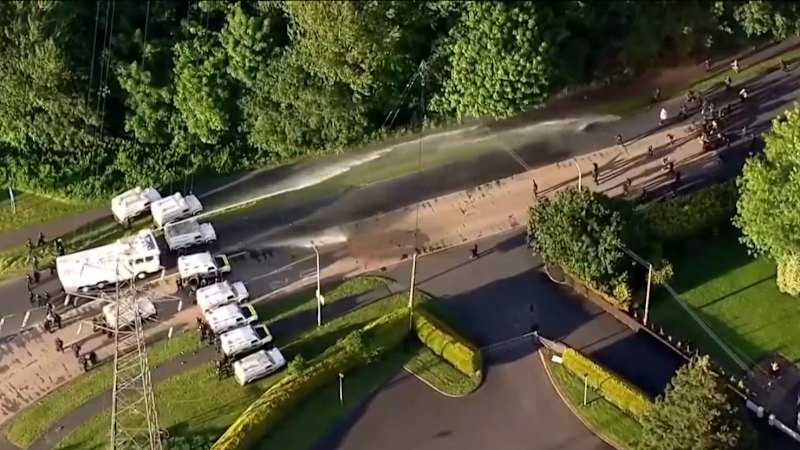
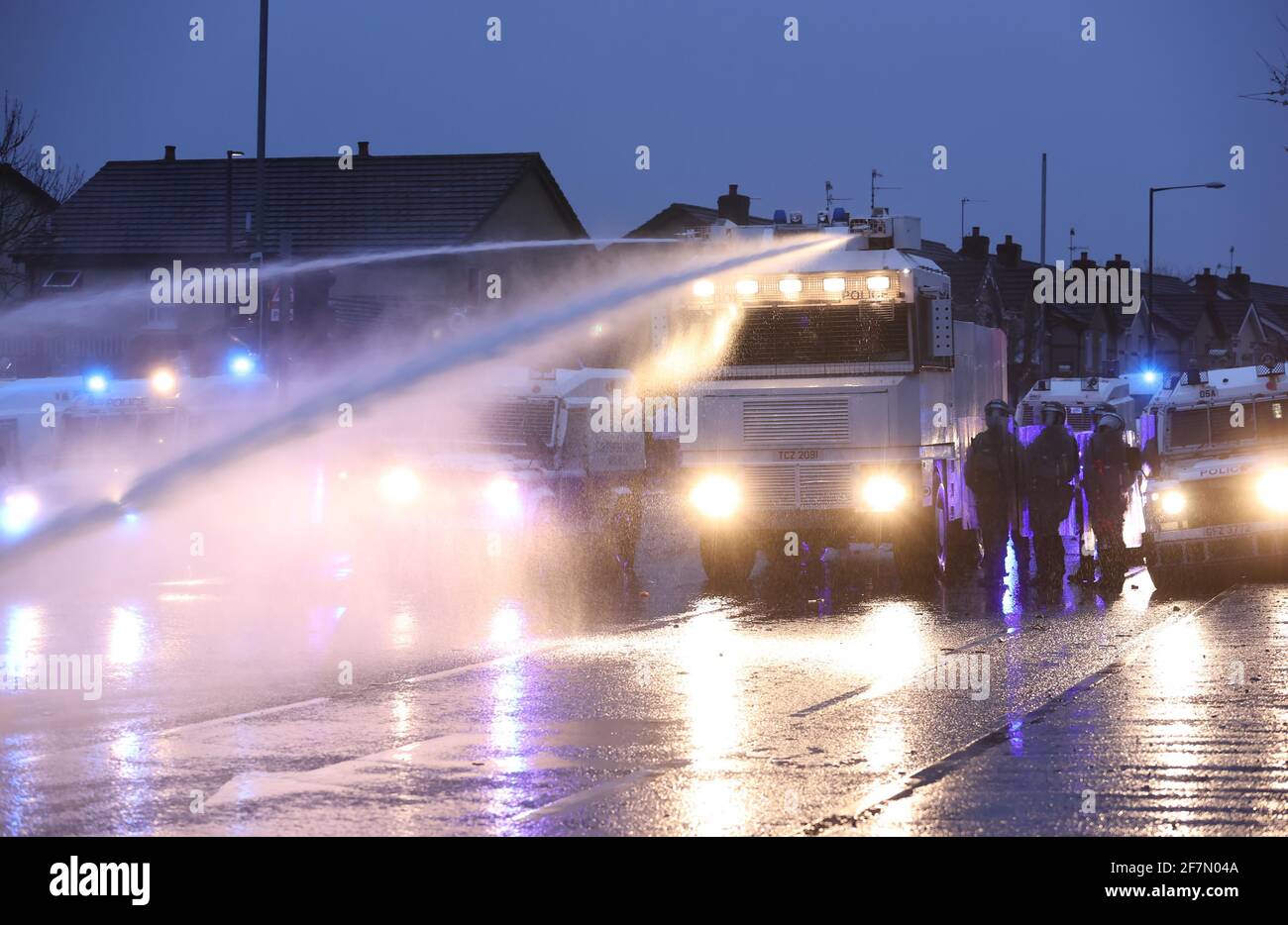
Police in Belfast deployed water cannons against anti-immigration protesters during a series of demonstrations that have disrupted the city center, according to reports from the Police Service of Northern Ireland (PSNI). The use of specialized crowd-control equipment follows a period of heightened social tension in the region, which has seen recurring public gatherings involving opposing groups in recent weeks.
The PSNI confirmed that officers were required to intervene as protests escalated, citing the need to maintain public order and protect property. These events are part of a broader wave of civil unrest that has impacted several cities across the United Kingdom, often fueled by misinformation circulating on social media regarding the arrival and housing of asylum seekers. The situation remains fluid, with local authorities maintaining a significant security presence to prevent further clashes between demonstrators and counter-protesters.
The Context of Recent Belfast Unrest
The disturbances in Belfast are linked to a string of anti-immigration protests that have surged across Northern Ireland following the killing of three children in Southport, England, on July 29, 2024. While the identity of the suspect in the Southport attack was initially subject to false claims online, the resulting unrest has manifested in various forms, including arson, vandalism, and physical altercations. According to the Police Service of Northern Ireland (PSNI), officers have faced sustained hostility during these deployments, leading to multiple arrests and injuries among the force.
The use of water cannons, a tactic rarely employed in mainland Britain but utilized periodically in the context of Northern Ireland’s unique security history, underscores the severity of the situation as assessed by commanders on the ground. The PSNI has stated that the decision to escalate tactics is based on an ongoing risk assessment of public safety, particularly in areas where community tensions are high. Independent observers, including local community leaders, have expressed concern that the violence is being stoked by agitators from outside the immediate neighborhoods where these protests take place.
Police Strategy and Public Safety
Law enforcement agencies have faced mounting pressure to balance the right to peaceful protest with the obligation to protect local businesses and residents. The PSNI has utilized a combination of traditional policing and, when necessary, more robust measures like water cannons to disperse crowds that threaten to turn violent. Official figures provided by the BBC indicate that dozens of individuals have been charged in connection with the recent disorder, facing counts ranging from rioting to possession of offensive weapons.
The legal framework for these responses is rooted in the Public Order (Northern Ireland) Order 1987, which grants police the authority to impose conditions on public processions and open-air public meetings to prevent serious public disorder. As the investigation into the instigators of these events continues, the PSNI has urged members of the public to rely on verified information provided by official channels rather than unverified reports on social media platforms. The coordination between local agencies and the devolved government is aimed at de-escalating the environment before the next cycle of planned demonstrations.
Impact on Local Communities
The impact of these protests has been felt most acutely by minority communities and small business owners in Belfast. Many shops in the city center have been forced to close early or board up windows as a precautionary measure, resulting in significant economic disruption for the hospitality and retail sectors. Community groups have organized counter-protests, advocating for inclusivity and condemning the xenophobic rhetoric that has characterized the anti-immigration demonstrations. The Guardian has documented these tensions, noting that the atmosphere in the city remains fraught as groups with opposing views continue to mobilize.
Government officials, including First Minister Michelle O’Neill and deputy First Minister Emma Little-Pengelly, have issued joint statements calling for calm and condemning the violence. The political leadership has emphasized that the actions of a small minority do not represent the values of the broader population in Northern Ireland. Efforts to engage with community leaders are ongoing, with the objective of addressing the underlying grievances—whether real or perceived—that have been exploited to incite the current unrest.
Next Steps and Official Updates
The PSNI continues to review footage from body-worn cameras and CCTV to identify further suspects involved in the rioting. The next phase of the judicial process will involve court appearances for those already arrested, with the Public Prosecution Service for Northern Ireland expected to manage the influx of cases in the coming weeks. Residents and business owners are advised to monitor the PSNI news feed for the latest updates on road closures and safety advisories.

As the situation develops, citizens are encouraged to report any criminal activity to the authorities through the official non-emergency lines or via the Crimestoppers platform. The restoration of stability in Belfast remains a priority for the Northern Ireland Executive, which is currently coordinating with regional security partners to ensure that future protests, if they occur, remain within the bounds of the law.
Maria Petrova is the World Editor at World Today Journal. She has reported on geopolitical instability and human rights across Europe for over 14 years.