Belgium is facing a renewed and divisive political struggle over the implementation of energy windfall taxes, as political factions clash over how to handle the profits of fossil fuel and electricity producers. The debate has intensified following a push by the Green party (Groen) to target oil and gas companies amid geopolitical instability and rising energy costs.
At the heart of the current dispute is a call for Belgium to join a coalition of five European Union member states—Germany, Italy, Spain, Portugal, and Austria—which have requested that the European Commission introduce a windfall tax on oil and gas companies. These nations argue that such companies are reaping excessive profits resulting from the conflict in Iran Groen.
This movement arrives as Belgium continues to navigate the legal and economic fallout of its previous attempts to cap energy profits. While some political actors view these taxes as a necessary tool for social solidarity and funding the green transition, others warn against overestimating potential revenues and caution against policies that could stifle energy security.
The Push for Fossil Fuel Windfall Taxes Amid Regional Conflict
On April 7, 2026, Groen chairperson Aimen Horch called on the Belgian government to align itself with the European coalition pushing for a fossil fuel levy Groen. Horch has proposed what is termed a “Trump tax,” arguing that the extreme profits currently being collected by fossil fuel companies should be redistributed to Belgian citizens and reinvested into renewable energy sources.
The proposal is framed as a response to the economic pressure on households facing high energy bills. According to Horch, the move is necessary to break the “ideological obsession” with fossil fuels. He specifically criticized conservative politicians, including Sammy Mahdi (cd&v), who has advocated for increased gas extraction in Europe, and Bart De Wever (N-VA), regarding diplomatic approaches to energy procurement Groen.
The five EU ministers leading this charge have pointed to the precedents set in 2022, when similar solidarity levies were introduced following the Russian invasion of Ukraine, as a blueprint for the current request to European Commissioner Wopke Hoekstra Groen.
The Legacy of the 2022 Electricity Levy
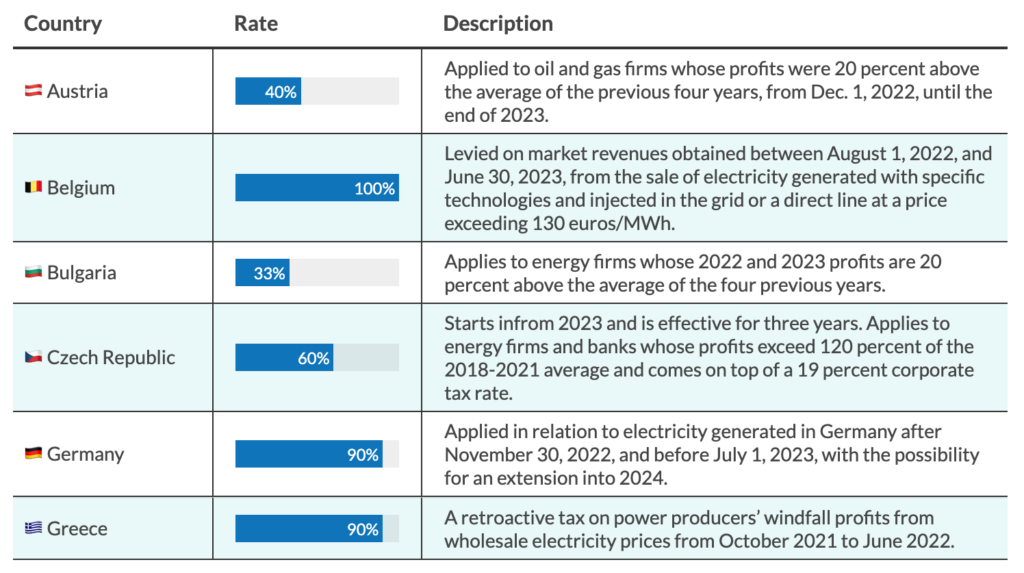
The current debate is heavily informed by Belgium’s experience with the electricity windfall tax introduced via the law of December 16, 2022 De Bandt. This legislation was designed to implement EU Regulation 2022/1854, aiming to protect consumers from the exceptionally high electricity prices triggered by the 2022 energy crisis De Bandt.
The 2022 tax applied a rate of 100% on income from the sale and delivery of electricity that exceeded a specific maximum threshold Moore. This levy specifically targeted producers utilizing “inframarginal technologies,” which include:
- Wind and solar energy
- Geothermal energy
- Hydroelectric power (without reservoirs)
- Nuclear energy
- Biomass fuels (excluding biomethane)
- Waste materials, lignite, raw petroleum products, and peat
The scope of the law was broad, applying to both traditional energy giants, such as nuclear power plant operators, and smaller entities, including companies owning wind turbines or solar panels on their premises Moore. The tax applied only to surplus income generated from installations located on Belgian territory, though certain small-scale producers were exempted to avoid disproportionate administrative burdens Moore.
Legal Challenges and Constitutional Scrutiny
Despite its intent to provide relief to consumers, the 2022 windfall tax has faced significant legal opposition. Various electricity producers and sector federations challenged the law before the Belgian Constitutional Court, seeking its total annulment De Bandt.
On June 20, 2024, the Constitutional Court issued a critical interim judgment De Bandt. Rather than ruling immediately on the law’s validity, the Court posed 15 prejudicial questions to the Court of Justice of the European Union (CJEU) to clarify the legal framework surrounding the levy De Bandt.
This legal uncertainty complicates the government’s current position. If the 2022 levy is found to be incompatible with EU law or the Belgian Constitution, it could create a precarious precedent for any new windfall taxes targeting the fossil fuel sector.
The Political Divide: Green Transition vs. Energy Security
The disagreement within the Belgian government reflects a deeper ideological split regarding the future of the nation’s energy mix. On one side, the Green party views windfall taxes as a strategic lever to force a shift away from fossil fuel dependency, arguing that continuing to rely on oil and gas increases national uncertainty and vulnerability Groen.
Conversely, conservative elements within the government emphasize the practicalities of energy procurement and the risks of alienating energy producers. This camp argues that the government should not overstate the potential income from such taxes and should focus on diversifying energy sources, including the potential for increased gas extraction within Europe to ensure stability Groen.
Key Takeaways: The Belgian Windfall Tax Debate
- Current Proposal: Groen is urging Belgium to join five EU nations in taxing oil and gas profits linked to the war in Iran.
- Past Precedent: A 2022 tax imposed a 100% rate on surplus income for electricity producers using inframarginal technologies (e.g., nuclear, wind, solar).
- Legal Status: The 2022 law is under review, with the Constitutional Court having referred 15 questions to the CJEU on June 20, 2024.
- Core Conflict: A struggle between the desire to fund green energy via “solidarity levies” and the push for energy security via traditional fossil fuel resources.
The next critical development will be the Belgian government’s decision on whether to formally join the EU coalition requesting the fossil fuel tax. The final ruling from the Court of Justice of the European Union regarding the 2022 electricity levy will determine the legality of such measures moving forward.
Do you believe windfall taxes are an effective tool for funding the green transition, or do they risk destabilizing energy security? Share your thoughts in the comments below.
Related reading