
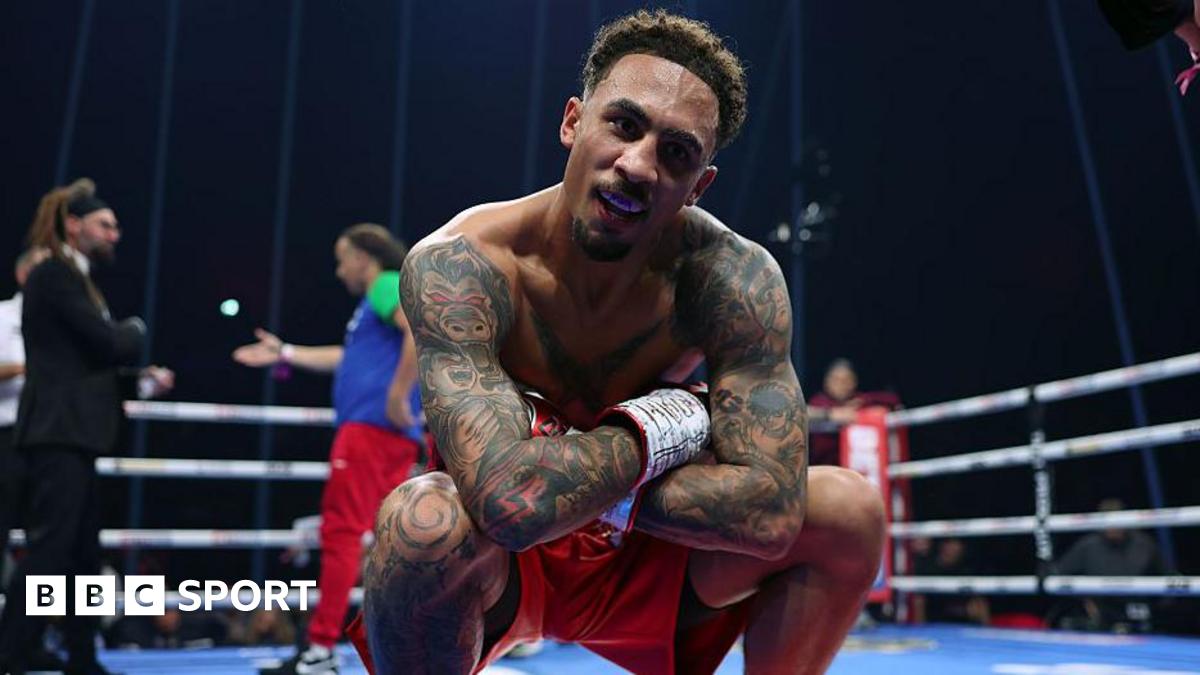
British light-heavyweight Ben Whittaker delivered a stunning performance in Liverpool, securing a first-round knockout victory over Argentina’s Braian Suarez in a bout that captured attention across the boxing world. The fight, held at the Echo Arena on a Saturday evening in late 2023, marked another significant step in Whittaker’s ascent through the professional ranks following his Olympic medal success. With a crisp left hook that landed flush on Suarez’s chin, Whittaker ended the contest just 90 seconds into the opening round, prompting an immediate stoppage by the referee.
The victory underscored Whittaker’s growing reputation as a formidable puncher with elite speed and timing, attributes honed during his amateur career that culminated in a silver medal at the Tokyo 2020 Olympics. Fighting in front of a home crowd in Liverpool, Whittaker displayed the composure and power that have made him one of Britain’s most promising prospects in the light-heavyweight division. The win improved his professional record to an unblemished streak, further solidifying his status as a contender worth watching in the coming years.
Whittaker’s performance drew immediate praise from commentators and former boxers alike, who noted the precision and economy of his attack. Rather than relying on volume, he waited for the perfect moment to strike, demonstrating a level of ring intelligence that belies his relative youth in the professional game. The stoppage was clean and decisive, leaving no doubt about the outcome and earning respect from both his opponent and the assembled crowd.
For Braian Suarez, the loss represented a setback in his efforts to establish himself on the international stage. The Argentine fighter, who had compiled a respectable record in South American promotions, came into the bout hoping to use the UK platform as a springboard to greater opportunities. However, he was unable to withstand Whittaker’s early assault, which exposed vulnerabilities in his defense that the British boxer exploited with ruthless efficiency.
Whittaker’s Rise: From Olympic Podium to Professional Contender
Ben Whittaker’s journey to this moment began long before his professional debut, with a standout amateur career that included multiple national titles and a historic Olympic podium finish. At the Tokyo Games, held in 2021 due to the pandemic delay, Whittaker became the first British male boxer to win a medal in the light-heavyweight division since 2000, securing silver after a hard-fought tournament run. His performances in Japan were characterized by explosive combinations and a southpaw stance that troubled opponents throughout the competition.
Turning professional shortly after the Olympics, Whittaker signed with a prominent UK-based promotional team and quickly began climbing the ranks. His early fights showcased not only his punching power but also his ability to adapt to the longer duration and tactical demands of professional boxing. Unlike some Olympians who struggle to transition, Whittaker appeared to make the shift seamlessly, using his amateur foundation as a springboard rather than a limitation.
Each victory has added to his growing reputation, with fans and analysts noting his improving footwork, better distance management and increasing confidence in exchanges. The Liverpool win was particularly significant since it came against a live, aggressive opponent who came to fight, rather than a tune-up bout designed for spectacle. Whittaker’s ability to dispatch such a challenger so early in the fight suggests he is developing the killer instinct necessary to compete at the highest levels.
Industry observers have begun to speculate about potential future matchups, including possible eliminator bouts or regional title challenges. Even as Whittaker remains focused on steady progression, his team has acknowledged that he is approaching the point where more significant tests will be necessary to continue his development. For now, the emphasis stays on refining his craft and building toward bigger opportunities.
The Fight Breakdown: How Whittaker Secured the Stoppage
The opening moments of the bout saw both fighters circling cautiously, assessing distance and timing. Suarez, known for his aggressive style in previous fights, appeared to be looking for an opportunity to close the gap and launch his offense. Whittaker, however, maintained excellent positioning, using his lateral movement to stay just outside of Suarez’s preferred range while keeping his own punches sharp and ready.
Approximately halfway through the first round, Whittaker feinted with a jab to the body, drawing Suarez’s guard down slightly before snapping a left hook upward along the exact same path. The punch landed cleanly on the button, snapping Suarez’s head back and leaving him visibly dazed. Though he remained on his feet for a brief moment, his legs buckled, and the referee intervened to prevent further damage, calling a halt to the contest at 1:30 of the round.
Replays confirmed the legitimacy of the stoppage, showing a flush impact with no significant follow-up blows after the initial knockdown trigger. Whittaker immediately retreated to a neutral corner, showing respect for his opponent while acknowledging the effectiveness of his shot. There were no protests from Suarez’s corner, indicating broad acceptance that the referee made the correct call in protecting the fighter’s safety.
The performance highlighted several key aspects of Whittaker’s growing skill set: his ability to feint effectively, his timing in counterpunching, and his power generation from the hips and core. Rather than relying on arm strength alone, he rotated his entire body into the punch, maximizing force transfer—a technique refined through years of amateur competition and professional coaching.
Implications for the Light-Heavyweight Division
Whittaker’s victory adds momentum to a light-heavyweight division that has seen increased interest in recent years, particularly in Europe and the UK. With several regional titles currently vacant or held by emerging talents, fighters like Whittaker are positioning themselves to fill the void as established names move up or transition out of the division. His Olympic background gives him a unique marketability, combining elite amateur credentials with growing professional credibility.
In the UK specifically, the light-heavyweight scene has benefited from a resurgence of interest driven by televised prospects and crossover appeal from fighters with Olympic pedigrees. Whittaker’s performances contribute to this narrative, offering fans a homegrown talent who represents both tradition and evolution in British boxing. His southpaw stance and explosive style make him a difficult matchup for many opponents, potentially complicating matchmaking as he advances.
Globally, the division remains competitive, with champions emerging from various sanctioning bodies across different regions. While Whittaker is not yet in immediate contention for a world title, his trajectory suggests he could reach that level within the next few years if he continues to develop and secure meaningful wins. Promoters and matchmakers will likely begin weighing him against other top prospects in Europe and beyond as his profile grows.
For Whittaker, the immediate focus remains on activity and improvement. His team has indicated a desire to keep him busy, aiming for multiple fights per year to maintain momentum and sharpen his skills against a variety of styles. Each bout serves as both a test and a statement, helping to define what kind of fighter he is becoming and what level he can ultimately reach.
Whittaker’s Training and Preparation Behind the Scenes
While fight night performances capture public attention, the foundation of Whittaker’s success is built in the gym through months of disciplined preparation. His training camp leading up to the Liverpool bout included a combination of technical sparring, strength and conditioning perform, and specific preparations for Suarez’s style. Known for coming forward with heavy hands, Suarez required a game plan centered on movement, timing, and precise counterpunching—elements that Whittaker and his coaches emphasized in the weeks prior.
Whittaker trains primarily at a respected boxing facility in the Midlands, working with a coaching staff that includes veterans of both amateur and professional boxing. His regimen incorporates traditional boxing drills alongside modern sports science approaches, including performance tracking, recovery protocols, and nutritional planning tailored to his weight class and fight schedule. This holistic approach has helped him maintain consistency and avoid the pitfalls of overtraining or injury.
Mental preparation also plays a significant role in his readiness. Whittaker has spoken in past interviews about using visualization techniques and mindfulness practices to stay focused under pressure, particularly in high-profile fights where expectations are high. The ability to remain calm and execute a game plan, even when faced with adversity or crowd noise, has become a hallmark of his performances.
Nutrition and weight management are additional critical components, especially for a fighter competing in the light-heavyweight division where making weight comfortably can impact performance. Whittaker follows a structured diet plan designed to fuel training while allowing him to make the 175-pound limit without extreme depletion, ensuring he enters fights physically and mentally prepared.
What’s Next for Ben Whittaker?
Following the Liverpool victory, Whittaker’s team has indicated that he will return to the ring in early 2024, though no specific opponent or date has been finalized as of the latest updates. The focus remains on securing a meaningful contest that will continue his progression, whether that be another experienced journeyman to test his durability or a rising prospect with comparable ambition.
Several potential pathways have been discussed in boxing circles, including a possible bout against another European contender or a fighter coming off a significant win in a regional elimination. However, Whittaker’s promoters have stressed that they will not rush the process, prioritizing long-term development over short-term spectacle. The goal is to build a resume that earns him a legitimate shot at higher honors when the time is right.
Fans eager to follow his career can stay updated through Whittaker’s official social media channels, where training clips, fight announcements, and behind-the-scenes content are regularly posted. Major boxing news outlets and broadcast partners typically provide coverage of his fights, including previews, live commentary, and post-fight analysis.
As Whittaker continues to evolve, his career serves as an interesting case study in how Olympic success can translate into professional promise when paired with the right support system, discipline, and opportunity. The Liverpool knockout was not an isolated flash of brilliance but rather a confirmation of the qualities that have defined his rise: precision, power, and a relentless drive to improve.
For now, the British light-heavyweight division has another exciting prospect to follow, one whose next steps will be watched closely by fans, analysts, and rival fighters alike. Whether he ultimately contends for titles or carves out a respected legacy as a consistent top-ten performer, Ben Whittaker’s journey remains one of the more compelling narratives in contemporary boxing.
If you enjoyed this breakdown of Ben Whittaker’s impressive victory, consider sharing your thoughts in the comments below. What do you think comes next for the rising star? Join the conversation and help shape the conversation around the future of the light-heavyweight division.