
Korean eggplant stir-fry, known as Gaji-bokkeum, achieves its signature chewy texture and deep umami flavor through specific heat management and a savory seasoning profile. By utilizing aromatics such as garlic and sesame oil alongside soy-based sauces, this traditional side dish, or banchan, transforms the naturally spongy eggplant into a highly sought-after “rice thief” (bap-doduk) that complements steamed rice.
The culinary appeal of Gaji-bokkeum lies in the contrast between the vegetable’s soft interior and its firm, almost meaty exterior. While many home cooks struggle with eggplant turning into an unappealing mush, professional techniques focus on moisture control and rapid heat application. This method ensures the eggplant retains its structural integrity while absorbing the concentrated flavors of the sauce.
Why is the texture of Korean eggplant stir-fry so unique?
The “chewy” texture often described in premium Gaji-bokkeum is a result of how the eggplant’s cellular structure reacts to oil and heat. Eggplants are biologically composed of a high percentage of water and air pockets. When subjected to improper cooking methods, such as low-heat steaming without seasoning, these air pockets collapse, resulting in a soggy consistency.
To achieve a chewy, jjolgit texture, chefs often employ one of two methods. The first involves stir-frying the eggplant slices in a hot pan with a sufficient amount of oil. The oil fills the porous structure of the eggplant, creating a barrier that prevents the vegetable from absorbing too much liquid and collapsing. The second method, common in many Korean households, involves lightly steaming the eggplant first to soften it, then quickly tossing it in a seasoned pan to sear the exterior and lock in the flavors.
Temperature control remains the most critical factor. High-heat stir-frying allows the natural sugars in the eggplant to undergo a mild caramelization, which adds both a slight sweetness and a firmer bite to the vegetable.
What ingredients create the umami profile in Gaji-bokkeum?
Umami, the fifth basic taste often described as savory or meaty, is the backbone of this dish. In Korean cuisine, this is rarely achieved through meat alone but through the strategic use of fermented and concentrated liquid seasonings. For an effective Korean eggplant stir-fry recipe, several key components must work in tandem.
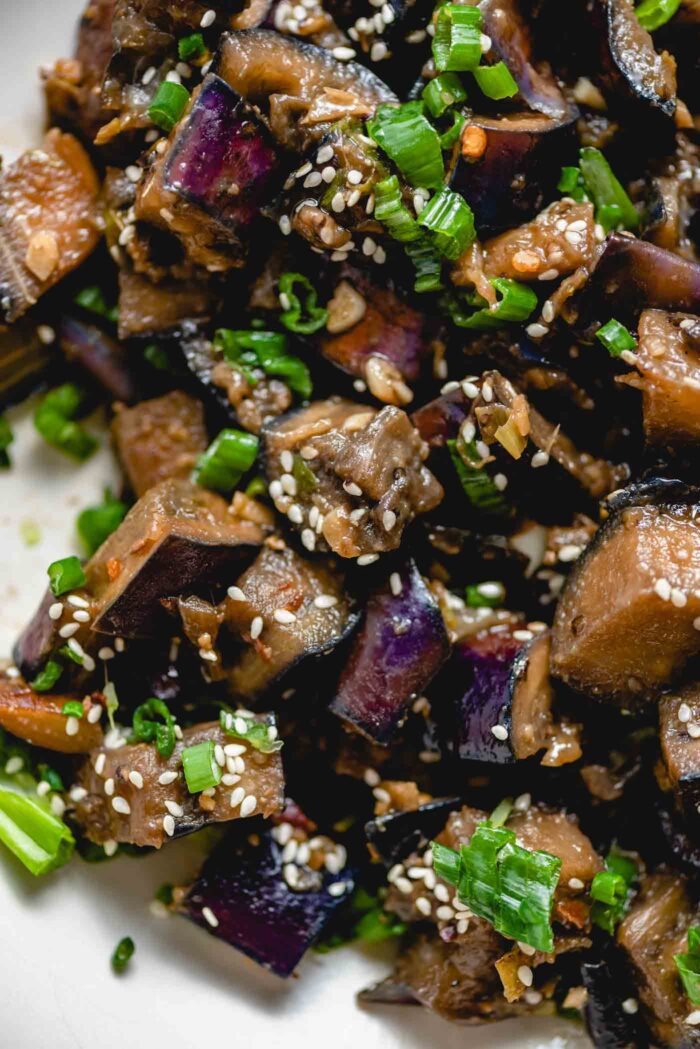
- Soy Sauce (Ganjang): This provides the foundational saltiness and deep color. Many cooks prefer jin-ganjang (regular soy sauce) for its balanced flavor when cooking.
- Garlic: Freshly minced garlic provides a pungent aromatic base that cuts through the richness of the oil.
- Sesame Oil: Added toward the end of the cooking process, toasted sesame oil provides a nutty aroma that rounds out the savory notes.
- Green Onions: These add a subtle sharpness and visual brightness to the finished dish.
- Optional Umami Boosters: Some variations include a small amount of oyster sauce or a pinch of sugar to balance the saltiness and enhance the perception of umami.
The interaction between the salt in the soy sauce and the aromatic oils in the garlic creates a flavor profile that adheres to the eggplant’s surface, ensuring every bite is seasoned deeply.
How do you cook eggplant to prevent it from becoming mushy?
Preventing mushiness is the primary challenge for anyone attempting a Gaji-bokkeum recipe. Beyond heat control, the way the eggplant is cut and prepared significantly impacts the final result. Cutting the eggplant into thick, longitudinal slices or bite-sized chunks rather than thin shreds helps maintain the center’s firmness.
Salt-treating the eggplant can also be an effective professional technique. By lightly salting the raw eggplant slices and letting them sit for 10 to 15 minutes, you draw out excess moisture. Once the moisture is released, the slices can be patted dry before cooking. This reduces the amount of water released during the stir-fry process, which is the leading cause of mushy vegetables.
Another tip is to avoid overcrowding the pan. When too many eggplant pieces are added at once, the temperature of the pan drops, and the vegetables begin to steam in their own released juices rather than frying in the oil. Cooking in smaller batches ensures the high heat necessary for a firm texture.
The cultural significance of the ‘rice thief’ side dish
In Korean culinary culture, the term bap-doduk, or “rice thief,” refers to dishes that are so flavorful and addictive that they cause the diner to consume large quantities of rice. Gaji-bokkeum is a classic example of this category. Because the dish is highly seasoned and savory, it acts as a perfect foil to the neutral, clean taste of freshly steamed white rice.
As a banchan (side dish), Gaji-bokkeum is designed to be shared. It is a staple of home-cooked meals, representing the “comfort food” aspect of Korean gastronomy. Unlike the elaborate spreads found in traditional royal cuisine, Gaji-bokkeum is accessible, utilizing common pantry staples to create a high-impact flavor experience.
Nutritional benefits of including eggplant in a Korean diet
Beyond its flavor, eggplant offers significant nutritional value. It is a low-calorie vegetable that is high in dietary fiber, which aids in digestion and promotes satiety. This makes it an excellent component of a balanced meal.

Eggplants are also notable for their antioxidant content. The skin of the eggplant contains nasunin, a powerful anthocyanin that helps protect cell membranes from oxidative damage. When prepared with healthy fats like sesame oil, the absorption of certain fat-soluble nutrients can be enhanced. Integrating vegetables like eggplant into a regular diet supports overall cardiovascular health and provides essential micronutrients including potassium and vitamin K.
Frequently Asked Questions
Can I use frozen eggplant for Gaji-bokkeum?
While possible, frozen eggplant often has a much higher water content and a softer texture once thawed. For the best “chewy” results, fresh eggplant is strongly recommended.
Is this dish spicy?
Traditional Gaji-bokkeum is savory rather than spicy. However, if you prefer heat, you can easily add gochugaru (Korean red chili flakes) or a small amount of minced chili peppers to the seasoning mix.
How long can I store leftover eggplant stir-fry?
Gaji-bokkeum can be stored in an airtight container in the refrigerator for 3 to 4 days. Note that the texture may soften slightly as it sits in the seasoning.
What is the best type of eggplant to use?
The long, slender purple varieties commonly found in Asian markets are ideal. They tend to have thinner skins and a more consistent texture for stir-frying compared to the larger, rounder globe varieties found in many Western supermarkets.
For more updates on culinary trends and global food culture, follow our entertainment and lifestyle sections. Please share your own cooking tips or questions in the comments below.
Keep reading