
For millions of adults living with obesity, the journey toward a healthier weight is rarely a linear path. While the foundational pillars of a reduced-calorie diet and regular physical activity remain the gold standard, medical science has introduced a sophisticated array of pharmacological tools to assist those for whom lifestyle changes alone are insufficient.
The landscape of weight loss medications has shifted dramatically in recent years, moving from simple appetite suppressants to complex hormone mimics. Today, patients can choose from a diverse range of weight loss pills, including GLP-1 agonists, lipase inhibitors, and combination therapies that target the brain’s reward system. However, as with any medical intervention, these benefits come with a spectrum of risks and strict administration requirements.
Choosing the right medication is not a one-size-fits-all process. As Dr. Kyle J. Thompson, a bariatric and weight loss surgeon at Intermountain Health in Denver, notes, recommending the appropriate medication requires a thorough patient history and a clear understanding of the individual’s specific weight loss goals and expectations.
The Latest Generation: Oral GLP-1 Agonists
The most significant recent advancement in obesity medicine is the arrival of oral glucagon-like peptide-1 (GLP-1) agonists. These drugs mimic a hormone produced by the small intestine, which increases satiety by affecting hunger-processing areas of the brain and slowing gastric emptying.
Oral Semaglutide (Wegovy) was approved by the U.S. Food and Drug Administration (FDA) in December 2025 for adults with obesity and at least one related health condition. In clinical trials, this medication helped participants lose an average of 13.6 percent of their total body weight over approximately 15 months. For an individual starting at 235 lbs, this equates to roughly 33 lbs of weight loss.
Despite its efficacy, Wegovy is noted for its rigorous administration protocol. It must be taken daily in the morning on an empty stomach with no more than 4 ounces of water, followed by a 30-minute wait before consuming food or other medications. Dr. Auda, a board-certified family medicine physician at Baker Health in New York City, warns that these strict fasting and timing requirements can make it the most challenging of the weight loss pills to maintain outside of a clinical trial setting.
A more flexible alternative arrived in April 2026 with the approval of Orforglipron (Foundayo). As a small-molecule drug, Foundayo is absorbed into the bloodstream regardless of food or drink intake, meaning it can be taken at any time of day without fasting restrictions. Clinical data through 72 weeks showed that adults with obesity (but without diabetes) lost between 7.8 and 12.4 percent of their body weight, depending on the dose, compared to 0.9 percent in the placebo group.
Combination Therapies and Appetite Suppressants
Beyond the GLP-1 class, several combination medications target the neurological drivers of hunger and cravings.
Phentermine and Topiramate (Qsymia)
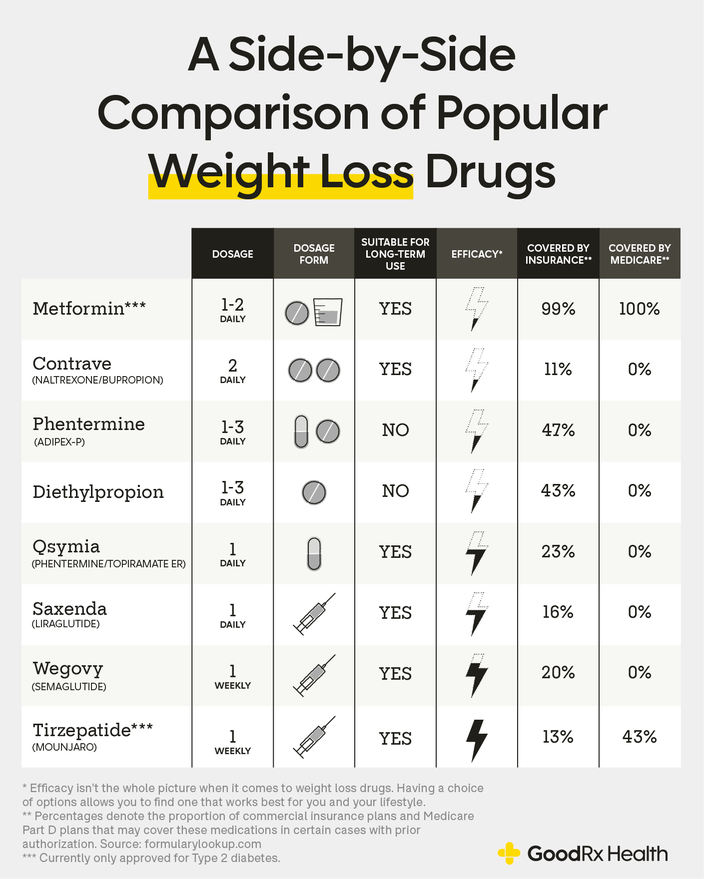
Qsymia is an extended-release capsule that reduces appetite and hunger. In clinical trials, participants taking the highest dose (15 mg of phentermine and 92 mg of topiramate) lost an average of 9.8 percent of their total body weight after one year, while the placebo group lost 1.2 percent. Because it can cause insomnia, We see recommended for morning use.

Naltrexone and Bupropion (Contrave)
Contrave is designed for those who struggle with emotional eating or intense cravings. It targets brain areas that control hunger to help patients perceive fuller. Clinical trials showed that participants on the maximum dose (32 mg of naltrexone and 360 mg of bupropion) lost an average of about 6 percent of their total body weight after one year, compared to 1.4 percent in the placebo group.
Contrave requires a gradual titration process over four weeks to reach the full maintenance dose of two morning and two evening pills daily. This complex schedule can sometimes lead to missed doses, though it remains a strong option for those who can adhere to the regimen.
Traditional Appetite Suppressants
Older medications, such as phentermine and diethylpropion, help patients feel full faster. While these are commonly prescribed, they generally have not received FDA approval for long-term use. Medical specialists may use them chronically only if the patient is not experiencing safety problems and the drug remains effective.
Fat Absorption Blockers and OTC Options
Not all weight loss pills work by suppressing hunger; some target the digestive process itself.
Orlistat (available as prescription Xenical or nonprescription Alli) is a lipase inhibitor. It prevents a portion of the fat in food from being absorbed by the intestines. In long-term trials, participants taking 120 mg three times daily lost an average of about 13 pounds (5 to 6 percent of body weight) over four years, compared to 6.5 pounds in the placebo group. However, Dr. Thompson notes that Orlistat is often poorly tolerated due to gastrointestinal side effects, such as oily spotting on underwear and loose stools.
Regarding over-the-counter (OTC) supplements—including botanical herbs like African mango or stimulants like caffeine pills—medical experts urge extreme caution. Dr. Auda warns that most OTC weight loss products contain undisclosed stimulants or ingredients with no proven benefit, suggesting that patients focus instead on evidence-based supports like protein, fiber, and hydration.
Safety, Risks, and Contraindications
Weight loss medications are potent tools and are not safe for everyone. The following table summarizes key contraindications and common side effects for the primary prescription options.
| Medication | Primary Action | Common Side Effects | Key Contraindications |
|---|---|---|---|
| Wegovy (Oral) | GLP-1 Mimetic | Nausea, constipation, vomiting | Family history of medullary thyroid cancer; pancreatitis |
| Foundayo | Small-molecule GLP-1 | Nausea, indigestion, diarrhea | Thyroid C-cell tumor history; MEN 2 syndrome |
| Qsymia | Appetite Suppressant | Insomnia, anxiety, taste changes | Pregnancy; recent use of MAO inhibitors |
| Contrave | Reward System Target | Nausea, dizziness, dry mouth | Seizure risk; uncontrolled hypertension |
| Orlistat | Fat Absorption Block | Oily stools, stomach pain | Pregnancy; breastfeeding; kidney failure |
Critical Warnings
Certain medications carry severe warnings. GLP-1 drugs like Wegovy and Foundayo are generally not recommended for individuals with a personal or family history of specific thyroid cancers. Qsymia can be habit-forming, and Contrave is contraindicated for those with a history of anorexia or bulimia, or those dependent on opioid pain medications.
Key Takeaways for Patients
- Medical Supervision is Mandatory: Prescription weight loss pills should only be taken under the care of an accredited physician.
- Lifestyle Integration: These medications are intended as adjuncts to a reduced-calorie diet and increased physical activity, not replacements.
- Adherence Matters: The effectiveness of these drugs often depends on strict dosing schedules (especially for oral semaglutide).
- Beware of OTC Claims: Avoid supplements promising rapid weight loss; prioritize evidence-based nutritional support.
As the field of obesity medicine continues to evolve, the focus is shifting toward personalized care. The next major checkpoint for patients and providers will be the ongoing monitoring of long-term cardiovascular outcomes for the newest oral GLP-1 agents, as these drugs continue to move from clinical trials into broad real-world application.
Do you have questions about navigating weight loss options? Share your thoughts or experiences in the comments below.