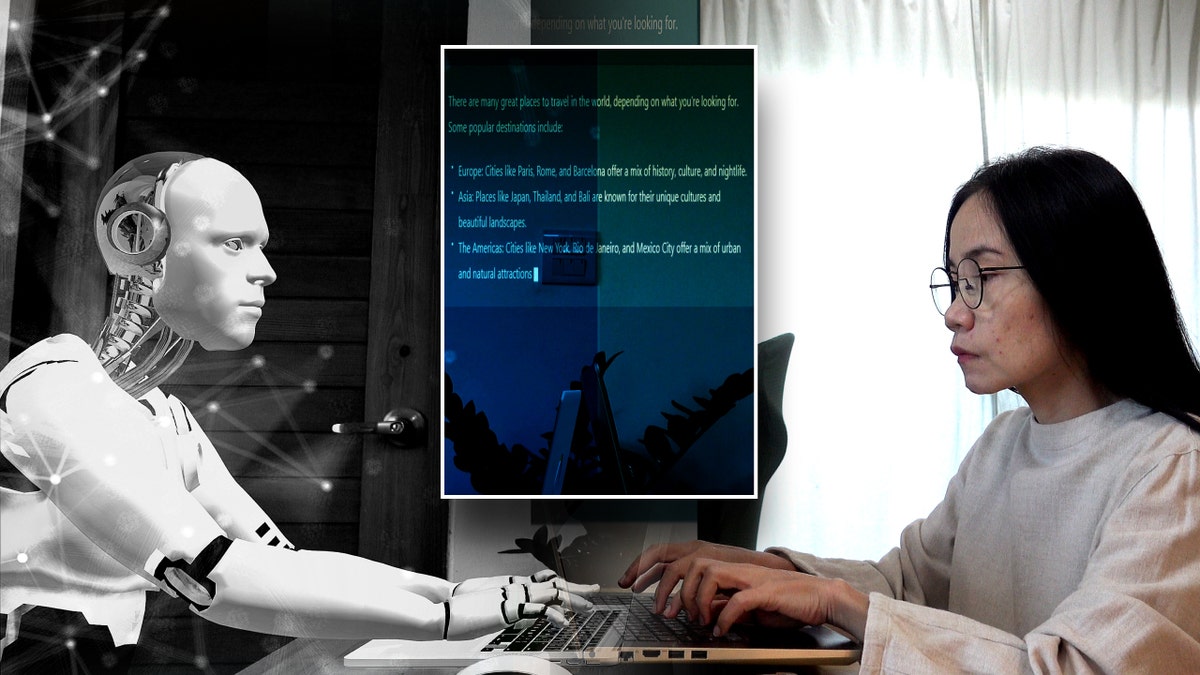
The rapid integration of artificial intelligence into the global workforce is no longer just a corporate trend. it has become a legal battleground. In a series of landmark developments, Chinese courts and labor arbitration boards have begun ruling that companies cannot legally terminate employees simply to replace them with AI-driven automation. These decisions mark a significant shift in how labor laws are applied to the age of automation, prioritizing job security over the immediate cost-saving allure of generative AI.
The legal precedent is forming around the interpretation of “objective circumstances.” While many firms have argued that the transition to AI constitutes a material change in business needs—justifying layoffs under existing statutes—judicial bodies in Beijing and Hangzhou have rejected this narrative. Instead, they are classifying the decision to replace a human worker with software as a strategic operational choice, rather than an unavoidable circumstance of business survival.
These rulings provide a critical safeguard for workers in one of the world’s most aggressive AI adoption hubs. By designating AI-driven layoffs as potentially unlawful terminations, the courts are forcing companies to either retrain their staff or pay significant severance and compensation, effectively raising the “cost” of replacing humans with machines.
The Legal Pivot: Operational Decisions vs. Force Majeure
The core of the legal dispute rests on Article 40 of the PRC Employment Contract Law. This specific provision allows for the termination of a contract if objective circumstances materially change
, making the original contract impossible to perform. For years, companies have used this “material change” clause to justify downsizing during technological shifts.
Although, recent cases have dismantled this justification. In a notable dispute involving a data collector identified as Mr. Liu, the company argued that AI-driven business transformation necessitated his removal. The courts disagreed, ruling that the adoption of AI is an operational decision made by the employer, not an external “force majeure” or an unavoidable change in circumstances according to L&E Global.
This distinction is vital. If a company chooses to implement AI to increase profits or reduce overhead, that is a management choice. Under this new interpretation, such a choice does not grant the employer a “free pass” to bypass labor protections or terminate contracts without following strict legal procedures and providing fair compensation.
Beijing and Hangzhou: Setting the Standard
The trend is gaining momentum across China’s major tech hubs. On December 26, 2025, the Beijing Municipal Human Resources and Social Security Bureau published the Top Ten Typical Labour and Personnel Dispute Arbitration Cases in Beijing for 2025
. Among these, a key case explicitly declared that dismissing employees as their roles were replaced by AI constitutes unlawful termination as reported by Yicai Global.

The movement expanded further in April 2026. The Hangzhou Intermediate People’s Court, located in a primary AI hub in Zhejiang Province, released a set of “typical examples” including a ruling in favor of a human employee who had been replaced by AI via Xinhua. Legal experts suggest these cases are intended to send a reassuring message to the workforce that labor rights will be protected even as automation accelerates.
By publishing these as “typical cases,” the government is essentially providing a roadmap for other courts and companies. It signals that the judiciary will likely view AI-replacement layoffs with high skepticism, placing the burden of proof on the employer to show that the termination was not merely a cost-cutting exercise.
Key Takeaways for Global Labor Markets
- Operational Choice: Replacing humans with AI is viewed as a business decision, not an external necessity.
- Unlawful Termination: Firing a worker solely for the purpose of AI replacement can be ruled as illegal under current labor laws.
- Compensation Requirements: Companies may be required to pay full severance or reinstate workers if they cannot prove a “material change” in circumstances.
- Judicial Trend: High courts in Beijing and Hangzhou are actively setting precedents to protect workers from automation-led layoffs.
The Broader Impact on the AI Economy
This legal shift creates a complex tension for companies striving for “AI-first” efficiency. While the technology allows for massive reductions in headcount, the legal risk of doing so without a comprehensive transition plan is increasing. This may lead to a rise in “upskilling” initiatives, where companies invest in training current employees to manage the AI tools rather than replacing them entirely.
For the global community, China’s approach offers a glimpse into the potential future of AI regulation. As other nations grapple with the displacement of white-collar and blue-collar jobs, the “operational decision” framework could become a model for protecting employees in the West. If the act of automating a job is seen as a choice rather than a destiny, the legal responsibility for the displaced worker remains with the corporation.
these rulings may slow the reckless deployment of AI in sectors where human oversight is critical. When the cost of firing is high, companies are more likely to implement “Human-in-the-Loop” (HITL) systems, where AI augments human productivity rather than erasing the human element entirely.
What Happens Next?
The legal landscape is evolving in real-time. The next critical checkpoint will be the observation of how these “typical cases” are cited in lower-court disputes throughout the remainder of 2026. As more employees challenge AI-related terminations, the consistency of these rulings will determine if This represents a temporary trend or a permanent shift in Chinese labor jurisprudence.
Industry analysts are also watching for any formal amendments to the PRC Employment Contract Law that might explicitly address artificial intelligence, as the current rulings rely on the interpretation of existing laws rather than new legislation.
We want to hear from you. Do you believe that replacing a human worker with AI should be considered a legal “material change” in business, or a management choice that requires compensation? Share your thoughts in the comments below.
Related reading