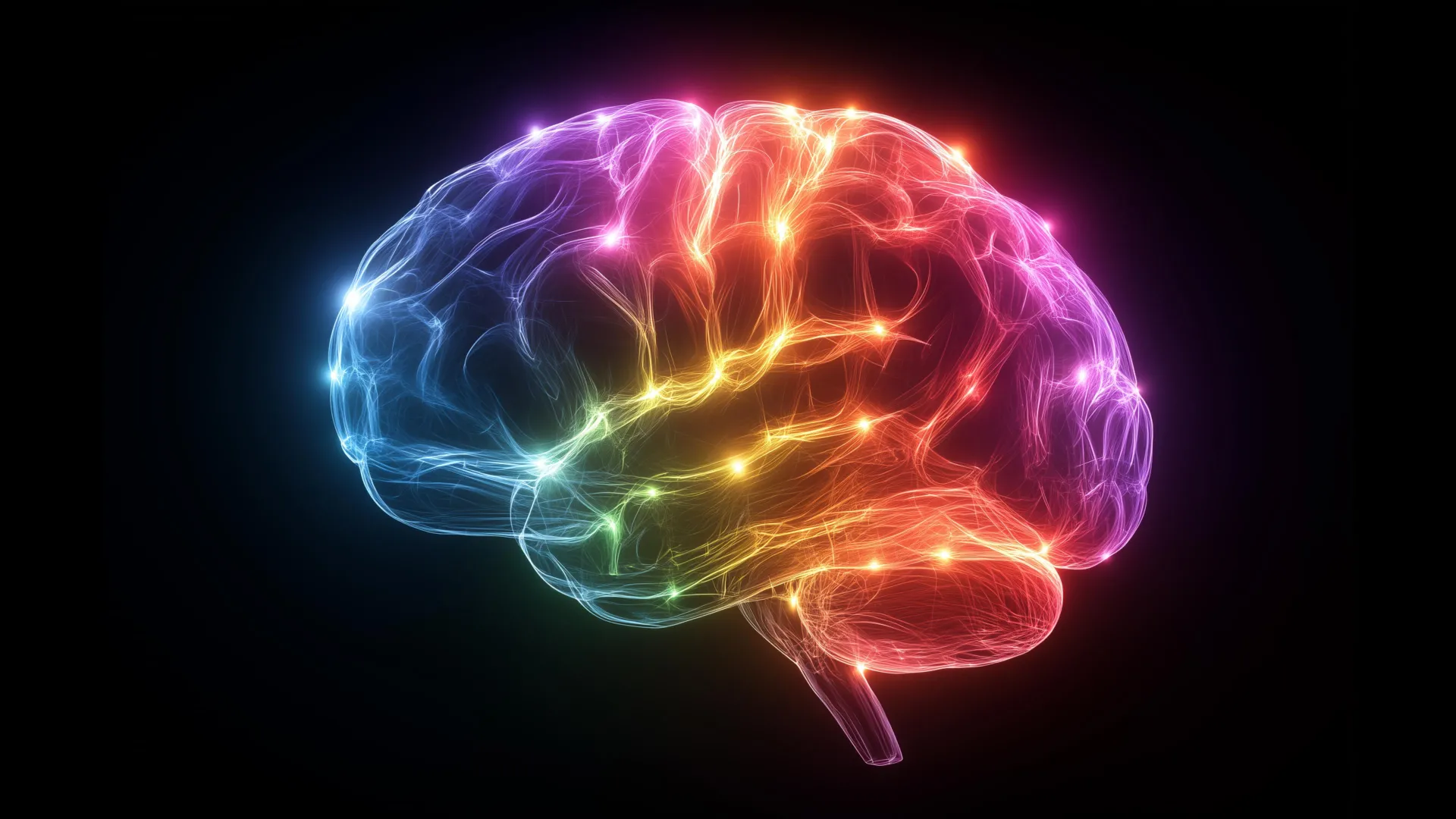
The Seven Senses: skoltech Research Reveals the Optimal Number for Memory Capacity and AI Design
For centuries, humanity has understood the world through five senses: sight, sound, smell, taste, and touch. But what if this number isn’t a biological limit, but rather a constraint on our cognitive capacity? Groundbreaking research from Skoltech scientists suggests that an optimal number of senses exists for maximizing memory capacity – and that number is seven. This finding, published in scientific Reports, isn’t just a philosophical curiosity; it has profound implications for the development of artificial intelligence and a deeper understanding of the human mind.
Deconstructing Memory: From Neurons to Conceptual Spaces
The Skoltech team, led by Professor Nikolay Brilliantov of Skoltech AI, approached the problem of memory not from a biological outlook, but through the lens of mathematical modeling. Their work builds upon a century of research into the fundamental units of memory, known as engrams.
Think of an engram as a unique pattern of neuronal activity. when you experience something – a banana,such as – a specific ensemble of neurons fires together,creating a trace in yoru brain.This trace is the engram. Crucially, this engram isn’t just a simple recording; it’s a complex representation of the object, characterized by multiple features.
Traditionally, these features are understood to correspond to sensory inputs. A banana isn’t just a visual image; it has a distinct smell, a particular taste, a specific texture, and even a sound when peeled. This creates a multi-dimensional “object” within the vast conceptual space of our memory. The more dimensions, the more nuanced and detailed the representation.
The Mathematical Sweet Spot: Why Seven Dimensions Matter
the Skoltech model simulates how these engrams evolve over time. repeated exposure to a stimulus strengthens an engram, making it more focused and readily accessible - this is learning. Conversely, lack of stimulation leads to blurring and eventual forgetting.The researchers mathematically demonstrated that this dynamic process eventually reaches a “steady state,” a mature distribution of engrams that persists over time.
Here’s where the surprising result emerges. By analyzing the capacity of this conceptual space – essentially, how many distinct concepts it can hold – the team found that the maximum capacity is achieved when each concept is characterized by seven features.
“We have mathematically demonstrated that the engrams in the conceptual space tend to evolve toward a steady state… as we consider the ultimate capacity of a conceptual space of a given number of dimensions, we somewhat surprisingly find that the number of distinct engrams stored in memory in the steady state is the greatest for a concept space of seven dimensions,” explains Professor Brilliantov.
This isn’t simply a quirk of the model. The researchers emphasize that the number seven appears to be a robust feature of memory engrams themselves, self-reliant of the specific details of the conceptual space or the nature of the stimuli.
Beyond Human Senses: implications for Robotics and AI
While the idea of humans evolving additional senses – perhaps detecting radiation or magnetic fields – remains speculative,the implications for artificial intelligence are immediate and significant.
Current AI systems often struggle with generalization and contextual understanding. They excel at specific tasks but lack the flexible,adaptable memory of the human brain. The Skoltech research suggests that designing AI systems with a seven-dimensional conceptual space could dramatically improve their ability to store, process, and retrieve information, leading to more complex and human-like intelligence.
“It appears that when each concept retained in memory is characterized in terms of seven features… the number of distinct objects held in memory is maximized,” Brilliantov notes. “Our findings may be of practical importance for robotics and the theory of artificial intelligence.”
Understanding Conceptual Similarity and Memory Capacity
The study acknowledges a crucial nuance: the concept of conceptual similarity.Multiple, slightly differing engrams clustered around a central point are considered to represent a single concept when calculating memory capacity.This is as our brains don’t store perfect replicas of experiences; they abstract and generalize.
This approach reflects how we categorize the world. Different varieties of apples, for example, are all recognized as “apples” despite subtle variations in color, size, and taste. The model accounts for this inherent efficiency in memory storage.
The Enigma of Consciousness and the Future of Memory Research
The study underscores the profound complexity of memory, a phenomenon inextricably linked to consciousness itself. While this research provides a powerful mathematical framework for understanding memory capacity, it also highlights the vast amount we still don’t know about the human mind.
Advancing theoretical models of memory,like the one developed at Skoltech,is crucial for unlocking the secrets of consciousness and for building AI agents capable of truly human-like cognitive abilities. The quest to understand how we remember – and how we can improve that ability, both in ourselves and in the machines we