The global appetite for the “next big thing” in technology is shifting. While the last two years were dominated by the explosive rise of generative AI and the semiconductor surge that powered it, the spotlight is now turning toward the physical manifestation of that intelligence: robotics. In South Korea, this transition has found a high-profile catalyst in the recent market debut of Cosmo Robotics, a specialist in wearable robotic technology.
The company’s entry into the public market was less of a standard listing and more of a financial event. In a stunning display of investor enthusiasm, Cosmo Robotics experienced what is known in the Korean trading community as a “ttattable” debut—a term describing a stock that hits the maximum allowable price limit of 400% of its initial public offering (IPO) price on its first day of trading. This surge signals a profound confidence in the commercial viability of wearable robotics, positioning the sector as the logical successor to the AI-driven investment wave.
The frenzy began long before the first trade was executed. During the public offering process, Cosmo Robotics attracted a staggering amount of investment demand, with subscription requests exceeding 6 trillion won. While this figure represents the total volume of bids from retail and institutional investors rather than the actual capital raised, it underscores a massive liquidity preference for robotics companies that can demonstrate tangible, hardware-based utility in an increasingly automated world.
Decoding the ‘Ttattable’ Surge: Why Investors are Betting Big
To understand the significance of Cosmo Robotics’ performance, one must first understand the mechanics of the Korea Exchange (KRX). In the South Korean market, the first-day trading price of a newly listed stock can fluctuate within a specific range of the IPO price. A “ttattable” (a portmanteau of the Korean word for “double,” repeated twice) occurs when a stock climbs to 400% of its offering price, the absolute ceiling permitted on day one.
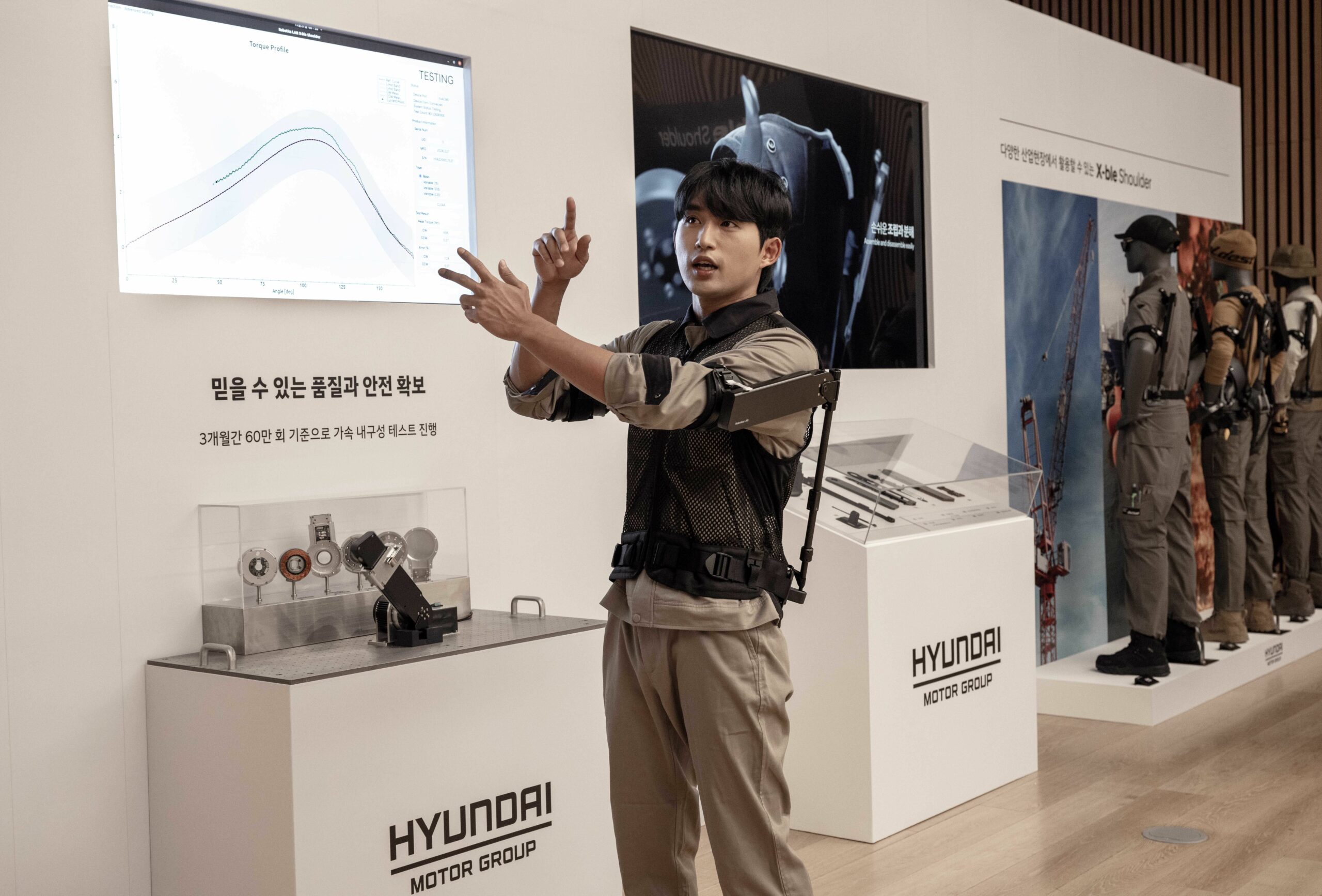
For Cosmo Robotics, hitting this ceiling is not merely a result of market speculation but a reflection of a broader thematic rotation. Investors are increasingly looking for “AI-adjacent” plays—companies that take the intelligence of AI and apply it to physical labor, healthcare, and industrial safety. Wearable robots, or exoskeletons, sit at the intersection of these trends, offering a way to augment human capability rather than simply replacing it.
The 6 trillion won in subscription demand suggests that both institutional funds and retail “ant” investors are treating wearable robotics as a high-growth vertical. This level of demand often occurs when a company possesses a unique technological moat or operates in a sector with high perceived future demand, such as the integration of robotics into aging societies or hazardous industrial environments.
The Wearable Robot Frontier: Augmenting Human Potential
At its core, Cosmo Robotics focuses on wearable robotics—technology designed to be worn by humans to enhance strength, endurance, or mobility. Unlike autonomous robots that operate independently in a warehouse, wearable robots function as an extension of the human body. This “cobotic” (collaborative robotic) approach is gaining traction across several key sectors:

- Industrial Logistics: Reducing the physical strain on workers lifting heavy loads, thereby decreasing workplace injuries and increasing longevity in the workforce.
- Healthcare and Rehabilitation: Assisting patients in recovering mobility after strokes or spinal injuries, and helping caregivers lift patients without straining their own backs.
- Military and First Response: Enabling soldiers or firefighters to carry heavier equipment over long distances with less fatigue.
The shift toward wearable tech is particularly poignant in South Korea, which faces one of the fastest-aging populations in the world. The demand for technology that can sustain a shrinking workforce and provide elderly care is not just a business opportunity; it is a national economic imperative. By augmenting the physical capabilities of the remaining workforce, wearable robotics can mitigate the productivity losses associated with demographic decline.
From Semiconductors to Robots: The New Tech Pipeline
The trajectory of recent market trends reveals a clear pipeline: AI software creates the “brain,” semiconductors provide the “neurons,” and robotics provide the “body.” For months, the market has been obsessed with the chips produced by giants like NVIDIA and SK Hynix. However, the “physicality” of AI is where the next phase of value creation is expected to occur.

Cosmo Robotics’ IPO success suggests that the market is now ready to value the “body” of the AI revolution. When AI can be integrated into a wearable suit, the result is a machine that can learn a worker’s movements, predict their needs, and provide the exact amount of torque required to lift a heavy object safely. This synergy between software intelligence and hardware execution is what drove the 400% price surge.
This trend is mirrored globally, as robotics companies move from niche experimental phases into scalable commercial products. The integration of sensors, lightweight materials, and AI-driven control systems has finally brought the cost of these systems down to a level where large-scale industrial adoption is feasible.
Key Market Indicators for the Robotics Sector
| Phase | Primary Driver | Key Asset | Market Focus |
|---|---|---|---|
| Phase 1: AI Software | Large Language Models (LLMs) | Algorithms/Data | Efficiency & Content Generation |
| Phase 2: Infrastructure | GPU/HBM Memory | Semiconductors | Computing Power & Scale |
| Phase 3: Physical AI | Wearable/Autonomous Robots | Actuators/Sensors | Labor Augmentation & Physicality |
What This Means for the Global Tech Landscape
The “Cosmo effect” is likely to trigger a wave of similar IPOs and increased venture capital flow into the robotics sector. When a company achieves a “ttattable” debut, it validates the sector for other investors, often leading to a “halo effect” where other robotics firms see their valuations rise simply by association.

However, the challenge for Cosmo Robotics and its peers will be transitioning from “IPO darling” to a sustainable operational business. The gap between a successful stock market debut and widespread commercial adoption is wide. To maintain its valuation, the company must move beyond the excitement of the listing and deliver scalable revenue through partnerships with global logistics firms or healthcare providers.
For the global observer, the lesson is clear: the AI revolution is no longer confined to a screen. It is moving into the physical world, and the companies that can successfully merge digital intelligence with physical movement are poised to be the next generation of tech titans.
Next Milestone: Investors will be closely watching Cosmo Robotics’ first quarterly earnings report following the listing to see if the massive initial demand translates into actual contract wins and revenue growth. Official financial filings will be available via the Data Analysis, Retrieval and Transfer (DART) system of the Financial Supervisory Service.
Do you think wearable robots will become a standard part of the modern workplace, or is the current IPO frenzy overblown? Share your thoughts in the comments below.