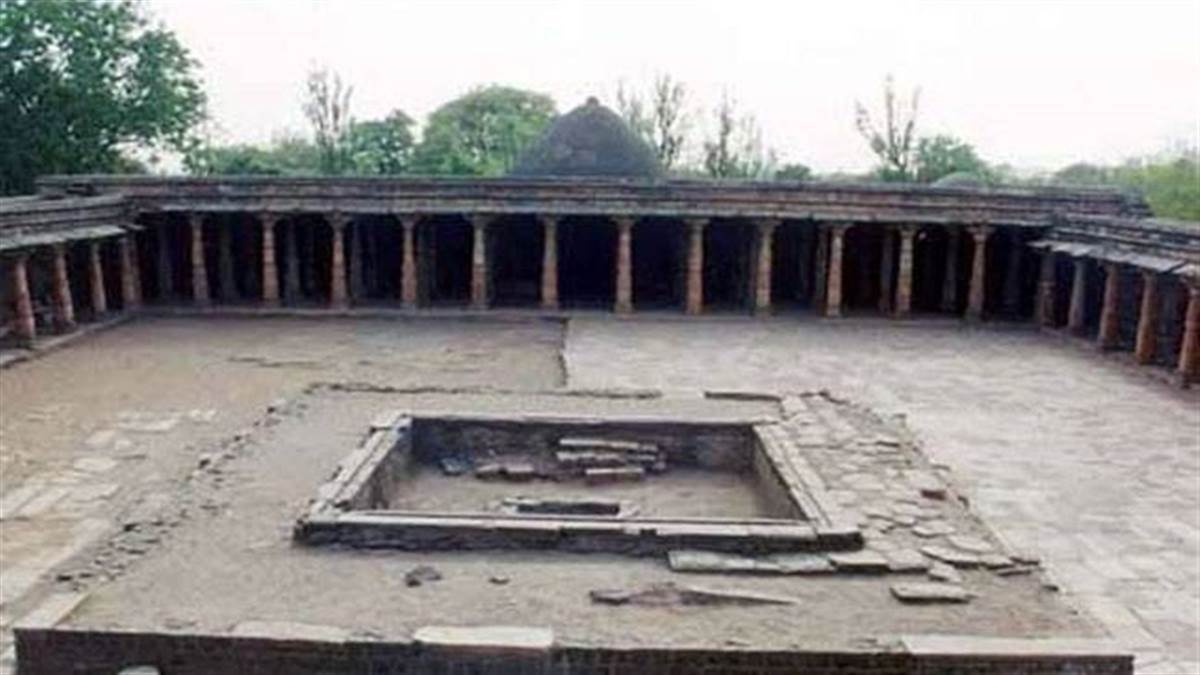
Legal Battle Intensifies Over the Religious Identity of Dhar’s Bhojshala Complex
The Madhya Pradesh High Court is currently presiding over a critical legal dispute regarding the religious identity and nature of the historical Bhojshala complex in Dhar. In a series of hearings before the Indore bench, legal representatives are presenting conflicting claims over whether the 11th-century monument is a temple or a mosque.
The proceedings have seen intense arguments from the Hindu side, represented by advocate Vishnu Shankar Jain of the Hindu Front for Justice. The core of the dispute centers on the religious character of the site, which is currently a protected monument under the Archaeological Survey of India (ASI).
As the court examines the historical and legal evidence, the case highlights a long-standing tension between the Hindu community, which identifies the site as a temple dedicated to Vagdevi (Saraswati), and the Muslim party, which recognizes the structure as the Kamal Maula Mosque.
Hindu Side Challenges Mosque Status in High Court
During hearings held on Tuesday, April 7, 2026, the Hindu side presented arguments asserting that the mere performance of namaz (Islamic prayer) at a location does not legally transform that site into a mosque . The legal team argued that the disputed structure within the 11th-century complex is not a Waqf (charitable endowment) property.

To support these claims, the Hindu Front for Justice referenced a survey conducted in 1978, which they contend proved that the Bhojshala is a temple and not a mosque . The Hindu side has further claimed that the site was “never a mosque” during the ongoing regular hearings that commenced on April 6, 2026 .
Historical Context and ASI Protection
The Bhojshala complex is an architectural site dating back to the 11th century and is currently preserved and protected by the Archaeological Survey of India (ASI) . The site’s status as a protected monument adds a layer of regulatory complexity to the dispute, as any changes to the structure or its usage are subject to strict ASI guidelines.
The conflict remains a polarized issue, with the Hindu community maintaining that the structure is a temple for Vagdevi, while the Muslim side asserts its identity as the Kamal Maula Mosque . The court is now tasked with evaluating these competing historical narratives and the validity of the documents presented by both parties.
Summary of Competing Claims
| Stakeholder | Claimed Identity | Key Argument/Evidence |
|---|---|---|
| Hindu Side (Hindu Front for Justice) | Vagdevi (Saraswati) Temple | Cites 1978 survey. argues namaz does not legally create a mosque. |
| Muslim Side | Kamal Maula Mosque | Identifies the complex as a mosque. |
| Regulatory Body (ASI) | Protected Monument | Maintains the site as an 11th-century protected structure. |
Next Legal Steps
Following the presentation of arguments by advocate Vishnu Shankar Jain on Wednesday, the Madhya Pradesh High Court’s Indore bench will continue to evaluate the evidence and testimonies from both parties to determine the religious nature of the complex.
Further updates will depend on the court’s schedule for subsequent hearings and the submission of any additional historical documentation. We encourage readers to share their thoughts on this complex legal battle in the comments below.
Keep reading