
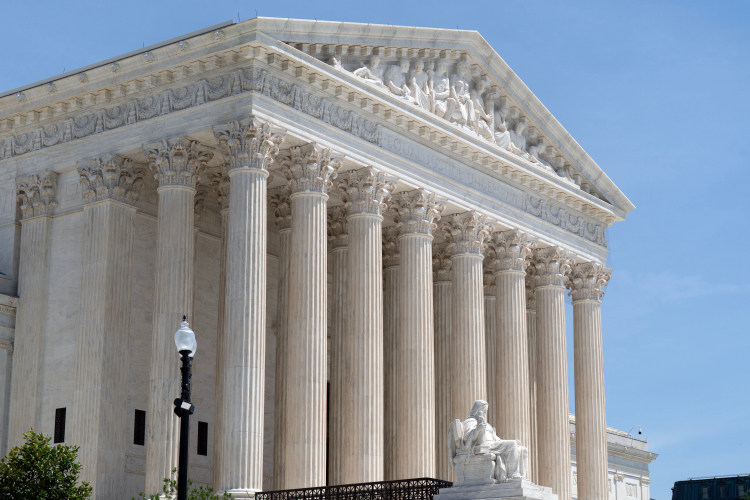
President Donald Trump’s January 2025 executive order attempting to restrict birthright citizenship has triggered a complex legal challenge, with lower courts and the Supreme Court of the United States (SCOTUS) currently assessing the intersection of executive authority and the 14th Amendment. While legal scholars remain divided on the scope of presidential power regarding immigration, the administration’s directive faces significant hurdles in overriding the long-standing interpretation of the Citizenship Clause, which guarantees birthright citizenship to nearly all children born on U.S. soil. This unfolding legal battle represents a major test of constitutional interpretation regarding the status of children born to non-citizens.
The core of the dispute rests on the interpretation of the 14th Amendment to the U.S. Constitution, which states, “All persons born or naturalized in the United States, and subject to the jurisdiction thereof, are citizens of the United States and of the State wherein they reside.” For over a century, since the 1898 Supreme Court ruling in United States v. Wong Kim Ark, the judiciary has held that this clause applies to almost everyone born within U.S. borders, regardless of their parents’ citizenship or immigration status. Legal analysts note that overturning or narrowing this precedent would require a significant shift in judicial philosophy, as the Supreme Court typically adheres to the doctrine of stare decisis, which emphasizes the importance of following established legal precedents.
The Executive Order and Legal Precedent
Upon taking office in January 2025, President Trump signed an executive order aimed at limiting the issuance of birthright citizenship to children of undocumented immigrants. According to the administration, the order seeks to clarify the “jurisdiction” component of the 14th Amendment. However, legal experts from organizations such as the American Civil Liberties Union (ACLU) have argued that an executive order cannot unilaterally modify constitutional mandates or long-standing Supreme Court interpretations. The administration’s move is viewed by many constitutional scholars as an attempt to force a review of the Wong Kim Ark ruling, potentially hoping for a new judicial consensus that would allow the executive branch more latitude in defining citizenship eligibility.
Critics of the order point to the text of the 14th Amendment, which was ratified in 1868 specifically to overrule the 1857 Dred Scott v. Sandford decision. Historically, the amendment was intended to ensure that citizenship was not denied based on race or previous status of servitude. Many legal historians maintain that the framers of the amendment intended for it to be broad in scope, covering virtually all individuals born within the territorial jurisdiction of the United States. Any attempt to restrict this by executive action faces the immediate hurdle of the judicial branch’s role as the final arbiter of constitutional meaning.
Judicial Challenges and the Supreme Court
The path to the Supreme Court is rarely direct, and the current challenges to the executive order are working their way through the federal court system. Lower courts are expected to evaluate whether the president has the authority to interpret the 14th Amendment in a way that deviates from 127 years of settled case law. If a district court issues an injunction against the executive order, the case could be fast-tracked to the Supreme Court, providing the high court with an opportunity to either affirm or overturn the Wong Kim Ark precedent. This process typically involves a lengthy period of filings, oral arguments, and deliberations, making an immediate resolution unlikely.

The Supreme Court’s current composition, which features a conservative majority, has prompted speculation among legal observers about whether the bench might be willing to revisit birthright citizenship. However, conservative jurists have historically shown a strong commitment to originalism and textualism, frameworks that often prioritize historical context and the literal text of the Constitution. Some scholars argue that a strict textualist reading of the 14th Amendment supports the current interpretation of birthright citizenship, which could complicate the administration’s efforts to secure a favorable ruling. The court is currently monitoring multiple immigration-related cases, and any decision regarding this executive order would likely be confined to the specific legal questions presented by the plaintiffs.
What Happens Next
For families and legal practitioners, the immediate status of birthright citizenship remains unchanged while the litigation continues. The government’s ability to implement the order is contingent upon the outcome of these pending lawsuits. The next major checkpoint will be the filing of briefs in federal appellate courts, which will determine whether the executive order can be enforced during the pendency of the litigation. Observers expect the Department of Justice to defend the order by arguing that the term “subject to the jurisdiction thereof” implies a political allegiance that non-citizens may not owe the United States, a theory that has been debated in legal circles for decades but never adopted by the Supreme Court.
As the legal process unfolds, the public can track court dockets and official updates through the U.S. Courts website (uscourts.gov), which provides access to filings and scheduled hearings for federal cases. The outcome of this case will have significant implications for immigration policy and the definition of American citizenship. Readers are encouraged to follow the ongoing updates as the judiciary addresses these fundamental constitutional questions.