
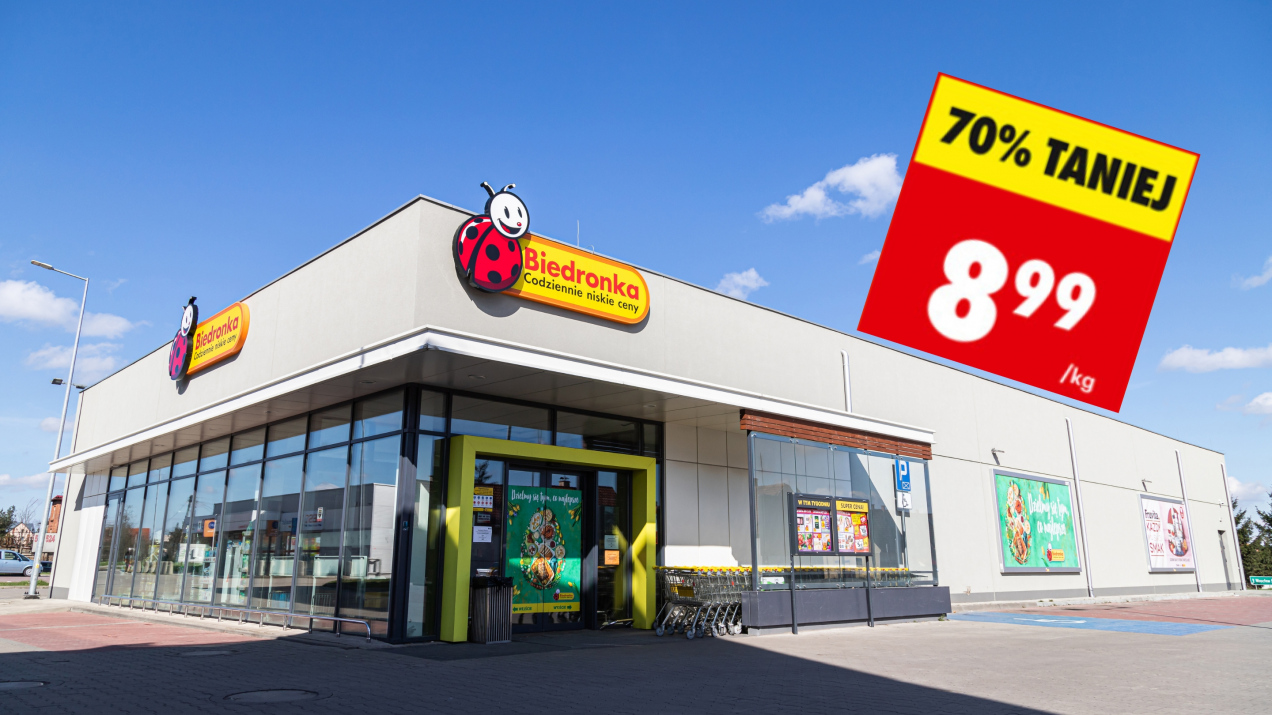
The retail landscape in Poland has entered a state of high-intensity competition as the national “Majówka” holiday weekend arrives. In a strategic push for market dominance, the country’s two largest discount giants, Biedronka and Lidl, have launched a series of aggressive pricing maneuvers and promotional giveaways designed to capture the surge in consumer spending associated with early May festivities.
This latest Biedronka and Lidl price war is characterized by deep discounts on seasonal staples—most notably grilling meats and beverages—and high-visibility “free” offers. For the global observer, these tactics are more than simple sales; they represent a sophisticated battle for foot traffic and loyalty in one of Europe’s most volatile grocery markets.
The intensity of the current clash is evidenced by rapid-fire price adjustments. Recent reports indicate that Biedronka has implemented sharp reductions on key items, including a specific promotion where a product previously priced at 29.99 zł has been slashed to 8.99 zł according to coverage by RMF FM. Such steep discounts, often exceeding 70%, are classic examples of loss-leader pricing intended to draw consumers into the store, where they are likely to purchase higher-margin complementary goods.
The Economics of the Majówka Promotional Cycle
To understand the scale of this retail conflict, one must first understand “Majówka.” This traditional Polish long weekend, centered around May 1 (Labor Day) and May 3 (Constitution Day), is culturally synonymous with outdoor grilling, gardening, and travel. Consumer demand for sausages, beer, and charcoal spikes precipitously during the first week of May.
Retailers leverage this predictable demand to engage in “predatory” promotional cycles. By offering essential holiday items at near-cost or below-cost prices, Biedronka and Lidl effectively “lock in” the consumer’s primary shopping trip for the weekend. For example, Biedronka recently offered Śląska sausage at a 72% discount, bringing the price down to 3.79 zł as reported by Biznes o2.
From an economic perspective, this is a game of market share. When one retailer drops the price of a staple like sausage or beer, the competitor is forced to match or beat that price to avoid a significant loss in volume. This creates a feedback loop of discounting that benefits the consumer in the short term but puts immense pressure on the retailers’ operating margins.
Analyzing the ‘Free’ Offerings: Beer and Ice Cream
Beyond direct price cuts, both chains have utilized “free” incentives to increase the average basket value. Reports have circulated regarding “free beer” promotions at both Lidl and Biedronka, with some headlines suggesting consumers could acquire significant quantities of beverage stock for the holiday. Yet, in the context of Polish retail, these “free” offers are typically structured as multi-buy promotions (e.g., “Buy 3, Get 1 Free”) or tied to loyalty app requirements.

Similarly, Biedronka has introduced limited-time giveaways of ice cream, a strategic move to capture the “impulse buy” segment as temperatures rise in early May. These tactics are designed to create a sense of urgency—often marketed as last chance
or only today
offers—which accelerates the consumer’s decision-making process and increases store density.
Comparative Promotional Strategies
| Strategy | Biedronka Approach | Lidl Approach |
|---|---|---|
| Loss Leaders | Deep cuts on traditional meats (e.g., Śląska sausage). | Aggressive pricing on premium imported meats, and cheeses. |
| Volume Incentives | High-volume beverage bundles for holiday parties. | Multi-buy “gratis” offers on beer and soft drinks. |
| Digital Integration | Heavy reliance on the “Moja Biedronka” app for exclusive pricing. | Lidl Plus app coupons and personalized discounts. |
The Broader Retail War: Biedronka vs. Lidl
The current friction is a microcosm of a decade-long struggle for the Polish consumer. Biedronka, operated by the Portuguese group Jerónimo Martins, has long held a dominant position due to its vast network of stores and deep integration into Polish shopping habits. Lidl, however, has aggressively expanded its footprint and upgraded its store formats to challenge this hegemony.
The competition has evolved from simple price-matching to a war of ecosystems. Both retailers are now investing heavily in digital loyalty programs. By requiring a smartphone app to access the lowest prices, these companies are no longer just selling groceries; they are harvesting granular data on consumer behavior to optimize their supply chains and personalize future offers.
This data-driven approach allows them to implement “dynamic pricing,” where discounts can be adjusted in real-time based on local inventory levels or competitor moves. The 29.99 zł to 8.99 zł price drop is a prime example of a “flash sale” designed to trigger immediate store visits.
What So for the Global Consumer
While the current battle is localized to Poland, the strategies employed by Biedronka and Lidl serve as a case study for retail trends worldwide. As food inflation continues to impact households globally, the “discount-first” model is becoming the primary driver of growth in the grocery sector.
Consumers are increasingly “cherry-picking”—buying loss-leaders at one store and staples at another. This behavior forces retailers to move away from general discounts toward highly targeted, time-sensitive offers. The “Majówka” war demonstrates that in a saturated market, the only way to grow is to aggressively steal market share from the nearest competitor through psychological pricing and perceived value.
Key Takeaways for Market Observers
- Loss-Leader Dominance: Retailers are using extreme discounts (up to 72%) on culturally significant items to drive holiday foot traffic.
- App-Centric Loyalty: Pricing is increasingly gated behind digital apps, shifting the competition from the shelf to the smartphone.
- Seasonal Volatility: The “Majówka” window creates a unique economic micro-climate where traditional pricing rules are suspended in favor of aggressive volume growth.
- Market Consolidation: The relentless competition between the top two players continues to squeeze smaller, independent grocers out of the market.
As the May Day festivities conclude, the retail market will likely see a normalization of prices, though the gains in loyalty app memberships will remain. The next major checkpoint for the Polish retail sector will be the summer grilling season, where another round of price wars is expected as retailers compete for the peak outdoor dining window.
Do you think aggressive price wars like these benefit the consumer in the long run, or do they lead to lower quality and reduced choice? Share your thoughts in the comments below.