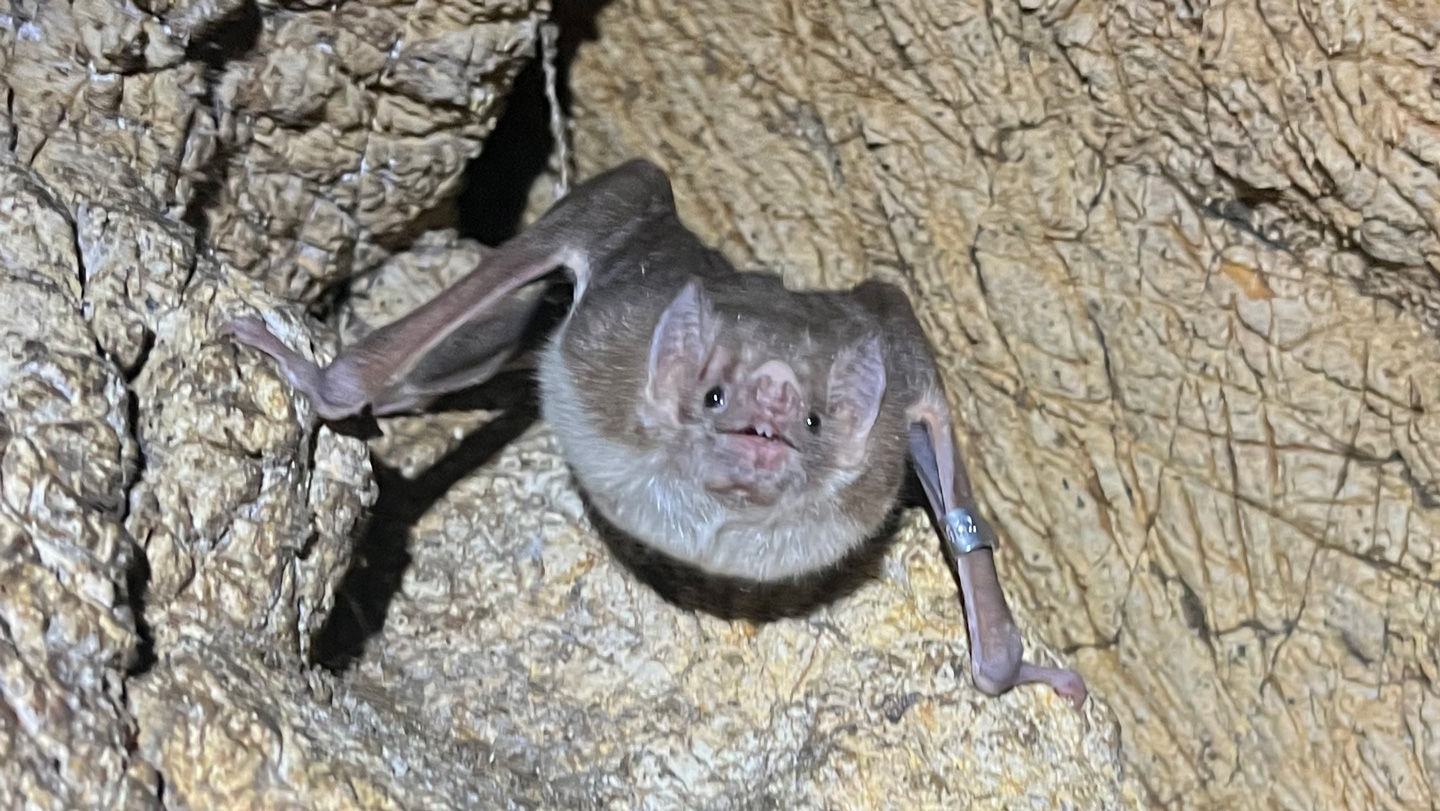
Lima, Peru — Bats have become the latest mammals susceptible to H5N1, the highly pathogenic avian influenza virus responsible for bird flu.
In Peru, over a dozen vampire bats have been found carrying H5N1 antibodies, indicating exposure to the virus, researchers report November 11 at bioRxiv.org. The finding is “very worrisome,” says Vincent munster, a virus ecologist at the Rocky Mountain Laboratories in Hamilton, Mont., who was not involved in the study. Each time the virus jumps to a new mammalian host, he says, it gains opportunities to mutate and evolve,possibly bringing it closer to spreading among people.
And vampire bats may not be the only bat species at risk. Preliminary findings from Bangladesh indicate that 16 flying foxes, large fruit-eating bats with foxlike faces, appear to have died from bird flu, says Munster, who is investigating those deaths.
Bats are reservoir hosts for several pathogens that pose serious risks to humans. If multiple bat species are susceptible to H5N1, large colonies could act as reservoirs for the virus, says Gregory Gray, an infectious diseases epidemiologist at the University of Texas Medical Branch in Galveston, who was not involved in either of the bat studies.And that could make the bats vectors for bird flu transmission to other animals or even humans, he says.
hints of H5N1 in marine-feeding vampire bats
Wildlife veterinarian I-Ting Tu began her Ph.D. at the University of Glasgow in Scotland in July 2022, focusing on viruses that vampire bats (Desmodus rotundus) might transmit to marine animals in Peru.A few months later, bird flu swept across South america’s coast, eventually killing at least 560,000 seabirds and 10,000 sea lions in Peru alone. Tu wondered how vampire bats would be affected by this animal equivalent of a pandemic.
After nearly a year of securing permits and organizing logistics, Tu and her colleagues collected samples from hundreds of vampire bats in three regions. Along the coast, the bats feed exclusively on marine animals such as sea gulls and sea lions. In the Andes, they feed on livestock and occasionally humans. At mixed-diet sites, a few kilometers from the seafront, the bats feed on both marine and land-based species.
Tu describes the journey as a trail of “blood and tears.” It was her first time working with vampire bats: She was bitten multiple times and even commemorated one of the bites with a tattoo.
To analyze the bats’ blood meals, she anesthetized the animals and inserted a tube into their stomach — an invasive procedure that some bats didn’t survive. “They died because of my research,” Tu says. She was wracked with guilt, crying herself to sleep after long nights of sampling.
But the blood and tears paid off: While the researchers found no H5N1 genetic material in the bats — probably due to delays in getting samples before bats had cleared the virus — they discovered that 14 bats, all of which had exclusively fed on marine animals during the outbreak, carried antibodies against H5N1, suggesting they had been infected.
Study coauthor Susana Cárdenas-Alayza, a conservation biologist at Cayetano Heredia University in Lima, wasn’t surprised: They knew bats were feeding on H5N1-infected animals. During the 2022–2023 outbreak, she recalls, sick animals were everywhere, sea lions were coughing and pups were climbing over their dead parents. “It was apocalyptic.”
Cárdenas-Alayza says that vampire bats — the only bat species that can walk and jump on land — could have been infected by the heavily contaminated coastal surroundings. Using heat sensors in their nose to detect areas where blood flows close to the skin, they often target the eyeballs and anus of marine animals, areas rich in mucosal secretions where viruses are shed, she says.
Bird flu’s new potential virus flight path
The findings could have serious implications, particularly at mixed-diet sites where vampire bats feeding on marine animals might acquire H5N1 and pass it to livestock or humans, says study coauthor Daniel streicker, a disease ecologist at the University of Glasgow.
To assess the risks, key questions must be addressed, including how efficiently H5N1 can replicate in bats, transmit among them and spread to other species, says Ariful Islam, an emerging infectious diseases researcher at Charles Sturt University in Bathurst, Australia, and co-investigator of the flying fox die-offs in Bangladesh.
The team in Peru found that H5N1 can attach to various tissues in vampire bats — including the lungs, kidneys and liver — and infect cells from those tissues in a petri dish.Transmission among bats,though,appears to be limited,as only those that foraged on marine animals carried H5N1 antibodies.Streicker suspects the virus may not be optimized to sustain a chain of infection. But the conclusion must be confirmed by further studies, he says, and a virus’ ability to transmit is not fixed.
Marine animals along the Latin American coast continue to experience outbreaks of bird flu.Repeated jumps of H5N1 from sea life to vampire bats, Streicker says, could create a new pathway for the virus to establish itself in novel hosts and acquire new traits, possibly becoming more deadly or contagious.
Scientists also wonder what other avian influenza viruses bats may harbor. In 2017, a virus related to H9N2, another bird flu virus posing a public health threat, was discovered in flying foxes in Egypt.Probably a recent crossover from birds to bats, this virus exhibits traits from relatives capable of infecting either birds or mammals and can be transmitted between ferrets.
Gray suggests that future research should monitor the potential trajectory of avian influenza viruses from birds to bats. Given the frequent interactions between bats and livestock, he stresses the urgent need to strengthen surveillance to detect possible virus crossover into domestic animals. That’s where we should “keep a pulse on,” he says.
Keep reading