
Bitcoin, the world’s first and most influential cryptocurrency, has long been a subject of intense speculation about its long-term value. While its price has fluctuated dramatically—from near-zero in 2010 to an all-time high of $126,198 in October 2025—one question continues to dominate discussions among investors, analysts, and economists: What will Bitcoin’s price look like in the next two decades? A recent claim, attributed to a physicist predicting a $10 million Bitcoin within 20 years, has reignited debates about the digital currency’s future. But how plausible is such a forecast? And what factors could shape Bitcoin’s trajectory over the coming years?
As of May 18, 2026, Bitcoin’s market capitalization stands at approximately $1.54 trillion, with a circulating supply of 19.93 million coins out of a hard cap of 21 million. The cryptocurrency’s price has seen volatility, currently trading around $76,983.52—up 1.32% over the past 24 hours—after a significant decline from its 2025 peak. While such predictions often capture headlines, they must be weighed against Bitcoin’s fundamental mechanics, adoption trends, and macroeconomic conditions. This analysis explores the feasibility of extreme long-term price targets, the forces driving Bitcoin’s value, and what stakeholders should watch in the years ahead.
The claim that Bitcoin could reach $10 million within 20 years—equating to a roughly 130x increase from its current price—rests on assumptions about scarcity, institutional adoption, and technological evolution. However, no verified, authoritative source supports this specific prediction. Bitcoin’s price is influenced by a complex interplay of factors, including supply dynamics (such as the halving events that reduce new Bitcoin issuance every four years), regulatory developments, and global economic trends. Without concrete data or expert consensus, such forecasts remain speculative. For context, even the most bullish analysts typically project Bitcoin’s price in the range of hundreds of thousands of dollars by 2040, not millions.
Bitcoin’s Scarcity Model: The Halving and Supply Cap
At the heart of Bitcoin’s value proposition is its fixed supply. Unlike fiat currencies, which central banks can print indefinitely, Bitcoin’s total supply is capped at 21 million coins. This scarcity is enforced by the protocol’s design, where new Bitcoins are released through a process called mining, and the rate of new issuance is halved approximately every four years—a mechanism known as the “halving.” The most recent halving occurred in April 2024, reducing the block reward from 6.25 BTC to 3.125 BTC per block. By 2026, the reward will have dropped further, reinforcing Bitcoin’s deflationary nature.

Proponents argue that this scarcity, combined with increasing demand from institutional investors and global adoption, could drive prices upward over time. For example, the recent approval of Bitcoin exchange-traded funds (ETFs) in the U.S. Has opened the door for traditional financial institutions to invest in Bitcoin, potentially accelerating its integration into mainstream portfolios. However, critics point to Bitcoin’s speculative history, where price surges have often been followed by sharp corrections. The cryptocurrency’s price is also sensitive to macroeconomic conditions, such as inflation rates and interest policies set by central banks like the Federal Reserve.
To put the $10 million prediction into perspective, consider Bitcoin’s historical performance. From its inception in 2009 to its peak in 2025, Bitcoin’s price increased by over 12 millionfold—a staggering return. However, such growth was not linear; it was punctuated by periods of volatility, regulatory crackdowns, and market crashes. For instance, Bitcoin’s price dropped by over 80% from its 2021 high to its 2022 low, demonstrating the asset’s speculative nature. While long-term holders (“HODLers”) have historically benefited from Bitcoin’s upward trajectory, short-term volatility remains a defining characteristic.
Institutional Adoption: A Double-Edged Sword
One of the most significant developments in recent years has been the entry of institutional investors into the Bitcoin market. Companies like MicroStrategy, Tesla (during its holding period), and public pension funds have added Bitcoin to their balance sheets, viewing it as a hedge against inflation and a store of value. The approval of Bitcoin ETFs in January 2024 marked a turning point, allowing retail and institutional investors to gain exposure to Bitcoin without directly holding the asset. As of early 2026, Bitcoin ETFs have accumulated over $50 billion in assets under management, according to data from the U.S. Securities and Exchange Commission.
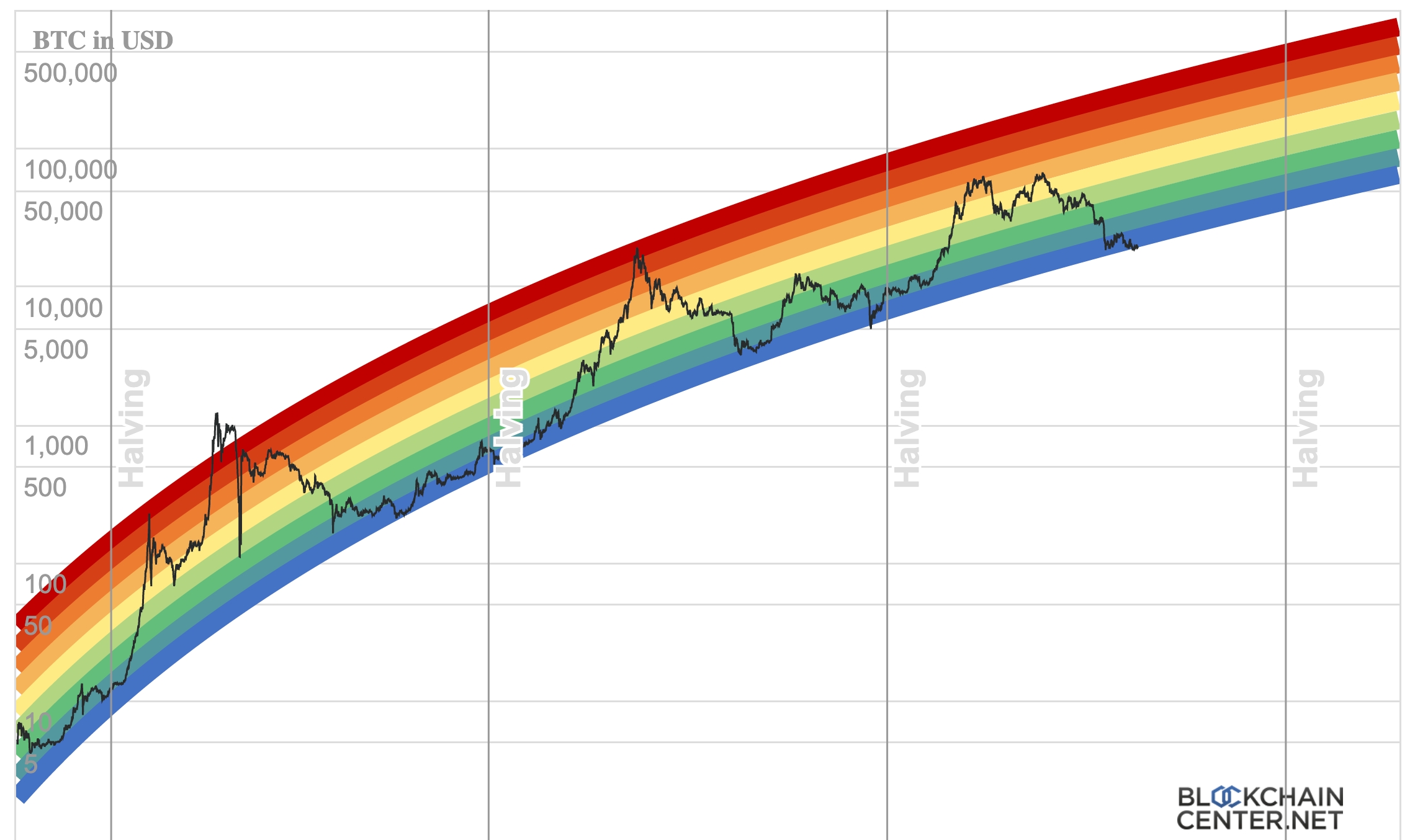
This institutional adoption has lent legitimacy to Bitcoin, reducing perceptions of it as purely a speculative asset. However, it has also introduced new risks. For example, if institutional investors collectively decide to sell their Bitcoin holdings—whether due to regulatory pressures, profit-taking, or macroeconomic shifts—the market could experience significant downward pressure. The correlation between Bitcoin and traditional risk assets (like stocks) has strengthened in recent years, meaning Bitcoin’s price may become more susceptible to broader market downturns.
Regulatory uncertainty remains another wild card. Governments worldwide are still grappling with how to classify and regulate cryptocurrencies. In 2025, the European Union finalized its Markets in Crypto-Assets (MiCA) framework, providing clearer rules for crypto assets, while countries like China continue to enforce strict bans on cryptocurrency-related activities. Such regulatory divergence could create fragmentation in the global crypto market, impacting Bitcoin’s price and adoption.
Technological and Macroeconomic Factors
Bitcoin’s underlying technology—particularly its energy consumption and scalability—continues to be a point of contention. While Bitcoin’s proof-of-work consensus mechanism has been criticized for its environmental impact, proponents argue that advancements in renewable energy and more efficient mining hardware are mitigating these concerns. For instance, data from the Digiconomist suggests that Bitcoin’s energy use has become more sustainable in recent years, with a growing share of mining operations powered by renewable sources.
On the scalability front, Bitcoin’s Lightning Network—a second-layer solution designed to enable faster and cheaper transactions—has seen gradual adoption. However, as of 2026, it remains a niche solution, with most Bitcoin transactions still processed on the base layer. If the Lightning Network gains broader traction, it could improve Bitcoin’s utility as a medium of exchange, potentially attracting more users and merchants. Conversely, if adoption stalls, Bitcoin may continue to be viewed primarily as a store of value rather than a transactional currency.
Macroeconomic conditions will also play a critical role in Bitcoin’s long-term price. For example, if central banks continue to raise interest rates to combat inflation, risk assets like Bitcoin could face selling pressure. Conversely, in an environment of low interest rates and economic uncertainty, Bitcoin’s appeal as a hedge against traditional financial systems may strengthen. The ongoing debate over Bitcoin’s role as “digital gold”—a non-sovereign, scarce asset—will shape investor perceptions and market dynamics.
Expert Consensus: What Do Analysts Say?
While the $10 million prediction lacks a verified source, it aligns with some of the more optimistic long-term forecasts from crypto analysts. For example, PlanB, the creator of the Stock-to-Flow (S2F) model—a widely cited framework for predicting Bitcoin’s price based on its scarcity—has suggested that Bitcoin could reach $1 million by 2030 under certain assumptions. However, even PlanB’s model has faced criticism for its simplifications and reliance on historical data, which may not account for future regulatory or technological shifts.
Other analysts, such as those at Glassnode, emphasize the importance of on-chain activity and adoption metrics in forecasting Bitcoin’s price. According to Glassnode’s data, metrics like the number of active Bitcoin addresses and the value locked in Bitcoin wallets have shown strong correlations with price movements. However, these models are not infallible; they rely on historical patterns that may not hold in unpredictable market conditions.
It’s also worth noting that Bitcoin’s price is influenced by narratives and sentiment. In 2024, for instance, the narrative around Bitcoin as a hedge against geopolitical instability and currency devaluations gained traction, particularly in countries with high inflation rates. Such narratives can drive speculative bubbles, as seen in the 2021 bull run, when Bitcoin’s price surged to new highs before correcting sharply in 2022.
Key Takeaways: What Investors Should Watch
- Supply Dynamics: The next Bitcoin halving in 2028 will reduce the block reward to 1.5625 BTC, further tightening supply. Monitor mining difficulty and hash rate trends, as these can impact Bitcoin’s inflation rate.
- Institutional Adoption: Keep an eye on Bitcoin ETF inflows and outflows, as well as regulatory developments in major markets like the U.S., EU, and Asia.
- Macroeconomic Trends: Central bank policies, inflation rates, and global economic stability will continue to influence Bitcoin’s price. Pay attention to signals from the Federal Reserve and other major central banks.
- Technological Advancements: Watch for progress in Bitcoin’s scalability solutions, such as the Lightning Network, and advancements in energy-efficient mining.
- Geopolitical Factors: Bitcoin’s role as a “safe haven” asset may grow in times of geopolitical tension. Monitor developments in regions like Ukraine, the Middle East, and China, where Bitcoin adoption has been strong.
What’s Next for Bitcoin?
While the idea of Bitcoin reaching $10 million within 20 years is speculative, it underscores a broader question: What will drive Bitcoin’s value in the long term? The cryptocurrency’s future will likely depend on a combination of technological maturity, regulatory clarity, and macroeconomic conditions. For now, Bitcoin remains a high-risk, high-reward asset, and investors should approach long-term predictions with caution.
The next major checkpoint for Bitcoin will be the 2028 halving event, which is expected to reduce the block reward by half, further limiting new supply. The outcome of ongoing legal battles—such as those involving the SEC and crypto exchanges—could have significant implications for Bitcoin’s regulatory landscape. Investors and observers should also watch for developments in Bitcoin’s Layer 2 solutions, which could enhance its utility as a transactional currency.
For those interested in tracking Bitcoin’s price and market trends, resources like CoinMarketCap, Glassnode, and the official Bitcoin website (bitcoin.org) provide real-time data and analysis. As always, conduct thorough research and consider consulting with a financial advisor before making investment decisions.
What do you think about Bitcoin’s future? Will it continue to gain mainstream adoption, or will it remain a speculative asset? Share your thoughts in the comments below, and don’t forget to follow World Today Journal for the latest updates on technology and finance.
Related reading
- Granola Raises $125M to Become AI Unicorn with Apple Watch Transcription
- Roman Reigns and Jey Uso Drama: Unforgettable WWE Match Highlights
- Trabzonspor President Ertuğrul Doğan Says Club Could Sell 150 Million Euros in Players (archyworldys.com)
- EU AI Act Overview: Key Insights from Digital Law Expert Alexandre Lazarègue (newsdirectory3.com)