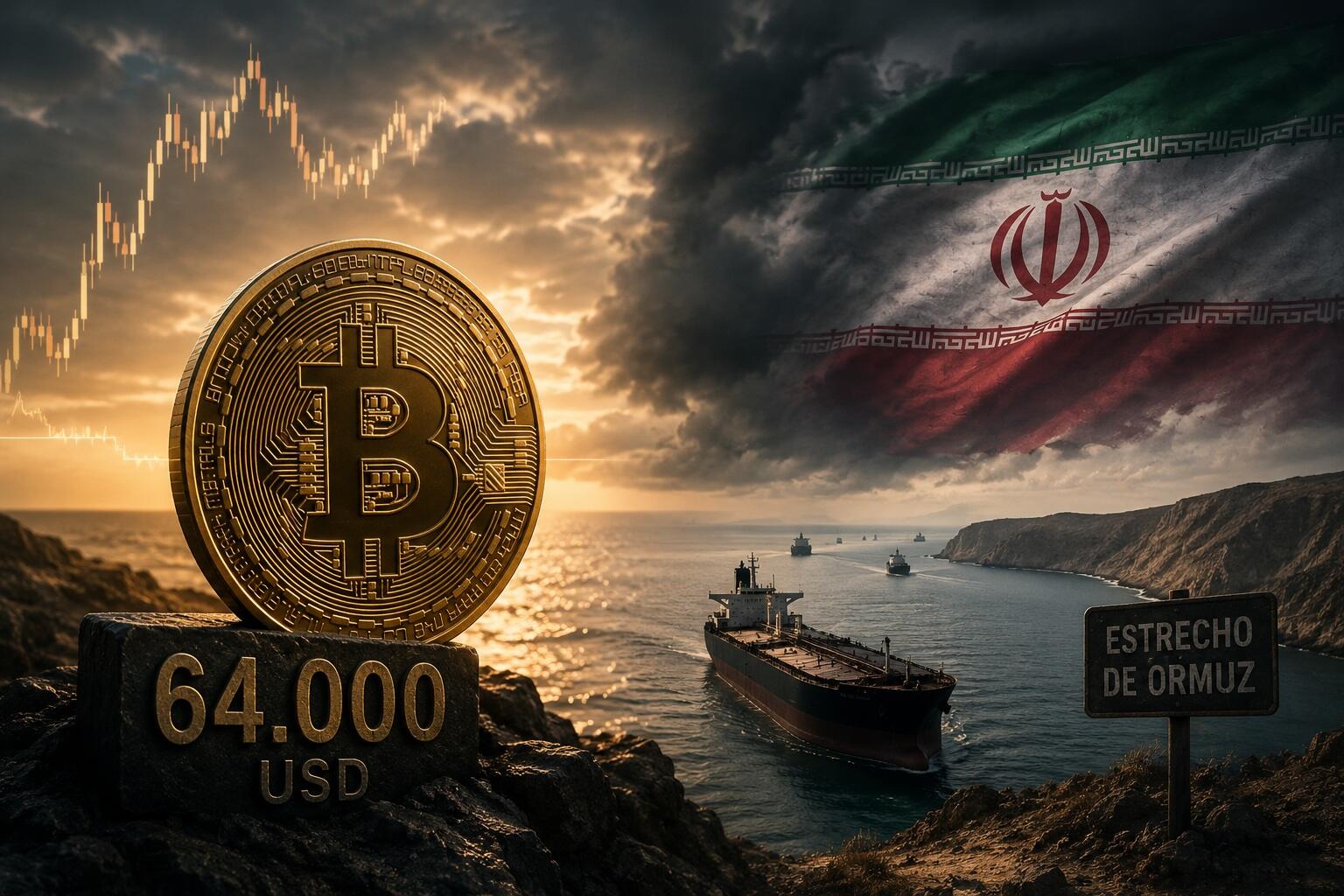
Bitcoin is holding steady near the $64,000 level as market participants monitor escalating geopolitical tensions in the Strait of Hormuz. While the cryptocurrency has shown resilience against recent volatility, analysts are observing whether regional instability will trigger a flight to traditional safe-haven assets or drive increased demand for digital gold.
The current price stability comes as investors weigh the potential for maritime disruptions in the Middle East against broader macroeconomic indicators. According to recent market data, Bitcoin has established a support zone around $64,000, a level that market technicians suggest could act as a floor if geopolitical risks intensify. However, the proximity of conflict in a critical energy corridor has introduced a layer of uncertainty that often influences global liquidity and risk appetite.
Why is Bitcoin holding steady at $64,000?
Bitcoin’s ability to maintain the $64,000 threshold despite regional unrest suggests a tug-of-war between two distinct market sentiments. On one side, institutional investors are utilizing the current price level to manage positions, with trading volume indicating significant buy-side interest at this support point. On the other side, the uncertainty surrounding Middle Eastern stability prevents a more aggressive breakout toward previous highs.
Market analysts note that the $64,000 mark has become a psychological and technical battleground. If the price remains above this level, it may signal that the market has already priced in a certain degree of geopolitical risk. Conversely, a break below this support could trigger liquidations in leveraged long positions, leading to a more rapid decline in price. Recent exchange data shows that liquidations have remained relatively contained, suggesting that traders are currently adopting a more cautious, “wait-and-see” approach.
The role of spot Bitcoin ETFs in the United States also plays a significant part in this stability. These financial products have provided a consistent channel for institutional capital, which tends to react differently to geopolitical news than retail traders. While retail sentiment often swings toward panic during conflict, institutional flows often focus on long-term liquidity and the potential for Bitcoin to act as a non-sovereign store of value during periods of high inflation or currency instability.
How do Strait of Hormuz tensions affect global markets?
The Strait of Hormuz remains one of the world’s most critical maritime choke points, with a significant portion of the global oil supply passing through its waters daily. Any disruption to shipping in this region has immediate implications for energy prices. According to energy market reports, even a temporary halt in tanker traffic can lead to a rapid spike in Brent crude and West Texas Intermediate (WTI) prices due to fears of supply shortages.
When energy prices rise sharply, they often exert upward pressure on global inflation. This creates a complex feedback loop for the cryptocurrency market. Higher inflation typically prompts central banks, such as the Federal Reserve, to maintain higher interest rates to cool the economy. Higher interest rates generally make “risk-on” assets—including Bitcoin and technology stocks—less attractive compared to interest-bearing government bonds. Therefore, tensions in the Strait of Hormuz could indirectly pressure Bitcoin by influencing the monetary policy trajectory of major central banks.
Furthermore, the “risk-off” sentiment triggered by military or maritime tension often leads to a contraction in global liquidity. During these periods, investors frequently exit volatile assets in favor of the US dollar or gold. The relationship between Bitcoin and gold is a subject of ongoing debate among economists. While some argue that Bitcoin is “digital gold” due to its fixed supply, others point out that Bitcoin’s high correlation with the Nasdaq 100 means it often behaves more like a high-growth tech stock during times of market stress.
Comparing Asset Reactions to Geopolitical Shocks
To understand how Bitcoin might react, it is helpful to look at how different asset classes have historically responded to similar regional conflicts:
- Gold: Historically serves as a primary safe haven, often seeing immediate price increases during periods of high geopolitical uncertainty.
- US Dollar (DXY): Generally strengthens during “risk-off” periods as investors seek the liquidity and perceived safety of US Treasury markets.
- Crude Oil: Typically experiences price surges due to supply-side fears linked to maritime choke points like the Strait of Hormuz.
- Bitcoin: Exhibits a dual nature; it can act as a hedge against systemic banking failure or currency debasement, but it also tends to face selling pressure when investors seek liquidity to cover losses in other sectors.
Is Bitcoin a reliable hedge against geopolitical risk?
The debate over Bitcoin’s status as a hedge is divided. Proponents of the “safe haven” narrative point to the asset’s decentralized nature, which makes it immune to the direct seizure or freezing of assets by national governments during wartime. They argue that in a scenario where traditional financial systems are disrupted by conflict, Bitcoin offers a censorship-resistant method for transferring value across borders.
However, empirical data shows that during the initial stages of major geopolitical shocks, Bitcoin has frequently moved in tandem with traditional equities. This suggests that, in the short term, the market treats Bitcoin as a liquidity-sensitive asset rather than a pure hedge. When a “black swan” event occurs, the immediate priority for large-scale funds is often the preservation of cash, which can lead to broad-based selling across all speculative asset classes, including cryptocurrency.
The divergence between Bitcoin and traditional hedges like gold often comes down to the nature of the risk. If the risk is perceived as a threat to the global banking system or the stability of fiat currencies, Bitcoin’s narrative as a hedge strengthens. If the risk is seen as a temporary disruption to energy markets or a standard increase in volatility, Bitcoin is more likely to be traded as a risk asset alongside tech stocks.
Key Takeaways for Investors
- Technical Support: Bitcoin is currently testing the $64,000 level, which serves as a critical psychological and technical floor.
- Energy Linkage: Tensions in the Strait of Hormuz could drive up oil prices, potentially impacting inflation and central bank interest rate decisions.
- Volatility Risk: Geopolitical instability in the Middle East tends to trigger “risk-off” sentiment, which can lead to short-term selling in the crypto market.
- Dual Nature: Bitcoin continues to oscillate between acting as a speculative risk asset and a potential long-term hedge against systemic financial instability.
What happens next for the cryptocurrency market?
The immediate direction of Bitcoin will likely depend on two primary factors: the stability of maritime transit in the Middle East and the upcoming release of US economic data. If tensions in the Strait of Hormuz remain contained, the market may find the stability necessary to attempt a move back toward the $66,000 or $68,000 levels. However, any confirmed disruption to oil tankers could lead to heightened volatility in both energy and digital asset markets.

Investors are also closely watching the Federal Reserve’s commentary regarding inflation. If energy-driven inflation remains a concern, the prospect of interest rate cuts may be pushed further into the future, which could act as a headwind for Bitcoin’s price action. On the technical side, a sustained close below $64,000 could signal a shift in market structure, potentially leading to a deeper correction.
Market participants are currently awaiting further updates from maritime security agencies and official statements from regional authorities regarding the status of shipping lanes in the Persian Gulf. These developments will be the primary drivers of market sentiment in the coming days.
Do you think Bitcoin will act as a safe haven during this period of instability, or will it follow the broader market downward? Share your thoughts in the comments below and share this article with your network.
- How Workers’ Profit Sharing Boosts Peruvian Real Estate and Car Sales
- How Whirlpool Lost Its Global Dominance
- Iran and Strait of Hormuz: Deal Prospects and Global Oil Impact (world-today-news.com)
- Climate Change and Heatwaves: Rising Risks of Infectious Diseases and Waterborne Bacteria (newsdirectory3.com)