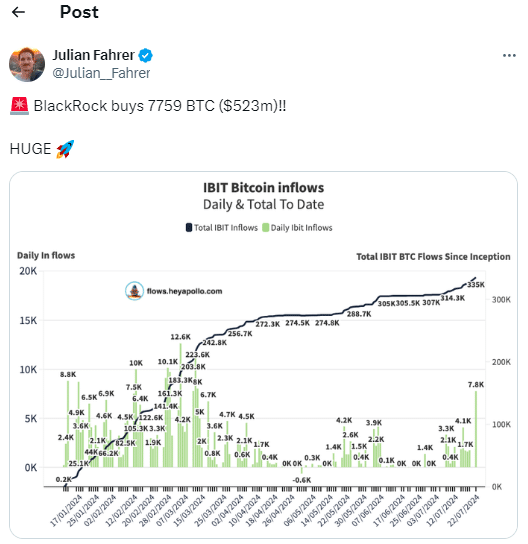
The cryptocurrency market is currently navigating a complex psychological divide. Even as general sentiment often leans toward optimism during periods of significant capital inflows, a contrasting trend has emerged: a notable increase in the utilization of short-Bitcoin products. This divergence suggests that while many investors are betting on growth, a growing segment of the market is preparing for, or actively speculating on, a price correction.
For the average investor, the concept of “shorting” can seem counterintuitive. Most are familiar with “going long”—buying an asset with the expectation that its value will rise. Although, shorting allows traders to capitalize on the downside. As volatility continues to define the digital asset space, these instruments have grow essential tools for both speculators seeking profit from dips and institutional investors looking to hedge their existing portfolios.
Understanding the mechanics of these products is critical for any global investor. Whether through traditional brokerage accounts or specialized exchange platforms, the ability to profit from a decline in Bitcoin’s price adds a layer of strategic flexibility to crypto trading, though it introduces a distinct set of risks that differ significantly from standard asset ownership.
Understanding the Mechanics of Crypto Shorting
At its core, crypto shorting, or short-selling, is a strategy designed to generate profit from the depreciation of a cryptocurrency’s value. Unlike a standard trade, a short position begins with the sale of an asset the trader does not actually own. According to IG International’s guide to shorting cryptocurrencies, this process typically involves borrowing the cryptocurrency from an online broker and selling it at the current market price.
The objective is to buy the asset back later at a lower price—a process known as “covering”—to repay the original loan to the broker. The profit is the difference between the higher price at which the asset was sold and the lower price at which it was repurchased. As noted by Investopedia’s analysis of shorting Bitcoin, this strategy is essentially a bet that the market will move in a downward direction.
This approach is particularly attractive in the crypto market due to its inherent volatility. High volatility creates opportunities for amplified profits if the trade moves in the investor’s favor. However, this “high-risk, high-reward” nature also means that if the price of Bitcoin rises instead of falls, the trader may face significant losses, as they will eventually have to buy back the asset at a higher price than they sold it for.
The Role of Margin and Leveraged Trading
Many traders enhance their short positions through margin trading, also known as leveraged trading. In this scenario, a broker lends the trader the full value of the trade, allowing them to grab a much larger position than their available capital would normally permit. While leverage can multiply gains, it also multiplies losses, making it a tool primarily used by experienced traders who can manage the associated risks of margin calls and liquidation.

Inverse ETFs: A Simplified Path to Short Exposure
For investors who find the process of borrowing assets and managing margin accounts too cumbersome or risky, Exchange-Traded Funds (ETFs) provide a more accessible alternative. Specifically, “inverse” or short crypto ETFs allow investors to gain short exposure through a standard brokerage account without having to directly interact with the underlying cryptocurrency.
ProShares has established a lineup of these products, offering investors a way to seek gains from crypto dips. According to the ProShares short crypto ETFs documentation, these funds provide an opportunity to profit when the daily price of Bitcoin or Ether declines, effectively removing the significant costs and fees typically associated with manual shorting.
Key short-crypto products include:
- BITI (Short Bitcoin ETF): Designed to provide inverse exposure to the daily price movements of Bitcoin.
- SBIT (UltraShort Bitcoin ETF): A more aggressive instrument for those seeking amplified inverse returns.
- SETH (Short Ether ETF): Provides an opportunity to profit from declines in the price of Ether.
- ETHD (UltraShort Ether ETF): Offers leveraged inverse exposure to Ether’s price movements.
We see important for investors to note that these funds do not invest directly in the cryptocurrencies themselves. There is no guarantee that these ETFs will perfectly track the returns of Bitcoin or Ether. They are designed for short-term strategic moves rather than long-term “buy and hold” investment strategies.
Why Investors Are Turning to Short-Bitcoin Products
The recent surge in inflows into short-Bitcoin products, even amidst a generally optimistic market, can be attributed to several strategic motivations. The most common is hedging. An investor who holds a large amount of Bitcoin may buy a short ETF or open a short position to protect their portfolio. If the market crashes, the gains from the short position offset the losses from their long-term holdings.
Beyond hedging, pure speculation plays a major role. Professional traders often identify “overbought” conditions where they believe the price has risen too quickly and is due for a correction. By utilizing short-Bitcoin products, they can turn a market downturn into a profitable event.
Comparing Long vs. Short Positions
| Feature | Long Position | Short Position |
|---|---|---|
| Market Outlook | Bullish (Price will rise) | Bearish (Price will fall) |
| Primary Action | Buy low, sell high | Sell high, buy low |
| Risk | Price drops to zero | Price rises infinitely |
| Primary Tools | Spot buying, Long ETFs | Margin trading, Inverse ETFs |
Risk Management in Volatile Markets
Shorting is inherently riskier than traditional investing. In a long position, the maximum loss is limited to the initial investment (the asset cannot travel below zero). In a short position, however, there is theoretically no limit to how much the price of an asset can rise, meaning potential losses could exceed the initial capital invested if the trader is using margin.
To mitigate these risks, seasoned investors often employ “stop-loss” orders, which automatically close a position once the price hits a certain threshold. The use of inverse ETFs like BITI or SBIT limits the risk to the amount of money invested in the fund, as the investor is not borrowing the asset directly on margin.
As the crypto market evolves and matures, the availability of these diverse financial instruments allows for more sophisticated portfolio management. The simultaneous rise of optimistic inflows and short-positioning highlights a market that is becoming increasingly nuanced, where investors are no longer simply “betting on the coin,” but are instead trading the volatility itself.
Investors should monitor upcoming market volatility indicators and official filings from ETF providers to stay informed on how these products are performing relative to the spot price of digital assets.
Do you use short-Bitcoin products to hedge your portfolio, or do you view them as purely speculative tools? Share your thoughts and strategies in the comments below.