
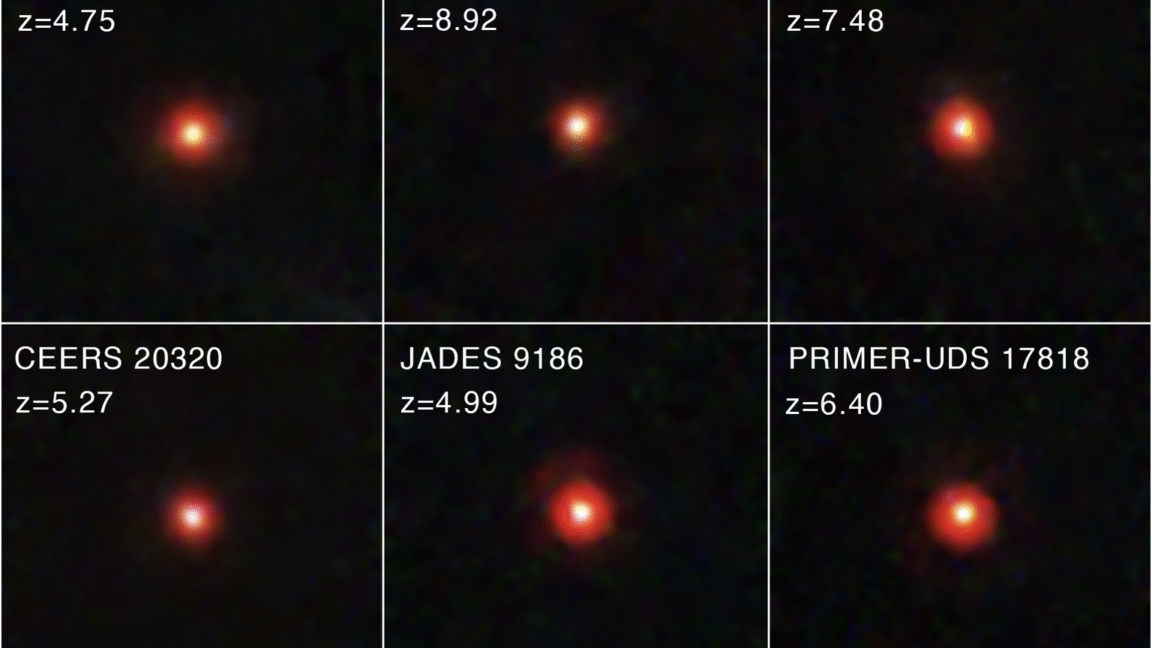
The Universe’s First cities of Stars: How Early Galaxies Forged Black Holes
Have you ever wondered how the first galaxies – and the supermassive black holes at their hearts – came to be? For decades, astronomers have wrestled with this cosmic chicken-or-egg problem. New research, powered by cutting-edge simulations, is revealing a stunning answer: the earliest galaxies didn’t gently evolve; they exploded with star formation, creating dense star clusters that may have directly seeded the behemoths lurking in galactic centers.
This isn’t just about understanding the distant past. Unraveling the origins of galaxies and black holes helps us understand our own cosmic address – and our place in the universe. Let’s dive into the groundbreaking discoveries reshaping our understanding of the early cosmos.
Recreating the Dawn of Galaxies
Researchers recently utilized advanced cosmological simulations to rewind cosmic history, focusing on the formative first 700 million years. Their target? A single, nascent dwarf galaxy.What they found wasn’t the gradual build-up previously expected, but a series of dramatic stellar birth events.
Instead of a single, sustained period of star formation, the simulation revealed two major bursts of activity. Imagine swarms of stars igniting like a cascade of Christmas tree lights – that’s the scale of energy we’re talking about. This intensity was driven by the unique conditions of the early universe.
“The early Universe was an incredibly crowded place,” explains researcher Garcia. “gas clouds were denser, stars formed faster, and in those environments, gravity naturally gathered stars into tightly bound systems.”
From Star clusters to Galactic Hearts
These newly formed star clusters didn’t remain scattered.They were drawn inward,spiraling towards the galaxy’s center like water circling a drain. as they converged, they merged, creating a massive, ultra-dense structure known as a nuclear star cluster.
This galactic heart blazed with the light of a million suns. Crucially, this cluster may have provided the crucial conditions for a supermassive black hole to form. But how? And what does this mean for our understanding of galactic evolution?
(Image: A simulation of the formation of the super-dense star clusters.)
The Key to Realistic Simulations: Variable Star Formation
What made this simulation different? Previous models often simplified star formation for computational efficiency, sacrificing realism. Garcia’s team took a different approach.
“Most simulations simplify things to make calculations more practical, but than you sacrifice realism,” Garcia notes. “We used an improved model that allowed star formation to vary depending on local conditions rather than just go at a constant rate like with previous models.”
This seemingly small change had a massive impact. the simulation showed some gas clouds converting a staggering 80% of their mass into stars - a ferocious rate compared to the 2% typically observed in galaxies today. This rapid star birth fueled the formation of these dense, gravitationally bound clusters.
The computational power required was immense. Garcia leveraged the University of Maryland’s supercomputing facility, Zaratan, completing a six-month calculation that would have taken 12 years on a standard laptop.
The Chicken or the Egg: Solving the Black Hole Mystery
For years, astronomers have debated the relationship between nuclear star clusters and supermassive black holes. which came first? Did a black hole form and then attract stars, or did a dense star cluster collapse to become a black hole?
This new research strongly suggests the latter. The simulation demonstrates a plausible pathway for a nuclear star cluster to directly seed the formation of a supermassive black hole in the early universe. The immense gravity within the cluster could have triggered a runaway collapse, ultimately creating the black hole.
This doesn’t necessarily mean all supermassive black holes formed this way, but it provides a compelling explanation for their surprisingly early appearance in the cosmos.
Evergreen Insights: The Ongoing Quest to Understand Our Origins
The story of early galaxy formation is far from complete. This research represents a meaningful step forward, but it also opens up new avenues of inquiry. here are some key takeaways that will remain relevant as our understanding evolves:
* The early Universe Was Different: Conditions in the early universe – higher gas densities, faster star formation rates – fundamentally shaped the galaxies we see today.
* Simulations are Essential: Recreating the conditions of the early universe requires powerful simulations and elegant modeling techniques.
* Nuclear Star Clusters are Key: These dense structures at the centers of galaxies play a crucial role in galactic evolution and might potentially be intimately linked to the formation of





