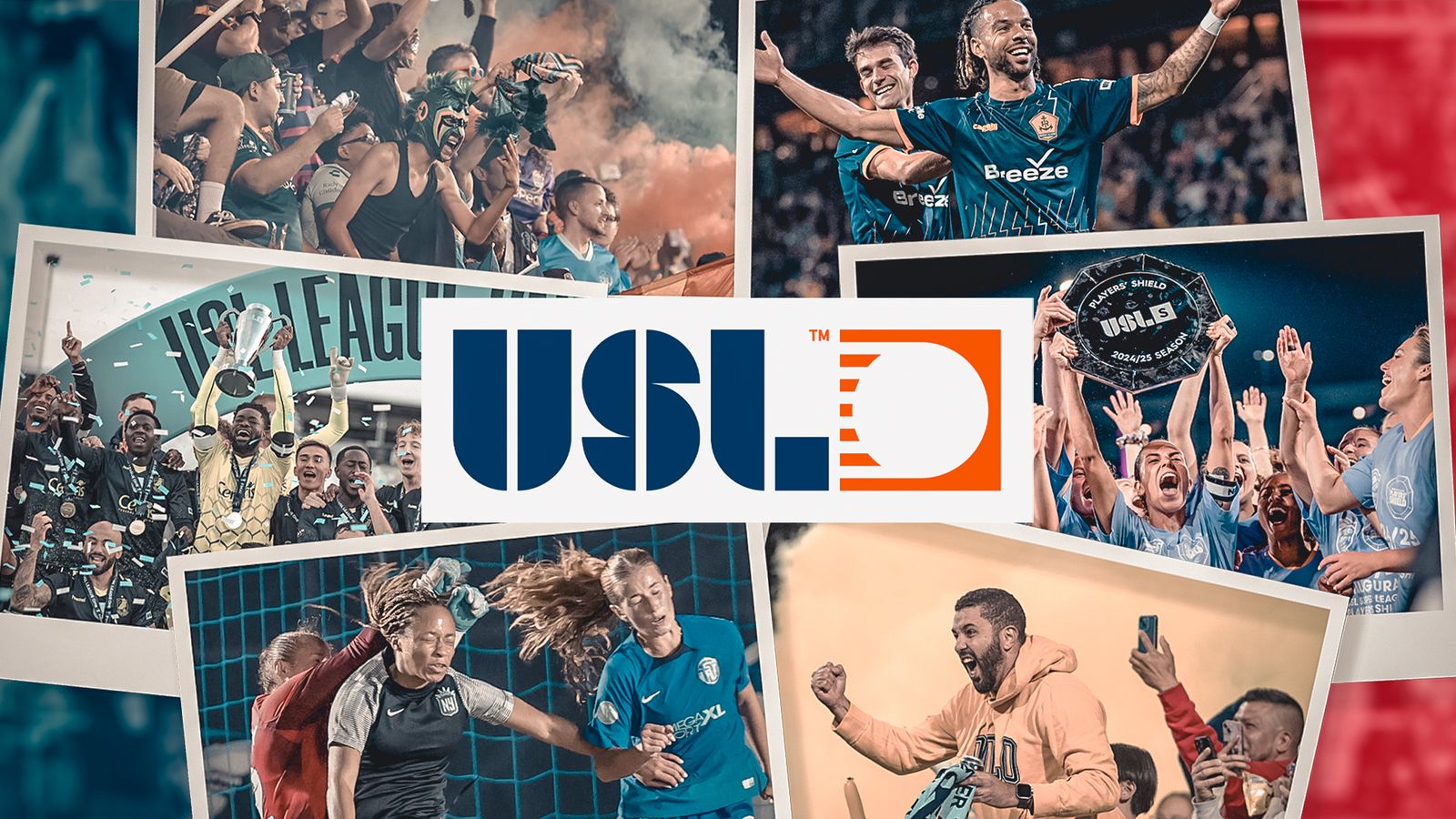
The US soccer Landscape: Why Both MLS and USL are Crucial for Growth
The United States is on the cusp of a soccer revolution, fueled by the upcoming 2026 World Cup and a rapidly growing fanbase. But the path to fully unlocking the sport’s potential isn’t a single league dominating the scene. Instead, it requires a thriving ecosystem - one where Major League Soccer (MLS) and the United Soccer League (USL) complement each other.
Many believe these leagues are in competition, but USL President James O’Neill argues differently.”We’re not going into competition with MLS,” he states. The US is vast, comparable in size to Europe with its multitude of leagues. This country is large enough to support both systems, and frankly, needs them to succeed.
Why a Dual-League System works for the US
For years, MLS has been the face of professional soccer in America. Its 30 franchises represent elite competition in major metropolitan areas. However, this isn’t enough to serve a nation of over 340 million people. That’s where the USL steps in.
The USL’s network of 38 professional men’s teams extends into regions historically underserved by top-flight soccer. this expansion increases accessibility for both aspiring players and potential fans nationwide. Consider these key benefits:
* Expanded Reach: The USL brings professional soccer to communities MLS doesn’t currently reach.
* Grassroots growth: Increased accessibility fosters a broader base of players and fans.
* Infrastructure Investment: The USL is actively building for the future.
* Future Growth: At least 16 expansion teams are planned, further extending the league’s footprint.
Since 2020, the USL has added 10 soccer-specific stadiums, with 12 more currently in development. This represents a important $1.5 billion investment in infrastructure, improving facilities at all levels of the game.
The Rising Tide of Soccer Popularity in the US
The numbers speak for themselves.Soccer’s growth in the US is undeniable, and the 2026 World Cup is poised to accelerate that trend. Here’s a snapshot of the current landscape, according to Navigate, a US-based sports analytics firm:
* World Cup Impact: The 2026 World Cup is projected to attract 32 million new soccer fans in the US.
* Gen Z Appeal: Soccer is uniquely popular among 16-24 year-olds compared to the other major US sports.
* Broad Engagement: Approximately two-thirds of Gen Z are expected to follow or engage with the world Cup.
* National Interest: Over half of all Americans aged 13-63 are projected to engage with the tournament in some way.
In a country dominated by American football, basketball, baseball, and hockey, this level of investment is crucial. It provides soccer with a fighting chance to improve facilities from the grassroots level to the professional ranks.
A Generational Shift in Soccer Culture
The growth isn’t just about numbers; it’s about a cultural shift. O’Neill, drawing on his experience in the UK, observes a fascinating trend. Traditionally, soccer is passed down through families.
However, in the US, he’s seeing something different. Young players are introducing the sport to their parents, many of whom grew up playing other sports.This suggests a generational shift is underway.
Within the next 20 to 30 years, we can expect soccer to become a more ingrained part of the American family dynamic. It will be passed down through generations, rather than simply adopted from the top down.
The american Spirit of Meritocracy
The USL’s vision is ambitious, inspired by the global game but distinctly American in its spirit. The potential adoption of a promotion-relegation system – where teams move between leagues based on performance – embodies the American ideal of meritocracy.
This system would reward success and provide a clear pathway for upward mobility. It might very well be the key to unlocking soccer’s full potential in the US. Whether this vision comes to fruition remains to be seen,
Keep reading