The Evolving Brilliance of Quasars: A New Understanding of Black Hole Dynamics Across Cosmic Time
For decades, quasars – the incredibly luminous cores of distant galaxies – have captivated astronomers. Powered by supermassive black holes, these cosmic beacons offer a unique window into the universe’s early history. Recent research, however, is challenging long-held assumptions about the fundamental processes driving their immense energy output, possibly reshaping our understanding of black hole growth and even cosmological measurements.This article delves into these groundbreaking findings, exploring the established science of quasars, the surprising new discoveries, and their implications for the future of astrophysics.
Understanding the Engine: Accretion Disks and the power of Quasars
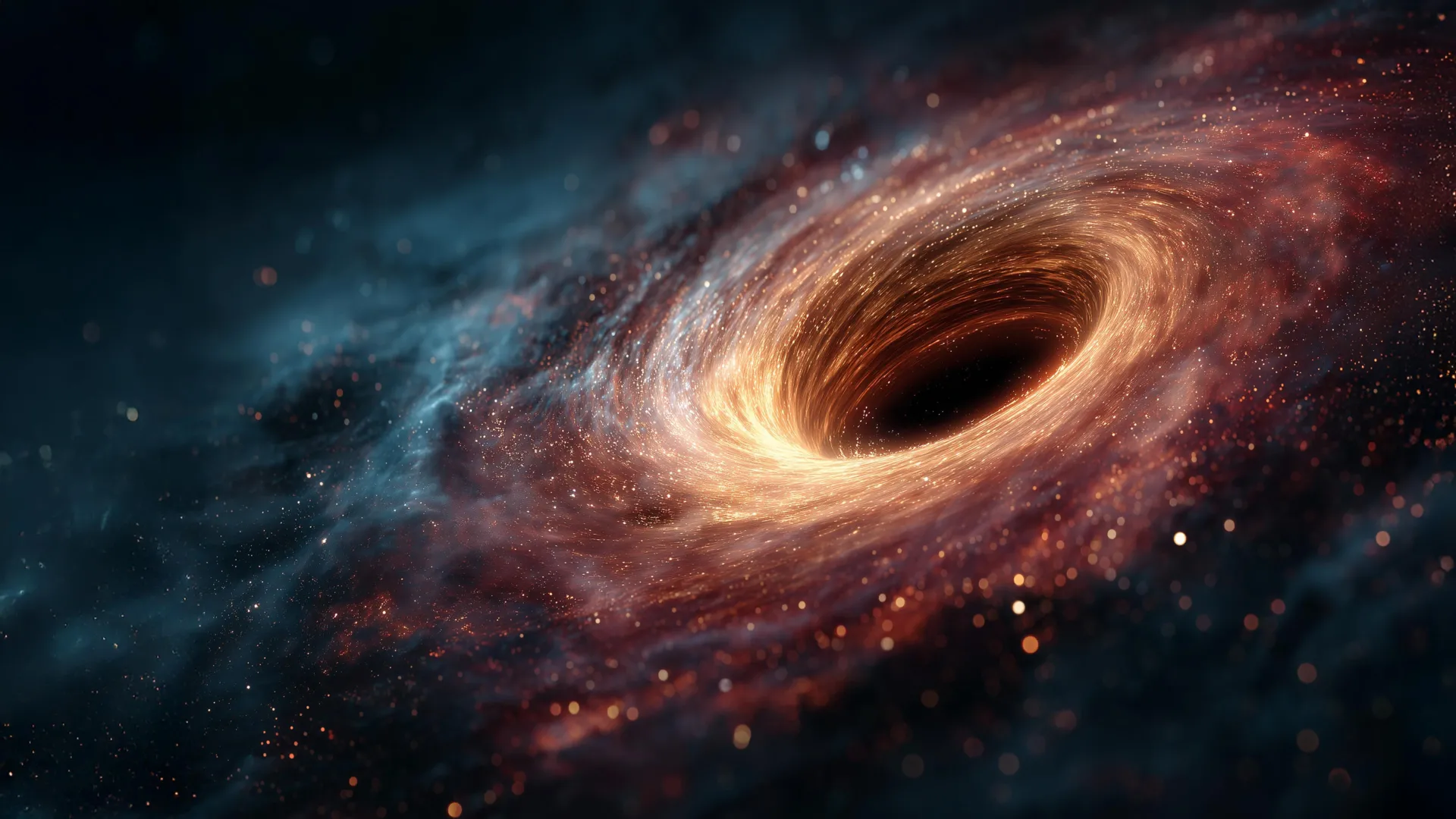
Quasars aren’t simply radiant objects; they represent a period of intense activity in the lifecycle of a galaxy. At the heart of every quasar lies a supermassive black hole, millions or even billions of times the mass of our Sun. As matter – gas, dust, and even entire stars - spirals inward towards this gravitational abyss, it doesn’t fall directly in. Rather, it forms a swirling, flattened structure known as an accretion disk.
This disk is a chaotic surroundings. Friction between the rapidly orbiting particles generates immense heat, raising temperatures to millions of degrees.This extreme heat causes the matter to radiate energy across the electromagnetic spectrum, most notably in the form of ultraviolet and X-ray light. In fact, a single quasar can emit 100 to 1,000 times the light of an entire galaxy containing hundreds of billions of stars. this phenomenal brightness is what allows us to detect these objects across vast cosmic distances, effectively looking back in time.
The Ultraviolet-X-Ray Connection: A Cornerstone of Quasar Research
For nearly half a century, astronomers have observed a strong correlation between the ultraviolet and X-ray emissions from quasars. Brighter ultraviolet light consistently corresponded with stronger X-ray output. This relationship wasn’t merely a coincidence; it provided crucial insights into the physical conditions surrounding supermassive black holes.
The prevailing theory explained this connection thru the “corona” – a region of highly energized particles located very close to the black hole. Ultraviolet light emitted from the accretion disk interacts with these particles, boosting their energy and transforming them into intense X-ray radiation. This model suggested a relatively consistent structure around black holes throughout the universe and across time.
A Paradigm shift: Evidence of Evolving Black Hole Environments
However, a recent study, leveraging data from the eROSITA X-ray telescope and the European Space Agency’s XMM-Newton observatory, is challenging this long-held assumption. Researchers analyzed an unprecedentedly large sample of quasars, and the results are striking.
The team discovered that when the universe was younger – approximately half its current age, around 6.5 billion years ago – the relationship between ultraviolet and X-ray light was different than what is observed in nearby quasars today. Specifically,the correlation was weaker,suggesting a change in the interaction between the accretion disk and the corona.
“Confirming a non-universal X-ray-to-ultraviolet relation with cosmic time is quite surprising and challenges our understanding of how supermassive black holes grow and radiate,” explains Dr. Antonis Georgakakis, a co-author of the study. The robustness of the findings, confirmed through multiple analytical approaches, underscores the meaning of this discovery.
Methodological Breakthroughs Enable New Insights
This breakthrough wasn’t solely due to new data; it was also driven by innovative analytical techniques. The eROSITA survey, while broad in coverage, provides relatively faint X-ray detections for many quasars.The research team employed a elegant Bayesian statistical framework to analyze these data, revealing subtle trends that would have otherwise remained hidden.
“The key advance here is methodological,” states Maria Chira, the study’s lead author. “By combining these data in a robust statistical framework, we could uncover subtle trends that would otherwise remain hidden.”
Implications for Cosmology and the future of Black Hole Research
This discovery has far-reaching implications. The assumption of a universal ultraviolet-X-ray relationship has been used in methods employing quasars as “standard candles” – objects of known luminosity used to measure distances and map the universe’s expansion. If the environment around black holes evolves over time, these measurements could be inaccurate, impacting our understanding of dark matter and dark energy.
Looking ahead, future observations from eROSITA, combined with data from next-generation X-ray and multiwavelength surveys, will be crucial.Researchers aim to determine weather the observed changes represent genuine physical evolution of black hole systems or are influenced by observational biases.
These ongoing efforts promise to unlock deeper insights into the fundamental processes powering the brightest objects in the
Related reading