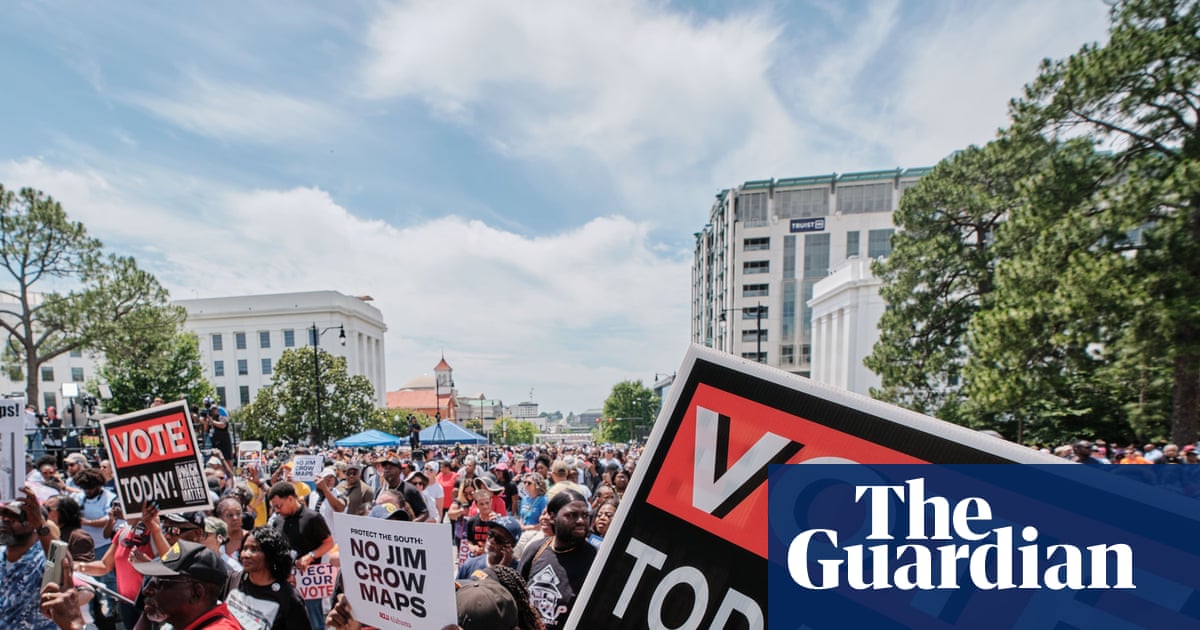
Thousands of activists, faith leaders, and citizens converged on downtown Montgomery, Alabama, for the “All Roads Lead to the South” rally, a mass mobilization aimed at defending Black political representation and protesting the continued use of racial gerrymandering. The gathering, which saw significant road closures across the city’s core, served as both a protest and a reclamation of the space where the American Civil Rights Movement once forged its most pivotal victories.
The rally centered on a singular, urgent grievance: the systemic dilution of Black voting power through the drawing of congressional and legislative maps. Protesters argued that despite landmark legal victories, the effort to marginalize Black voters in Alabama remains a persistent hurdle to genuine democratic representation. The event underscored a growing movement to ensure that the spirit of the Voting Rights Act is not merely a legal formality but a lived reality for millions of voters across the Deep South.
The atmosphere in Montgomery was one of defiant hope, bridging the gap between the historic marches of the 1960s and the modern fight for electoral equity. For many participants, the rally was a response to the ongoing struggle to implement fair district maps that accurately reflect the state’s demographic reality, ensuring that Black communities can elect candidates of their choice without their voting strength being fragmented across multiple districts.
The Battle Against Racial Gerrymandering
At the heart of the mobilization is the fight against racial gerrymandering—the practice of manipulating the boundaries of an electoral constituency to favor one party or class, often by splitting minority communities to diminish their collective influence. In Alabama, this battle has reached the highest levels of the American judiciary.
The legal catalyst for much of the current unrest is the case of Allen v. Milligan. The U.S. Supreme Court previously upheld a lower court’s ruling that Alabama had violated Section 2 of the Voting Rights Act of 1965 by failing to create a second congressional district in which Black voters had a reasonable opportunity to elect a representative. The court found that the state’s majority-Black population was concentrated into a single district, effectively neutralizing their political power in the rest of the state.

Despite the legal mandate to redraw the maps, activists at the Montgomery rally expressed frustration over the pace and nature of the state’s compliance. The phrase “They may draw racist maps, but we are the south” became a rallying cry, signaling a refusal to be erased from the political landscape. The protesters emphasized that the fight is not just about lines on a map, but about the fundamental right to have a voice in the laws that govern their daily lives, from healthcare and education to criminal justice reform.
‘Democracy is Not a Spectator Sport’
Among the high-profile speakers at the rally was U.S. Senator Cory Booker, who urged the crowd to move beyond passive observation of the political process. Addressing the thousands gathered, Booker declared that “democracy is not a spectator sport,” emphasizing that the protection of voting rights requires active, persistent, and organized participation.
Booker’s presence highlighted the national significance of the struggle in Alabama, framing the local fight against gerrymandering as a bellwether for the health of American democracy. He argued that when the voting power of a specific racial group is systematically diluted, the entire democratic system is compromised, as the resulting government no longer reflects the will of the people it serves.
The rally also featured a diverse array of voices, including local community organizers and figures from the arts, all echoing the sentiment that political representation is the primary tool for achieving social and economic equity. Speakers pointed out that without fair maps, Black communities are often excluded from the decision-making processes that allocate resources and infrastructure, further entrenching systemic inequality.
From Selma to Montgomery: A Legacy of Resistance
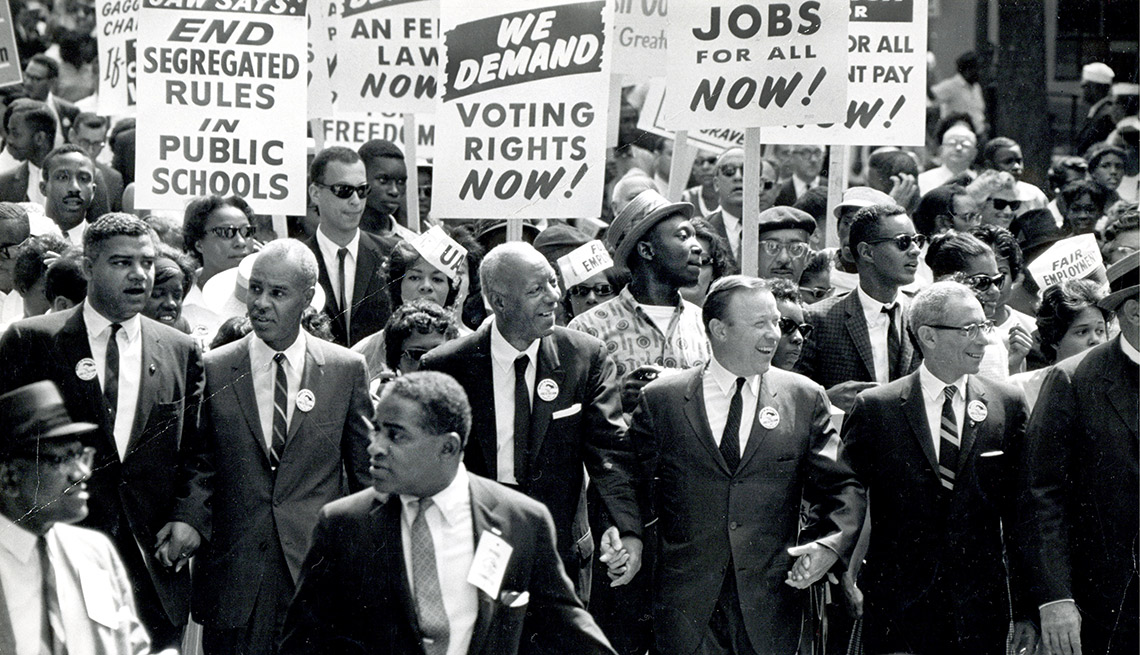
The choice of Montgomery as the site for the “All Roads Lead to the South” rally was deeply symbolic. The city, alongside nearby Selma, served as the epicenter of the 1965 Voting Rights March, where Dr. Martin Luther King Jr. And thousands of others marched to demand the end of literacy tests and other discriminatory barriers to the ballot box.
Participants in the 2024 rally explicitly linked their current struggle to the legacy of the 1965 marchers. By gathering in front of the State Capitol, the protesters mirrored the imagery of the past, suggesting that while the methods of disenfranchisement have evolved—shifting from overt violence and literacy tests to the technical manipulation of district lines—the underlying goal of suppressing Black political power remains the same.
This historical continuity serves as a powerful motivator for the movement. For many of the younger activists in attendance, the rally was an education in the long arc of the struggle for suffrage. They argued that the “fight for voting rights” is not a closed chapter of a history book, but an ongoing conflict that requires the same courage and persistence as the marches of the 1960s.
The Stakes of Political Representation
To understand why the “All Roads Lead to the South” rally was necessary, one must understand the tangible impact of redistricting. In a “winner-take-all” electoral system, the way a district is drawn can determine whether a community’s concerns are heard or ignored. When a community is “cracked”—split into several different districts—their voting power is diluted, making it nearly impossible for them to elect a representative who shares their interests.
Conversely, “packing” involves concentrating as many voters of one type into a single district to reduce their influence in other districts. Alabama has been accused of both tactics to maintain a political status quo that minimizes Black representation in the U.S. House of Representatives and the state legislature.
The impact of this dilution is felt in the lack of legislative priority for issues that disproportionately affect Black Alabamians. From the struggle for expanded Medicaid to the fight against environmental racism in industrial corridors, the lack of representative leadership often results in policy gaps that leave marginalized communities underserved.
Key Objectives of the Voting Rights Movement in Alabama
- Fair Redistricting: Ensuring the creation of a second majority-Black congressional district as mandated by the courts.
- Protection of the Voting Rights Act: Opposing efforts to weaken the federal protections that prevent discriminatory voting laws.
- Increased Voter Engagement: Mobilizing marginalized communities to register and vote in every election, regardless of the map.
- Legislative Accountability: Pressuring state officials to adopt maps that reflect the actual demographic makeup of the state.
What Happens Next?
The “All Roads Lead to the South” rally is part of a broader strategy to maintain public and legal pressure on the Alabama legislature. The focus now shifts to the implementation and monitoring of the revised district maps. Legal teams and civil rights organizations continue to scrutinize every line drawn by the state to ensure that the new maps do not simply replace one form of gerrymandering with another.
The next critical checkpoints will be the upcoming election cycles, where the efficacy of the new maps will be tested in real-time. Observers will be looking to see if the new boundaries actually result in increased Black representation in Congress, or if the state finds new ways to hinder the electoral process.
the movement is looking toward federal action. With the Voting Rights Act under constant legal challenge, activists are calling for the passage of new federal legislation that would codify the protections of the VRA and prohibit racial gerrymandering nationwide, removing the need for costly and protracted court battles in every single state.
As the rally concluded, the message from Montgomery was clear: the fight for the ballot is not over. The streets of Alabama, which once saw the birth of the modern Civil Rights Movement, continue to be the staging ground for the ongoing quest for a truly representative democracy.
The next confirmed legal milestone involves the continued oversight of Alabama’s redistricting process by the federal courts to ensure full compliance with the Allen v. Milligan ruling.
We invite our readers to share their thoughts on the intersection of redistricting and democratic representation in the comments below. Please share this report to help spread awareness of the ongoing struggle for voting equity.
Worth a look