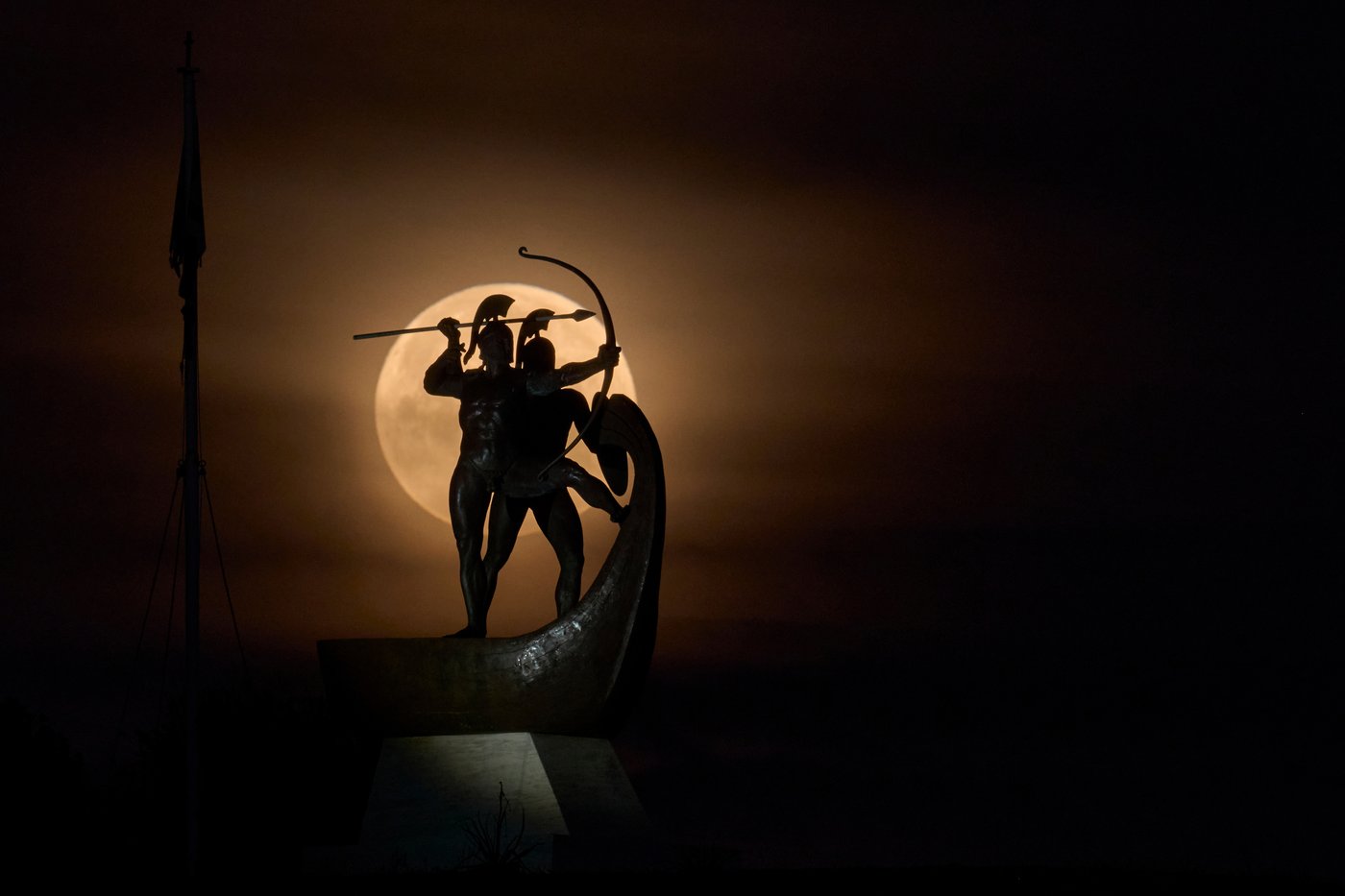
A Crimson Spectacle: Total Lunar Eclipse Captivates Skywatchers
A striking total lunar eclipse, often called a “blood moon” due to the reddish hue it casts, illuminated the skies early Tuesday morning, March 3rd. The event offered a breathtaking celestial display for observers across North and Central America, as well as parts of South America, Asia, and Australia. This eclipse marks the last total lunar eclipse visible until December 31, 2028, making it a particularly noteworthy event for astronomy enthusiasts. The phenomenon occurs when the Earth passes directly between the Sun and the Moon, casting a shadow that dramatically darkens and colors the lunar surface.
The eclipse wasn’t visible everywhere, however. According to NASA, Africa and Europe missed out on this particular spectacle. But for those fortunate enough to be in the path of totality, the event provided a stunning visual experience, requiring no special equipment for viewing – just a clear sky and a dark location away from city lights. The show began with the moon entering Earth’s faint outer shadow, but the most dramatic phase commenced when the entire moon was fully engulfed in the darker part of Earth’s shadow, a moment known as totality.
Understanding the “Blood Moon” Effect
The characteristic reddish color of a total lunar eclipse isn’t due to the Moon itself changing, but rather a result of how Earth’s atmosphere interacts with sunlight. As sunlight passes through the Earth’s atmosphere, shorter wavelengths of light – blues and greens – are scattered away. Longer wavelengths, like reds and oranges, are refracted, or bent, around the Earth and onto the Moon’s surface. This process, similar to why sunsets appear red, gives the eclipsed Moon its distinctive crimson glow. The intensity of the red color can vary depending on the amount of dust and clouds present in Earth’s atmosphere at the time of the eclipse.
Eclipse Phases and Timing
A total lunar eclipse unfolds through several distinct phases. First, the penumbral phase begins, where the Moon passes into the Earth’s outer, fainter shadow. This phase is often subtle and tough to notice. Next comes the partial phase, as a portion of the Moon enters the Earth’s umbra, or inner shadow. Finally, the total phase occurs when the entire Moon is within the umbra, resulting in the dramatic “blood moon” appearance. According to Patrick Wiggins, a NASA/JPL Solar System Ambassador to Utah, the main event began around 4:04 a.m. MST on March 3rd, when the Moon was fully engulfed in Earth’s shadow. Yahoo News reported on the timing and visibility of the eclipse.
Future Lunar and Solar Eclipses in 2028
While this total lunar eclipse was a highlight, it’s just one of several eclipses scheduled for 2028. According to EclipseWise, 2028 will feature two solar eclipses and three lunar eclipses. Specifically, the upcoming eclipses include a partial lunar eclipse on January 12th, an annular solar eclipse on January 26th, a partial lunar eclipse on July 6th, a total solar eclipse on July 22nd, and another total lunar eclipse on December 31st. The December 31st eclipse will be visible from regions including Europe, Asia, Australia, Africa, and North/West North America, as detailed by Time and Date.
The Science Behind Lunar Eclipses
Lunar eclipses are a fascinating demonstration of celestial mechanics. They occur only during a full moon, when the Moon is on the opposite side of the Earth from the Sun. For an eclipse to happen, the Sun, Earth, and Moon must be almost perfectly aligned. However, because the Moon’s orbit is slightly tilted relative to the Earth’s orbit around the Sun, eclipses don’t occur every month. The alignment needs to be precise for the Moon to pass through Earth’s shadow. The Earth’s shadow is actually composed of two parts: the umbra, which is the dark central part, and the penumbra, which is the lighter, outer part. The type of eclipse – total, partial, or penumbral – depends on which part of the shadow the Moon passes through.
Upcoming Partial Lunar Eclipse in August
Skywatchers won’t have to wait long for another opportunity to witness an eclipse. A partial lunar eclipse is scheduled for August, and will be visible across the Americas, Europe, Africa, and Asia. While not as dramatic as a total eclipse, a partial eclipse still offers a captivating view as a portion of the Moon is obscured by Earth’s shadow. This event provides another chance to observe the interplay of light and shadow in our solar system.
Key Takeaways
- A total lunar eclipse, or “blood moon,” occurred on March 3rd, 2026, visible across parts of the Americas, Asia, and Australia.
- The reddish hue of the Moon during a total lunar eclipse is caused by sunlight being refracted through Earth’s atmosphere.
- 2028 will be an active year for eclipses, with two solar eclipses and three lunar eclipses scheduled.
- The next total lunar eclipse will occur on December 31, 2028, and will be visible from a wide range of locations.
The study of eclipses has been crucial to our understanding of the solar system and the movements of celestial bodies. From ancient observations to modern scientific analysis, eclipses continue to inspire awe and provide valuable data for astronomers. As we look forward to future eclipses, it’s a reminder of the dynamic and beautiful universe we inhabit.
The next major celestial event to watch for will be the total solar eclipse on July 22, 2028. Maintain an eye on space and astronomy news sources for updates on visibility and viewing information.
What did you think of the eclipse? Share your photos and experiences in the comments below!