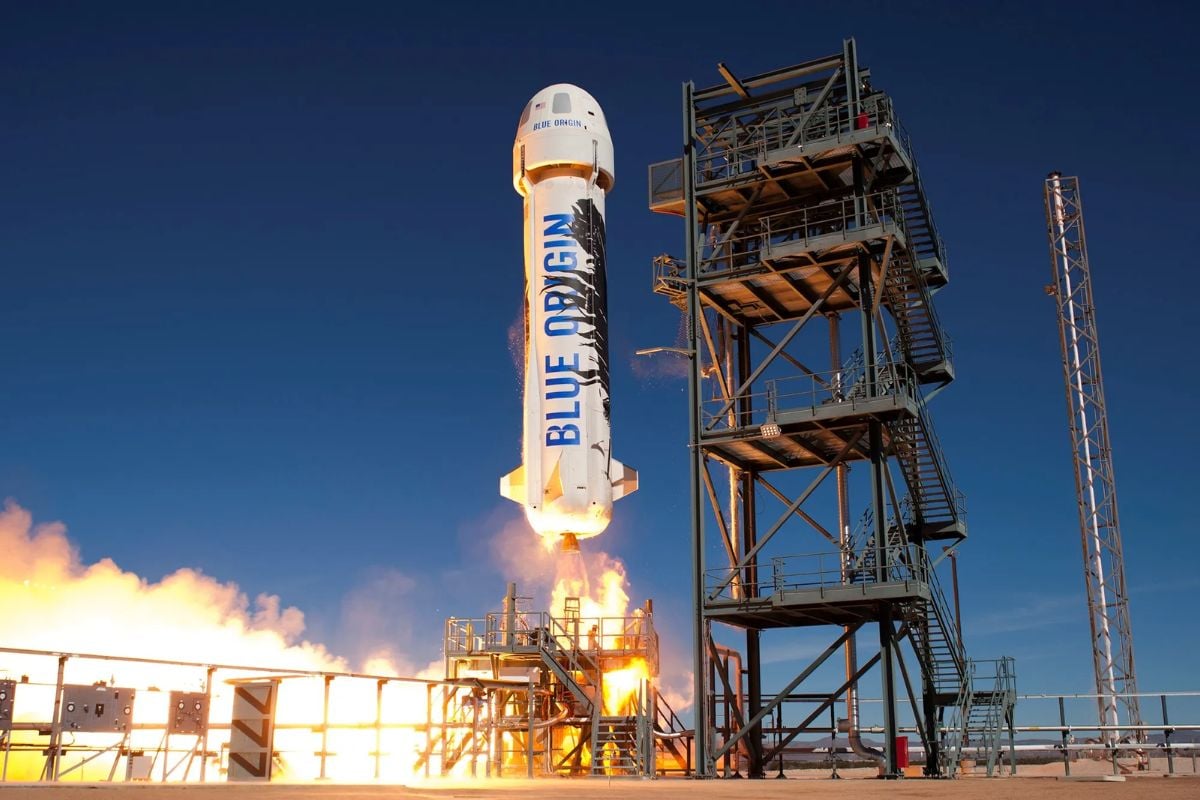
Blue Origin is working toward a 2026 debut for its heavy-lift New Glenn rocket to compete with SpaceX and fulfill Amazon’s Project Kuiper satellite contracts. The company is currently developing launch infrastructure at Cape Canaveral to support the orbital vehicle, aiming to provide a reusable launch solution for commercial and national security customers.
Blue Origin, the aerospace company founded by Jeff Bezos, has set a target to fly its New Glenn orbital rocket by 2026. This timeline comes as the company accelerates development of its heavy-lift capabilities at the Cape Canaveral Space Force Station in Florida. The shift toward orbital flight marks a significant transition for the company, which has previously focused on the suborbital New Shepard vehicle.
The development of New Glenn is central to Blue Origin’s strategy to capture a larger share of the global launch market. The heavy-lift rocket is designed to carry massive payloads into orbit, including large satellite constellations and deep-space exploration hardware. Meeting the 2026 window is critical for the company to secure its position alongside established players in the aerospace sector.
Why is Blue Origin targeting 2026 for the New Glenn debut?
The 2026 target reflects the complex engineering required to move from suborbital testing to heavy-lift orbital operations. Blue Origin is currently refining the BE-4 engines, which power both the New Glenn first stage and United Launch Alliance’s (ULA) Vulcan Centaur rocket. According to industry analysts, the successful maturation of the BE-4 engine is a prerequisite for the New Glenn flight schedule.

Developmental timelines in the aerospace industry are frequently adjusted due to the technical challenges of testing large-scale propulsion systems and reusable hardware. While the company has faced various developmental hurdles, the 2026 goal remains the primary benchmark for its orbital program. The company is focusing heavily on the readiness of its launchpad infrastructure at Cape Canaveral to ensure that once the hardware is flight-ready, the ground systems can support immediate operations.
The pressure to meet this deadline is driven by both commercial obligations and the rapidly expanding demand for orbital access. As more companies move toward large-scale satellite deployments, the availability of heavy-lift vehicles becomes a significant bottleneck in the space economy. Blue Origin’s ability to deliver a reliable, reusable heavy-lift rocket could alter the current supply-and-demand dynamics of the launch industry.
How does New Glenn compare to current heavy-lift rockets?
New Glenn is designed to compete directly with SpaceX’s Falcon Heavy and the upcoming Starship system. Unlike the Falcon 9, which is a medium-to-heavy lift vehicle, New Glenn is built for much larger payloads, featuring a 7-meter diameter fairing. This allows the rocket to carry massive, specialized satellites that smaller rockets cannot accommodate.

A core component of the New Glenn architecture is its reusable first stage. Blue Origin’s design intends for the booster to land on a moving ship at sea, similar to the landing methodology used by SpaceX. This reusability is intended to lower the cost per kilogram of payload delivered to orbit, a factor that remains the primary driver of competition in the modern space race.
The following table compares the projected capabilities of New Glenn against its primary commercial competitor:
| Feature | Blue Origin New Glenn | SpaceX Falcon Heavy |
|---|---|---|
| Payload Class | Heavy-Lift / Super-Heavy | Heavy-Lift |
| Fairing Diameter | 7 meters | 5.2 meters |
| First Stage Reusability | Planned (Sea Landing) | Confirmed (Sea/Land Landing) |
| Primary Engine | BE-4 (Liquid Oxygen/Methane) | Merlin 1D (RP-1/LOX) |
What role does Amazon’s Project Kuiper play in this timeline?
The commercial viability of New Glenn is closely tied to Amazon’s Project Kuiper. Amazon has contracted Blue Origin to launch a significant portion of its upcoming low-Earth orbit (LEO) satellite constellation. Project Kuiper aims to provide high-speed, low-latency broadband internet globally, which requires the deployment of thousands of satellites.

Because Project Kuiper requires a massive number of launches in a relatively short timeframe, the New Glenn rocket is not just a prestige project for Blue Origin; it is a critical piece of Amazon’s infrastructure. The success of the 2026 launch window is therefore tied to the broader commercial goals of one of the world’s largest technology companies. If Blue Origin can provide the necessary launch cadence, it secures a stable, high-volume revenue stream that offsets the high costs of rocket development.
This relationship illustrates a growing trend in the space industry: the integration of end-user demand with launch vehicle development. Rather than building rockets and searching for customers, companies like Blue Origin are building vehicles specifically to satisfy the massive requirements of their own or their partners’ satellite networks.
What infrastructure is being built at Cape Canaveral?
To support New Glenn, Blue Origin is constructing sophisticated launch facilities at the Cape Canaveral Space Force Station. This includes the development of Launch Complex 36 (LC-36), which will serve as the primary site for New Glenn operations. Building these facilities involves more than just a concrete pad; it requires complex propellant storage, specialized telemetry systems, and massive mobile launch platforms.
The construction of these facilities is a massive undertaking that must meet strict safety and performance standards set by both the company and federal regulators. Any delays in the construction of ground support equipment or the integration of launchpad systems can directly impact the flight schedule. The company has invested heavily in making these pads compatible with the heavy-lift requirements of the New Glenn booster, which is significantly larger than the New Shepard vehicle.
The presence of Blue Origin at Cape Canaveral also increases the density of commercial space activity in the region. As more heavy-lift vehicles share the airspace and launch corridors, coordination between the Space Force, the FAA, and private operators becomes increasingly vital to ensure mission safety and minimize delays for all stakeholders.
The next major milestone for Blue Origin will be the continued testing of the BE-4 engine production and the progress reports on the LC-36 launchpad construction at Cape Canaveral. Official updates regarding the New Glenn flight readiness review are expected as the 2026 target approaches.
What are your thoughts on the increasing competition in the heavy-lift rocket market? Share your comments below and follow World Today Journal for more technology and aerospace analysis.