
For years, “range anxiety” has been the primary psychological barrier preventing a wholesale shift toward electric mobility. While manufacturers provide official figures based on standardized tests, the gap between those laboratory numbers and the reality of a winter highway in Northern Europe has often been wide. Though, a recent real-world endurance test in Norway has challenged this narrative, suggesting that the next generation of electric SUVs may finally outpace their own official promises.
The focal point of this shift is the BMW iX3, a vehicle that has recently become a case study in efficiency. In a series of high-profile tests conducted by a Norwegian content creator, the SUV didn’t just meet its benchmarks—it shattered them. While the official range for the vehicle was cited at 805 km, the real-world application saw the car exceed the 1,000 km mark, even under the challenging conditions of a Nordic winter.
This result is particularly striking given that electric vehicle (EV) batteries typically suffer significant efficiency losses in cold weather. The ability to maintain, and even exceed, a high-mileage threshold in winter suggests a fundamental leap in thermal management and battery chemistry. For the global business community and the automotive industry, this represents more than just a successful YouTube experiment; This proves a signal that the efficiency ceiling for consumer EVs is higher than previously estimated.
Breaking the 1,000 km Barrier: The Norwegian Test
Norway has long served as the global laboratory for electric vehicles due to its aggressive adoption rates and extreme climate. The recent test involving the BMW iX3 provides critical data on how modern battery management systems (BMS) handle sustained loads over long distances. The vehicle reportedly surpassed its official 805 km autonomy, reaching a total distance of 1,000 km on a single charge cycle.
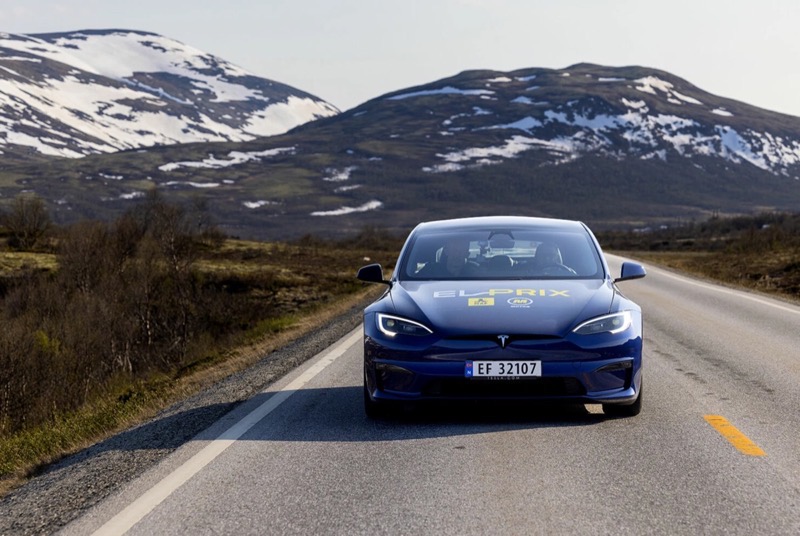
Achieving such a distance in a SUV—a vehicle class known for higher aerodynamic drag compared to sedans—indicates an exceptional level of energy optimization. To put this in perspective, most mid-to-large electric SUVs struggle to maintain 70% of their rated range when temperatures drop below freezing. The iX3’s performance suggests that BMW’s latest engineering iterations are mitigating the energy drain typically required to heat the cabin and maintain battery temperature.
This discrepancy between the Worldwide Harmonised Light Vehicle Test Procedure (WLTP) and real-world results is usually skewed in the opposite direction. Most drivers find that WLTP figures are optimistic. When a vehicle consistently outperforms its official rating in a real-world setting, it suggests that the manufacturer may be adopting a more conservative estimation strategy or that the vehicle’s efficiency curves are more stable across different speeds and temperatures than previously thought.
The Competitive Landscape: BMW vs. Tesla and Audi
The BMW iX3 does not exist in a vacuum. It competes in one of the most crowded segments of the luxury EV market, facing off against established leaders like the Tesla Model Y and latest challengers like the Audi Q6 e-tron. Recent comparisons, including analysis by noted automotive expert Mat Watson, highlight the tension between raw performance and refined efficiency.
While Tesla has historically dominated the conversation around software integration and charging infrastructure, BMW is pivoting toward “holistic efficiency.” The comparison between the iX3 and the Model Y often centers on build quality and ride comfort, but the range data from the Norwegian tests shifts the conversation toward endurance. Similarly, the Audi Q6 e-tron utilizes a high-voltage architecture designed for rapid charging, but the iX3’s ability to extract more kilometers per kilowatt-hour (kWh) gives it a distinct advantage for long-haul travel.
From an economic perspective, the “cost per kilometer” is the metric that ultimately drives consumer adoption. If a luxury SUV can reliably exceed 1,000 km, the necessity for a dense, high-speed charging network decreases, potentially lowering the barrier to entry for buyers in regions with less developed infrastructure.
The Technology Behind the Efficiency: Neue Klasse
The extraordinary range observed in recent tests is largely attributed to the evolution of BMW’s electric architecture. The company has been transitioning toward its “Neue Klasse” (New Class) philosophy, which reimagines the vehicle from the ground up rather than adapting internal combustion engine (ICE) platforms for electric drivetrains.
Key technological drivers contributing to this efficiency include:
- Gen6 Battery Cells: The shift toward cylindrical cells, which offer higher energy density and better thermal stability than traditional prismatic cells.
- Aerodynamic Optimization: Reduced drag coefficients that allow the SUV to “slice” through the air more effectively at highway speeds.
- Integrated Thermal Management: A more sophisticated heat pump system that recovers waste heat from the drivetrain to warm the interior, reducing the load on the main battery.
These advancements were further showcased at the Beijing 2026 automotive events, where BMW presented new high-performance electric versions, such as the i4 M60, emphasizing a marriage of sporting performance and sustainable endurance. The integration of these systems allows the iX3 to operate with a level of precision that was previously reserved for specialized endurance prototypes.
Market Implications for the Global EV Transition
The success of the iX3 in real-world testing has broader implications for the global automotive market. For years, the industry has focused on increasing battery size to increase range—a strategy that adds weight, increases cost, and raises environmental concerns regarding mineral extraction. The Norwegian results prove that efficiency, not just capacity, is the key to unlocking long-distance EV travel.
For stakeholders in the energy sector, this means that the projected demand for ultra-fast charging stations may require to be recalibrated. If vehicles can travel 1,000 km on a single charge, the “stop-and-charge” frequency drops significantly, changing the business model for charging operators who rely on high-turnover, short-stay charging sessions.
the launch of extended-wheelbase versions, such as the i3L and iX3L, demonstrates BMW’s strategy to capture the Asian market, where rear-seat space is a premium. By maintaining high efficiency even in larger, heavier chassis, BMW is positioning itself to dominate the executive transport segment in China and beyond.
Key Takeaways: BMW iX3 Range Breakthrough
| Metric | Official/Rated | Real-World (Norway Test) | Significance |
|---|---|---|---|
| Autonomy/Range | 805 km | 1,000+ km | Exceeds WLTP benchmarks in winter |
| Climate Condition | Standardized | Nordic Winter | Proves thermal management efficiency |
| Vehicle Class | Luxury SUV | Luxury SUV | Challenges SUV aerodynamic limits |
| Primary Driver | Battery Capacity | System Optimization | Shift from “Bigger Battery” to “Smarter Use” |
What Happens Next?
As BMW continues to roll out its Neue Klasse architecture across its entire fleet, the industry will be watching to see if these 1,000 km results can be replicated across different climates and driving styles. The next critical checkpoint will be the release of the official quarterly efficiency audits and the expanded commercial rollout of the iX3’s latest battery variants in the North American and European markets.

Whether these results become the new standard for the luxury SUV segment or remain an outlier of exceptional driving and conditions, the ceiling for electric vehicle autonomy has officially been raised. The transition to electric is no longer just about replacing the engine; it is about redefining the limits of distance.
Do you believe real-world range tests are more trustworthy than official WLTP figures? Share your thoughts in the comments below or share this analysis with your network.
Worth a look