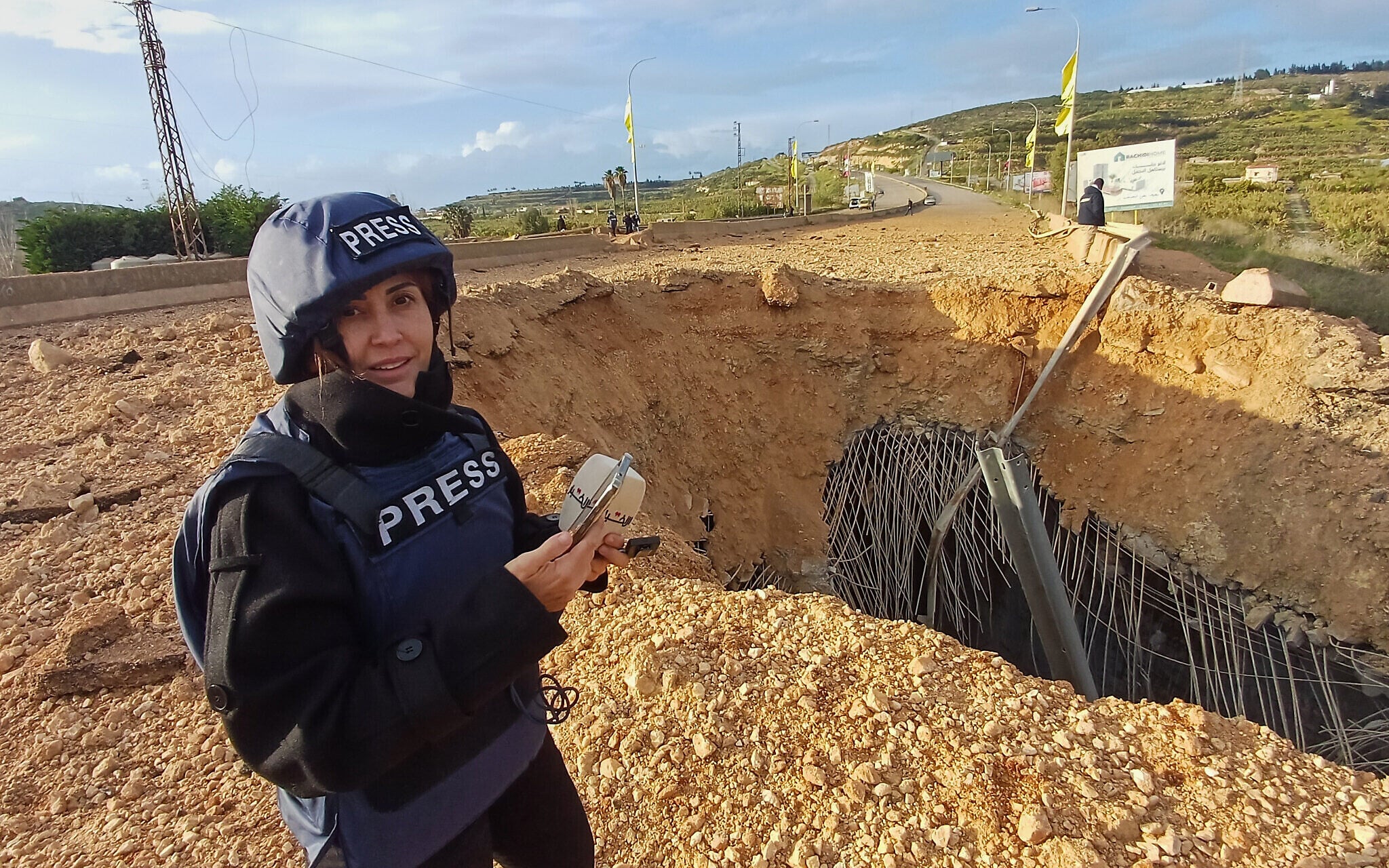
Lebanese journalist Amal Khalil, who worked for the pro-Hezbollah daily Al-Akhbar newspaper, was killed in an Israeli airstrike on a house in southern Lebanon where she had taken cover while reporting on the Israel-Hezbollah conflict. Her body was recovered from the rubble hours later by rescue workers after being trapped under debris, according to multiple reports from Lebanese authorities and international news agencies.
The strike occurred in the village of al-Tiri in southern Lebanon, where Khalil and her colleague Zeinab Faraj had sought shelter following an earlier Israeli airstrike that hit near the vehicle they were traveling in. While Faraj was seriously wounded and initially rescued, Israeli forces opened fire on emergency responders attempting to reach Khalil, forcing them to withdraw. This prevented immediate access to the site where Khalil remained buried under the collapsed structure.
Lebanon’s National News Agency (NNA) reported that rescue teams from the Lebanese army, civil defense, and the Lebanese Red Cross were eventually able to reach the scene hours later after Israeli fire subsided. They recovered Khalil’s body and transported Faraj to a hospital for treatment. The NNA as well stated that the first strike had killed two other individuals, whose bodies were retrieved before the second hit the shelter where the journalists were hiding.
Lebanese Prime Minister Nawaf Salam condemned the attack, stating that targeting journalists and obstructing rescue efforts constituted war crimes under international law. He emphasized that such actions were no longer isolated incidents but part of an established pattern by Israeli forces in southern Lebanon, accusing Israel of systematically targeting media workers to impede reporting on the conflict.
The Israeli military acknowledged that two journalists had been injured in the strikes but maintained that it does not deliberately target journalists and claims to grab measures to minimize harm to civilians and media personnel during operations. However, it did not deny striking the building in al-Tiri where Khalil and Faraj had taken cover, asserting instead that the structure was used by militants following a prior strike on a vehicle in the area.
Al-Akhbar, the newspaper for which Khalil worked, confirmed her death and described her as a dedicated reporter covering the renewed hostilities between Israel and Hezbollah that resumed in early March 2026. The publication noted that she had been documenting the impact of Israeli strikes on civilian infrastructure and displacement in southern Lebanon, often operating under dangerous conditions close to the front lines.
Her death marked the fourth media worker killed by Israeli forces in Lebanon since March 2026, according to Lebanese officials. The Committee to Protect Journalists (CPJ) has previously documented risks faced by reporters in the region, particularly those affiliated with outlets perceived as aligned with Hezbollah, and has called for independent investigations into attacks on press personnel during wartime.
The incident drew international concern over the safety of journalists in conflict zones, with press freedom advocates reiterating that intentional attacks on media personnel violate Protocol I additional to the Geneva Conventions, which prohibits targeting civilians, including journalists engaged in professional missions in armed conflict.
As of Thursday, April 23, 2026, Lebanese authorities have not announced any formal international inquiry into the killing, though calls for accountability continue from media unions and human rights organizations. The Lebanese Journalists’ Union has demanded that the United Nations Interim Force in Lebanon (UNIFIL) increase monitoring of attacks on press personnel in its area of operation.
For ongoing updates on this developing story and press safety in conflict zones, readers are encouraged to follow verified reports from international news agencies and press freedom monitoring groups. Share this article to help raise awareness about the risks journalists face while reporting from war zones.