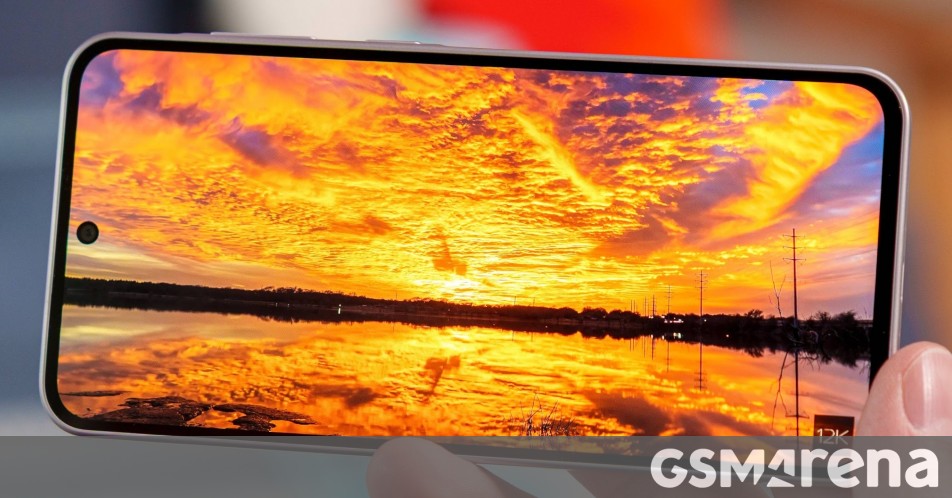
BOE’s new ADS Pro Display: A Deep Dive into the Future of Smartphone Screens
The smartphone display market is constantly evolving,and BOE Technology Group is consistently at the forefront of innovation. As one of the world’s largest manufacturers of LCD, OLED, and flexible displays, BOE’s latest advancement – the ADS Pro (IPS LCD) display – is poised to significantly impact the mid-range and budget smartphone segments. This article provides an in-depth look at the new display, it’s technical specifications, potential applications, and what it means for consumers in 2025. We’ll explore how this technology stacks up against competitors and what the future holds for display technology.
Understanding the ADS Pro Technology
BOE, formerly Beijing Oriental Electronics Group, has built a reputation for pushing the boundaries of display technology. Their new ADS Pro display isn’t just an incremental upgrade; it represents a ample leap forward in IPS LCD performance. ADS (Advanced Display System) is BOE’s proprietary IPS technology, known for its wide viewing angles and accurate color reproduction. The “Pro” designation signifies enhancements in brightness,refresh rate,and power efficiency.
Unlike OLED displays which are self-emissive, IPS LCDs require a backlight. The key to improving IPS LCDs lies in optimizing the liquid crystal alignment, backlight technology, and polarizer efficiency. BOE’s advancements in these areas are what make the ADS Pro stand out.
Key specifications and Performance Metrics
The newly unveiled ADS Pro display boasts remarkable specifications:
* Size: 6.74 inches
* Resolution: 2720 x 1224 pixels
* Pixel Density: Approximately 443 ppi (pixels per inch) – delivering a remarkably sharp image.
* Refresh Rate: Variable, offering options of 120Hz or 144Hz. This isn’t a smooth, adaptive refresh rate like LTPO OLEDs, but rather switches between discrete steps (likely 30Hz, 60Hz, 90Hz, 120Hz/144Hz) to balance visual fluidity and power consumption.
* Peak Brightness: A stunning 1,500 nits. This is crucial for outdoor visibility, especially in direct sunlight.
* Power Efficiency: Reportedly 20% more efficient than comparable panels.
ADS Pro vs. OLED: A Comparative analysis
While OLED displays currently dominate the high-end smartphone market due to their superior contrast ratios and true blacks, IPS LCDs like the ADS Pro offer distinct advantages.OLEDs can be susceptible to burn-in over time, and their production costs are generally higher.
Here’s a quick comparison:
| Feature | ADS Pro (IPS LCD) | OLED |
|---|---|---|
| Contrast Ratio | Typically 1000:1 – 1500:1 | Infinite (theoretically) |
| Brightness | Up to 1,500 nits | Typically 800-1200 nits |
| Color Accuracy | Excellent | Excellent |
| Power Consumption | Generally lower (especially at lower brightness levels) | can be higher, especially with bright colors |
| burn-in Risk | None | Potential for burn-in |
| Cost | Lower | Higher
|