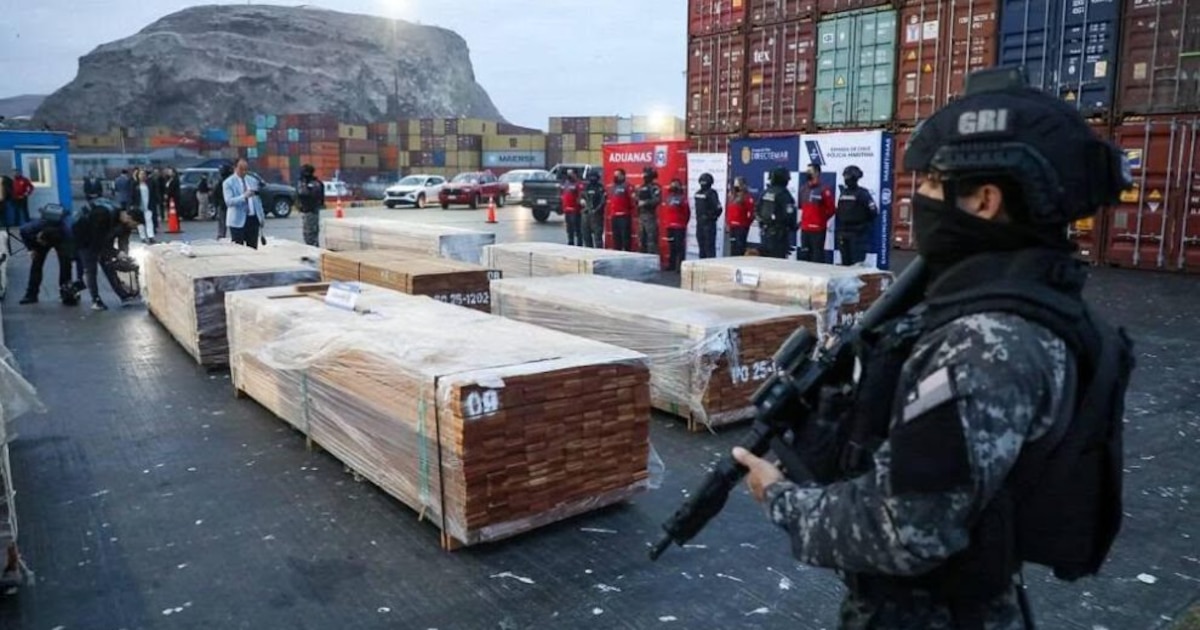
Bolivian Authorities Raid Sawmills Amid Investigation into “Narcomaderas” Drug Smuggling Links to Chile
Bolivian law enforcement agencies, led by the Special Force to Fight Drug Trafficking (FELCN), have launched a series of raids on sawmills across several departments following the discovery of cocaine shipments concealed within timber imports in Chile. The investigation, referred to locally as the “Narcomaderas” case, focuses on how organized crime groups are allegedly exploiting the legal wood trade to transport narcotics across international borders. Authorities are currently examining the supply chains of multiple timber processing facilities to determine the extent of criminal infiltration in the forestry sector.
The crackdown follows recent seizures by Chilean authorities, where high volumes of narcotics were found hidden inside processed wood products destined for international markets. These discoveries have prompted Bolivian officials to intensify inspections at both production sites and transit points to prevent further smuggling operations. The investigation aims to identify the specific nodes in the timber industry where drugs are being integrated into legitimate cargo.
What triggered the raids on Bolivian sawmills?
The current wave of enforcement actions in Bolivia was directly triggered by successful interdiction efforts in Chile. According to reports from Chilean investigative authorities, large quantities of cocaine were identified within shipments of timber that had originated in Bolivia. The method of concealment involved hiding the illicit substances within the structural components of the wood, making them difficult to detect through standard visual inspections at border crossings.
In response to these findings, the Bolivian FELCN coordinated raids on various sawmills to search for evidence of drug preparation or storage. These operations are part of a broader effort to map the “Narcomaderas” phenomenon—a term used by regional investigators to describe the intersection of the timber industry and narcotics trafficking. Investigators are looking for discrepancies in export documentation and physical evidence of tampering within the wood products themselves.
The Aduana Nacional (Bolivia’s National Customs) is also participating in the investigation. The agency is reviewing export permits and cargo manifests to check for irregularities in the volume and weight of timber being shipped to Chilean ports. Authorities are specifically looking for “ghost shipments” or instances where the declared value of the timber does not align with the physical cargo, which can sometimes indicate that the shipment is being used as a cover for illegal activities.
How are drugs being concealed in timber shipments?
The “Narcomaderas” method relies on the physical properties of timber to bypass traditional customs security. Based on preliminary findings from the Chilean seizures, criminal organizations utilize several distinct concealment techniques:
- Hollowed Logs: Large timber pieces are bored out to create internal cavities, which are then filled with compressed cocaine bricks and resealed with wood filler or wax.
- Structural Integration: In processed lumber, narcotics are sometimes placed within the gaps of palletized wood or integrated into the hollowed-out centers of industrial-grade beams.
- Chemical Masking: Some reports suggest that traffickers may use scents or chemical coatings on the wood to attempt to confuse canine units during transit.
This method presents a significant challenge for border agents. Unlike bulk shipments of raw materials, processed timber is often densely packed and standardized, making manual inspections time-consuming and difficult without specialized equipment like high-energy X-ray scanners. The use of the timber industry as a conduit allows traffickers to move large quantities of drugs under the guise of legitimate, high-volume commercial trade.
What are the political implications for Bolivia and Chile?
The investigation has moved beyond law enforcement and into the realm of high-level political debate in Bolivia. The “Narcomaderas” case has become a focal point for discussions regarding transnational crime and the effectiveness of regional border controls. Political figures in Bolivia have called for increased international cooperation to address the sophisticated methods used by cartels.
Some political commentators and opposition figures have challenged the government’s handling of the crisis, calling for a more robust international investigation involving agencies beyond the FELCN. There are growing calls for a coordinated effort between the Bolivian government, the Chilean government, and international bodies to ensure that the timber trade is not being used to facilitate the flow of narcotics from South American production hubs to global markets. The debate has highlighted tensions regarding how much oversight is being applied to the country’s lucrative natural resource exports.
The economic impact of the investigation is also a subject of concern. The timber industry is a significant contributor to the Bolivian economy, and the association of sawmills with drug trafficking threatens the reputation of legitimate exporters. Industry representatives have expressed concerns that broad-scale raids and increased scrutiny could lead to delays in shipments and increased costs for law-abiding businesses. However, officials maintain that the integrity of the export sector is paramount to long-term economic stability.
Comparing the Scale of Seizures and Investigations
While the exact total of narcotics seized in the “Narcomaderas” case is still being tallied by authorities, there is a notable difference in how the investigation is being framed by different institutional actors. The following table summarizes the differing focuses of the primary entities involved:
| Entity | Primary Focus of Action | Objective |
|---|---|---|
| FELCN (Bolivia) | On-the-ground raids of sawmills and processing plants. | Identify physical evidence of drug storage and arrest traffickers. |
| Aduana Nacional (Bolivia) | Audit of export manifests and timber documentation. | Detect fraudulent paperwork and irregular cargo volumes. |
| Chilean Authorities | Interdiction of shipments at ports and borders. | |
| Political Figures | Public debate and calls for international oversight. | Pressure for systemic reforms in border and industry control. |
The discrepancy between the focus of law enforcement (physical seizures) and customs (documentary fraud) highlights the multi-layered nature of the “Narcomaderas” problem. While FELCN works to stop the immediate movement of drugs, the Aduana Nacional must address the systemic exploitation of trade regulations that allows these shipments to be authorized in the first place.
What happens next in the investigation?
The investigation into the “Narcomaderas” case is expected to expand as forensic results from the seized timber become available. Authorities in both Bolivia and Chile are working to trace the specific points of origin for the shipments that were intercepted. This involves a detailed audit of the sawmills involved to determine if the criminal activity is limited to specific rogue employees or if it represents a broader organizational failure within the facilities.
Key upcoming developments to monitor include:
- Forensic Reports: The release of official findings regarding the exact method of concealment used in the most recent Chilean seizures.
- Additional Raids: Potential expansion of FELCN operations into other departments if new links to the timber supply chain are identified.
- Customs Audits: The results of the Aduana Nacional’s review of timber export licenses from the last 12 to 24 months.
- Diplomatic Coordination: Any formal agreements between Bolivia and Chile to establish joint task forces for monitoring timber-related trade routes.
As the investigation continues, the focus remains on whether the “Narcomaderas” method is an isolated phenomenon or a permanent shift in how transnational drug cartels approach South American export corridors. For now, the timber industry remains under intense scrutiny as authorities attempt to decouple legitimate commerce from organized crime.
Please share this report and leave your comments below regarding the impact of transnational crime on regional trade.
Keep reading