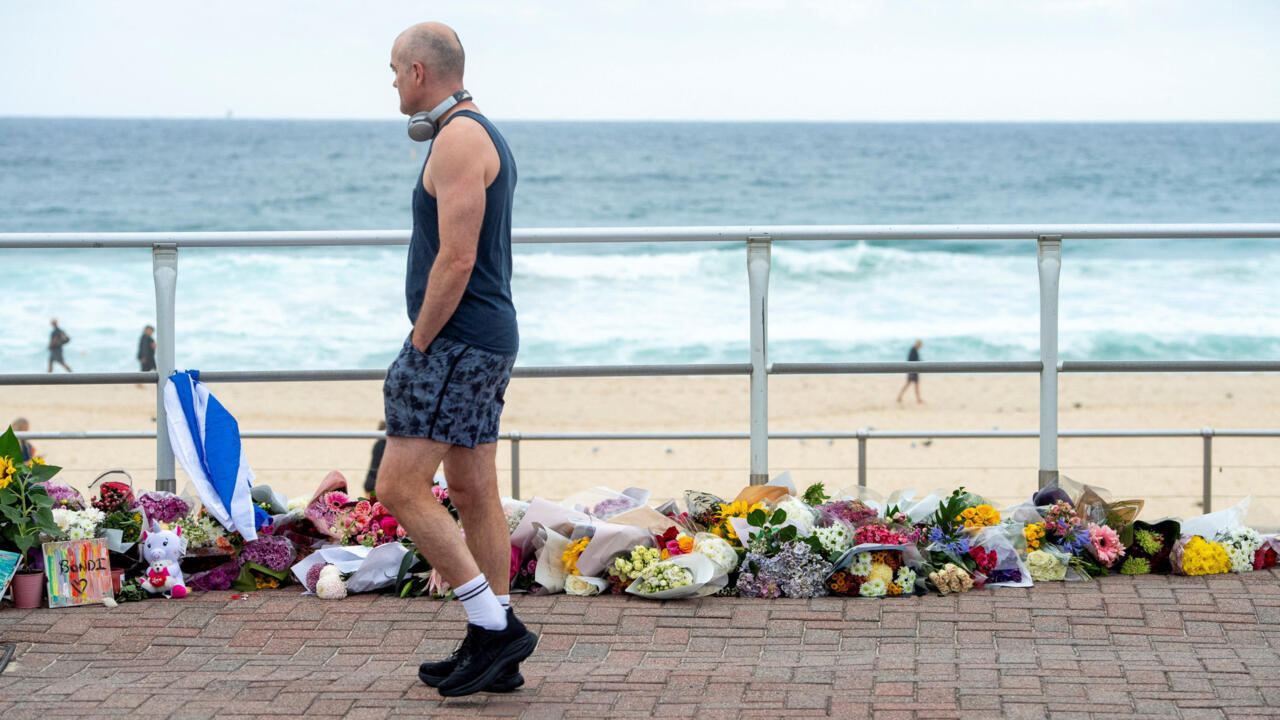
The Evolving Threat of “Low-cost” Terrorism: Analyzing the bondi Beach Shooting
The recent shooting at Bondi Beach in Sydney, targeting a synagogue adn leaving several injured, has sparked a critical conversation about the changing landscape of terrorist threats. While the attack remains unclaimed, experts are increasingly focusing on a shift in strategy by groups like ISIS – a move towards smaller, locally-driven attacks requiring minimal resources. This article will delve into that shift, examining what the Bondi Beach incident suggests about the future of terrorism and how prepared we need to be.
Understanding the Lack of Claim Obligation
It’s not uncommon for terrorist organizations to delay claiming responsibility for attacks, or even forgo a claim altogether. Sometimes,groups strategically wait to assess the impact and public reaction. other times, the attack simply wasn’t directly orchestrated by them.As counterterrorism analyst Dr.Assed Nasr points out, the absence of a claim doesn’t automatically negate a connection, but it does highlight a key trend.
From Spectacular Attacks to Opportunistic Violence
For years, the world witnessed large-scale, centrally planned terrorist operations – think 9/11, the 2015 Paris attacks, and the recent Crocus City hall attack in Moscow. These required significant planning, funding, and coordination. However, ISIS and al-Qaeda are now demonstrably shifting towards what Nasr terms “low-cost” terrorism.
What does this mean for you? It means:
* Decentralization: Attacks are no longer solely dictated by a central command.
* Local Actors: Individuals within countries are responding to ideological calls to action.
* Reduced Funding: Operations are increasingly self-funded, minimizing the financial footprint.
* Increased Opportunity: Attacks are based on readily available targets and opportunities.
This shift is driven by the weakening of ISIS’s central authority and its need to maintain relevance through inspiring attacks, even without direct control. The Bondi Beach shooting, if linked to ISIS, exemplifies this new approach.
Why Jewish Communities are Targeted
The Bondi Beach attack specifically targeted a Jewish community, aligning with repeated calls from ISIS and al-Qaeda for attacks on Jewish targets globally. This wasn’t necessarily an attack on Australia, but rather a demonstration of targeting a specific community. This highlights the importance of heightened security measures for vulnerable groups.
The Logistics of “Low-Cost” Terrorism
One of the most concerning aspects of this evolving threat is its simplicity. these attacks require:
* Minimal Coordination: A small number of individuals can inflict significant damage.
* Local Weapon Sourcing: Weapons are likely obtained within the country, bypassing complex smuggling operations.
* Limited Training: While the younger gunman in the Bondi Beach shooting displayed some weapon handling skills, this training could have been acquired through readily available resources like YouTube videos or even in remote areas.
Reports suggest the potential for brief, informal training in locations like the Philippines. However, even that isn’t necessarily a prerequisite. As Clarke Jones,an academic at the Australian National University,notes,accessing legitimate (though not extremist-linked) military training is also possible in the region.
The Efficiency and Difficulty of Prevention
“Low-cost” attacks are especially hazardous because of their efficiency and the challenges they pose to security agencies. A foreign fighter attempting to infiltrate Australia and carry out an attack would likely be detected. Though, a radicalized local, acting on ideological inspiration, presents a far more difficult challenge.
As Nasr succinctly puts it, “If (jihadist) fighters from the Philippines had tried to carry out an attack in Australia themselves, they likely would not have succeeded.”
What This Means for the Future
The Bondi Beach shooting serves as a stark reminder that the threat of terrorism is constantly evolving.We must adapt our security strategies to address this new reality. This includes:
* Enhanced Community Engagement: Building trust and fostering communication within communities to identify and address radicalization.
* Online Monitoring: Vigilantly monitoring online spaces for extremist propaganda and incitement.
* Strengthened Mental Health Support: Addressing the underlying factors that can contribute to radicalization.
* Increased Vigilance: Remaining aware of your surroundings and reporting any suspicious activity.
The shift towards ”low-cost” terrorism demands a proactive, multi-faceted approach. By understanding the changing tactics of terrorist
Keep reading