Boots Riley’s Radical Vision: How ‘I Love Boosters’ Reimagines Power, Fashion, and Labor
By Sophia Martinez | Editor, Entertainment
Los Angeles, May 19, 2026
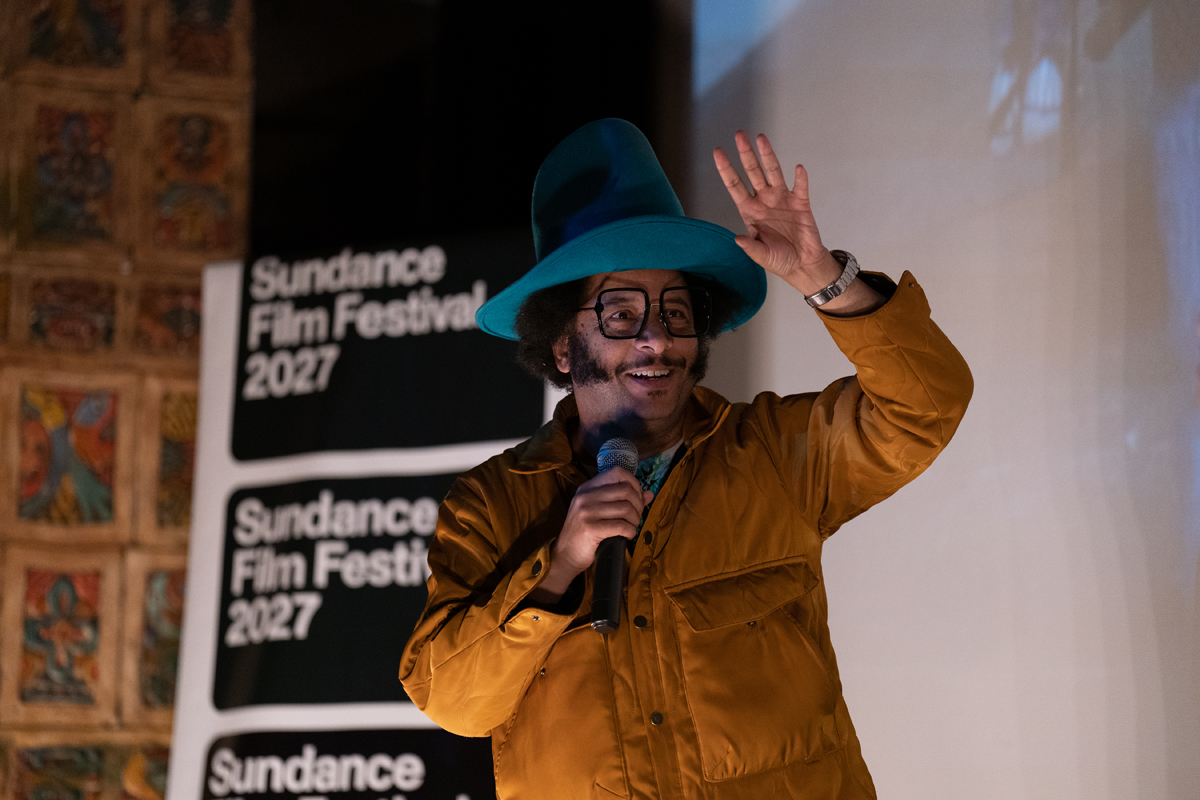
In a sold-out screening at Denver’s Landmark Mayan Theater on April 14, 2026, filmmaker Boots Riley delivered more than just a movie—he staged a manifesto. His latest work, I Love Boosters, a stylish, satirical sci-fi thriller about a crew of shoplifters navigating a world of global capitalism, left audiences buzzing with equal parts laughter and revolutionary fervor. The film, which debuts in theaters on May 22, 2026, stars Keke Palmer, Taylour Paige, Naomi Ackie, Poppy Liu, LaKeith Stanfield, and Demi Moore, and continues Riley’s tradition of blending sharp social critique with genre-bending storytelling.
The screening, hosted by the Sundance Institute, marked a full-circle moment for Riley, who first honed his craft in the organization’s labs in 2015, and 2016. His breakout film, Sorry to Bother You (2018), premiered at Sundance after years of development in the Institute’s Creative Producing Summit, Screenwriters Lab, and Directors Lab. Now, with I Love Boosters, Riley returns to the same creative crucible, this time with a film that interrogates time, labor, and the illusion of progress.
What makes I Love Boosters stand out isn’t just its premise—stylish shoplifters using a teleportation device to steal from the rich—but Riley’s refusal to let the film’s ideas sit passively on screen. After the screening, he joined Sundance Institute Senior Programmer John Nein for a conversation that veered from artistic process to political urgency. The evening even included an impromptu photo shoot, with Riley orchestrating a handstand assisted by Nein—a moment that captured the film’s playful yet provocative spirit.
The Alchemy of Sound and Style
Riley’s creative process is deeply rooted in music. His dialogue, he explained, mirrors the structure of his lyricism—jumping across logic to create unexpected connections. “I’ll take the set-up line and make a leap to something else, heightening the contradiction,” he said. “That’s what makes people go, ‘Oh, that’s a bar.’” This approach is evident in I Love Boosters, where characters speak in rapid-fire wit that feels both natural and razor-sharp.
The film’s soundscape, crafted in collaboration with Tune-Yards, further amplifies this energy. Riley revealed that the band began composing music while he was just 20 pages into the script. Even the songs performed by Keke Palmer—including tracks co-written by Riley’s daughter—were integrated early, shaping the film’s rhythmic and emotional pulse. “They did an amazing job,” Riley said. “The music was there before the visuals were fully locked.”
Visually, Riley’s team—production designer Christopher Glass, cinematographer Natasha Braier, and costume designer Shirley Kurata—pushed boundaries with limited resources. For a montage sequence where characters teleport between stores and change in a van, Riley initially envisioned multiple angles. Instead, they settled on a single shot, creating a dynamic beat as the characters emerged from the van. “This is how you hide what’s going to be expensive,” he joked, earning laughter from the crowd. When he couldn’t execute a “zolly” (a dolly shot) in the style of Martin Scorsese, he pivoted, trusting his collaborators to find inventive solutions.
Time, Labor, and the Illusion of Progress
At its core, I Love Boosters grapples with the philosophy of dialectical materialism, a framework Riley has long used to analyze systemic power. “Time is something we’ve been conditioned to believe in,” he noted, referencing Karl Marx and Friedrich Engels. “Scientifically, there is no time—only the present. But because of science fiction, we’ve internalized the idea of time travel, past and future as tangible things.”
In the film, this theory manifests through a device that allows characters to access different eras, blurring the lines between past, present, and future. Riley framed the film as an attempt to “accelerate the situation”—to push audiences to question the narratives they’ve absorbed. “I want you to engage with it as art, come to conclusions, and hopefully go out and help make a mass, militant, radical labor movement,” he said. “We need to get control of the wealth we’ve created with our labor.”
This global perspective is reflected in the film’s setting, which critiques the relationship between production and commodity—particularly the role of China in global manufacturing. Riley emphasized the need for working-class unity across borders, arguing that labor struggles should transcend national divides.
A Film That Demands More Than Applause
The Denver audience’s reaction was telling: roaring applause, standing ovations, and a palpable sense of excitement. But Riley’s ultimate goal isn’t just to entertain—it’s to provoke. I Love Boosters is a film that wears its politics on its sleeve, from its stylish shoplifters to its satirical jabs at capitalism. Yet, it never feels preachy. Instead, it invites viewers to laugh, think, and then act.
As the film prepares for its May 22 release, Riley’s message resonates louder than ever. In an era of economic inequality and labor unrest, I Love Boosters isn’t just entertainment—it’s a call to arms, wrapped in the language of art and style.
Key Takeaways
- Labor Unity: Riley’s film highlights the global nature of labor struggles, emphasizing solidarity over national divisions.
- Philosophical Time Theory: The film challenges the idea of time as a construct, using sci-fi to explore dialectical materialism.
- Artistic Collaboration: Riley’s team—including Tune-Yards, Natasha Braier, and Shirley Kurata—pushed creative boundaries with limited resources.
- Radical Entertainment: I Love Boosters blends satire, sci-fi, and social critique into a visually stunning, politically charged experience.
- Next Steps: The film’s theatrical release is set for May 22, 2026, with post-screening discussions and potential labor-focused initiatives in development.
What do you think of I Love Boosters’s bold approach to storytelling and activism? Share your thoughts in the comments below or tag us on social media with #ILoveBoosters.
Keep reading