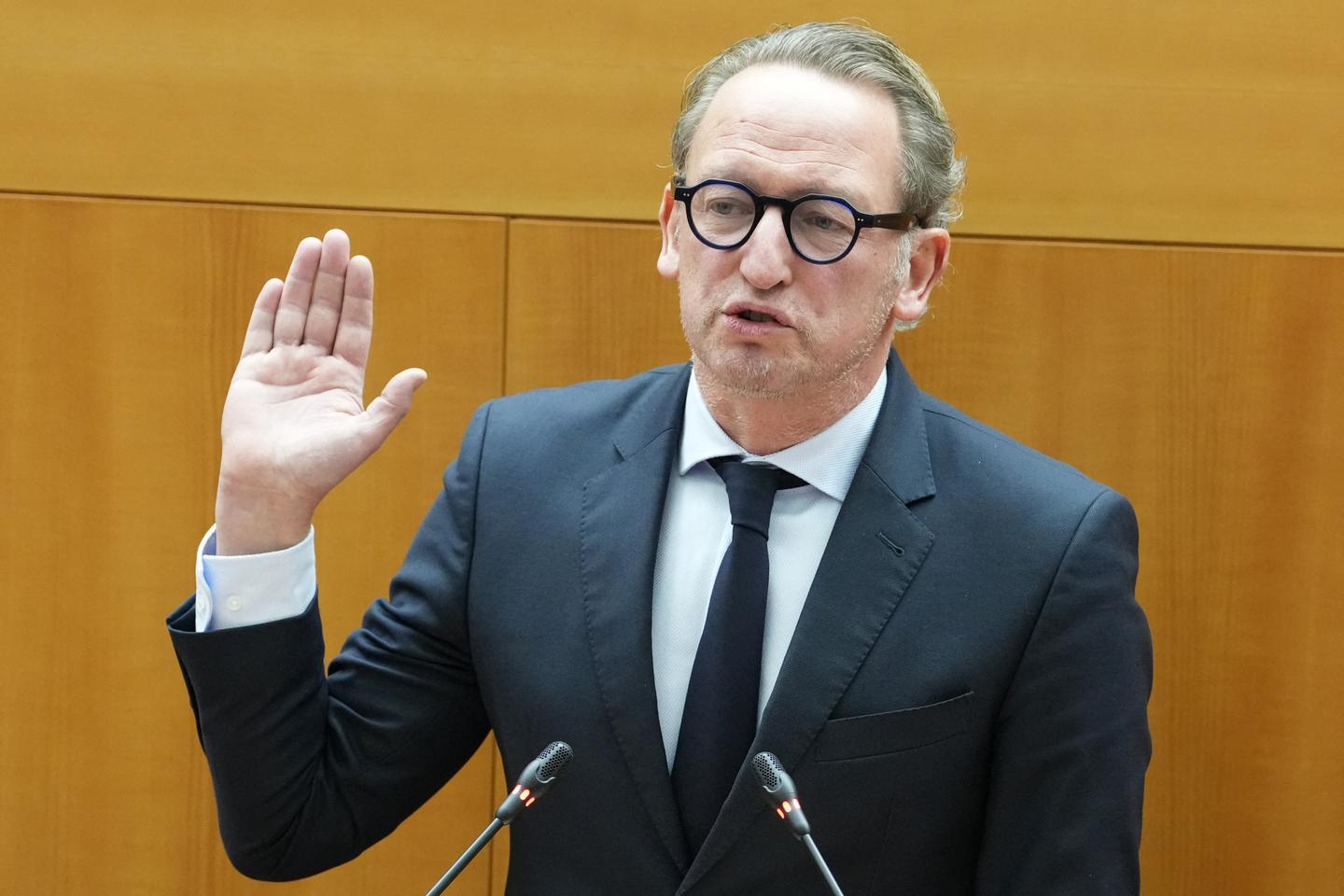
Brussels, Belgium – The appointment of Boris Dilliès as Minister-President of the Brussels-Capital Region in February 2026 has stirred both surprise and scrutiny, not just for the protracted political negotiations that preceded it, but similarly for a long-standing, and often overlooked, aspect of Belgian political life: the linguistic challenges faced by Francophone politicians in a multilingual region. While Belgium prides itself on its cultural diversity, the reality is that many Francophone leaders, including Dilliès, do not fluently speak Dutch, the language of a significant portion of their constituents in the Brussels region and Flanders.
This linguistic divide isn’t novel. It’s a deeply ingrained element of Belgian politics, reflecting the historical and cultural tensions between the country’s two main linguistic communities. The situation raises questions about representation, accessibility, and the ability of leaders to effectively govern a diverse population. The appointment of Dilliès, described as a “true gentleman” by those who know him, has brought this issue back into sharp focus, prompting renewed debate about the expectations placed on political leaders in a multilingual society. The formation of his government, after a staggering 645 days of negotiation, underscores the complexities of coalition-building in a country where language often dictates political alignment.
A Region Divided: The Linguistic Landscape of Brussels
The Brussels-Capital Region is officially bilingual – French and Dutch – but the reality is far more nuanced. While French historically held a dominant position, particularly in institutions, Dutch has been steadily gaining ground, fueled by Flemish migration and a growing emphasis on linguistic equality. According to data from Statbel, the Belgian statistical office, in 2023 approximately 60% of Brussels residents speak French, while around 35% speak Dutch, and the remaining 5% speak other languages. Statbel provides detailed demographic information on language use in Belgium.
This linguistic distribution is not uniform across the region. Certain municipalities, like Uccle, where Dilliès previously served as mayor, have a predominantly French-speaking population, while others, such as Sint-Jans-Molenaar, are predominantly Dutch-speaking. This creates a patchwork of linguistic communities, making it challenging for leaders to connect with all constituents effectively. The expectation that politicians should be fluent in both languages is often voiced, but rarely consistently met, particularly among those from the Francophone side of the linguistic divide.
Boris Dilliès: A Pragmatic Politician with Limited Dutch
Boris Dilliès, born on December 26, 1972, has had a notable career in Belgian politics. He currently serves as the Minister-President of the Brussels-Capital Region, assuming office on February 14, 2026, and previously served as the mayor of Uccle since 2017. His political journey began with the Reformist Movement (MR), a liberal party. However, Dilliès’s command of Dutch has been a recurring topic of discussion. Reports suggest his Dutch language skills are limited, a fact that has not gone unnoticed by political commentators and the public alike.
Described as a pragmatist and a skilled negotiator, Dilliès is known for his ability to build consensus. As noted in reporting from Brussels Times, he is often characterized as “a true gentleman” who can get along with everyone. This ability to forge relationships may compensate for his linguistic shortcomings in some respects, but it doesn’t negate the concerns raised about his ability to fully represent the Dutch-speaking population of Brussels. His appointment, while welcomed by some as a sign of stability after a prolonged period of political deadlock, has also been criticized by others as a perpetuation of a system where linguistic proficiency is not a prerequisite for leadership.
Historical Context: Language and Politics in Belgium
The linguistic tensions in Belgium are deeply rooted in the country’s history. Following independence in 1830, French was established as the dominant language of administration and education, despite the fact that the majority of the population spoke Dutch. This led to growing resentment among Dutch speakers, who felt marginalized and discriminated against. Throughout the 19th and 20th centuries, a series of language laws were enacted in an attempt to address these grievances, gradually granting Dutch equal status with French in various spheres of public life.
However, the linguistic divide remains a significant factor in Belgian politics. The country is divided into four language areas: a Dutch-speaking area, a French-speaking area, a German-speaking area, and a bilingual area in Brussels. Each language community has its own parliament and government, with significant autonomy over matters such as education, culture, and language policy. This complex federal structure, while designed to protect linguistic diversity, also contributes to political fragmentation and makes it demanding to achieve consensus on national issues. The long 645-day period to form a government, as reported by Le Monde, is a testament to these ongoing challenges. Le Monde detailed the difficulties in forming a governing coalition.
The Brussels-Capital Region: A Unique Case
The Brussels-Capital Region presents a unique case within the Belgian linguistic landscape. As a bilingual region, it is home to both French and Dutch speakers, and both languages have official status. However, the region’s institutions have historically been dominated by French speakers, leading to concerns about discrimination and unequal access to services for Dutch speakers. Efforts have been made to address these concerns in recent years, but the linguistic balance remains a sensitive issue.
The lack of Dutch proficiency among some Francophone politicians in Brussels is often seen as a symbol of this imbalance. Critics argue that it demonstrates a lack of respect for the Dutch-speaking community and hinders effective communication and collaboration. Proponents, argue that linguistic proficiency should not be a barrier to political participation and that a politician’s ability to govern effectively is more important than their language skills.
What Does This Mean for the Future of Brussels?
The appointment of Boris Dilliès and the ongoing debate about linguistic proficiency in Brussels raise important questions about the future of the region. Will Dilliès’s leadership style, characterized by pragmatism and consensus-building, be enough to overcome the linguistic challenges he faces? Will his administration prioritize linguistic equality and ensure that all residents of Brussels feel represented and heard?
The coming months and years will be crucial in determining the answer to these questions. Dilliès has already outlined a series of initiatives aimed at simplifying administration, revitalizing the economy, and improving security in the region. These initiatives, as detailed on the MR website, include streamlining bureaucratic processes, converting the Audi site into a hub for innovation and job creation, and strengthening coordination on security matters. MR website provides details on the new government’s initiatives.
However, the success of these initiatives will depend, in part, on Dilliès’s ability to connect with all segments of the Brussels population, including Dutch speakers. Whether he can bridge the linguistic divide and build a truly inclusive government remains to be seen. The situation highlights a broader challenge facing Belgium: how to reconcile its linguistic diversity with the necessitate for effective governance and social cohesion.
The next key date to watch is the implementation of the regional budget for 2026, which aims to address financial imbalances and pave the way for new investments. This will be a crucial test of Dilliès’s leadership and his commitment to addressing the challenges facing Brussels.
What are your thoughts on the linguistic challenges facing Belgian politicians? Share your comments below and let us know what you think.
Keep reading