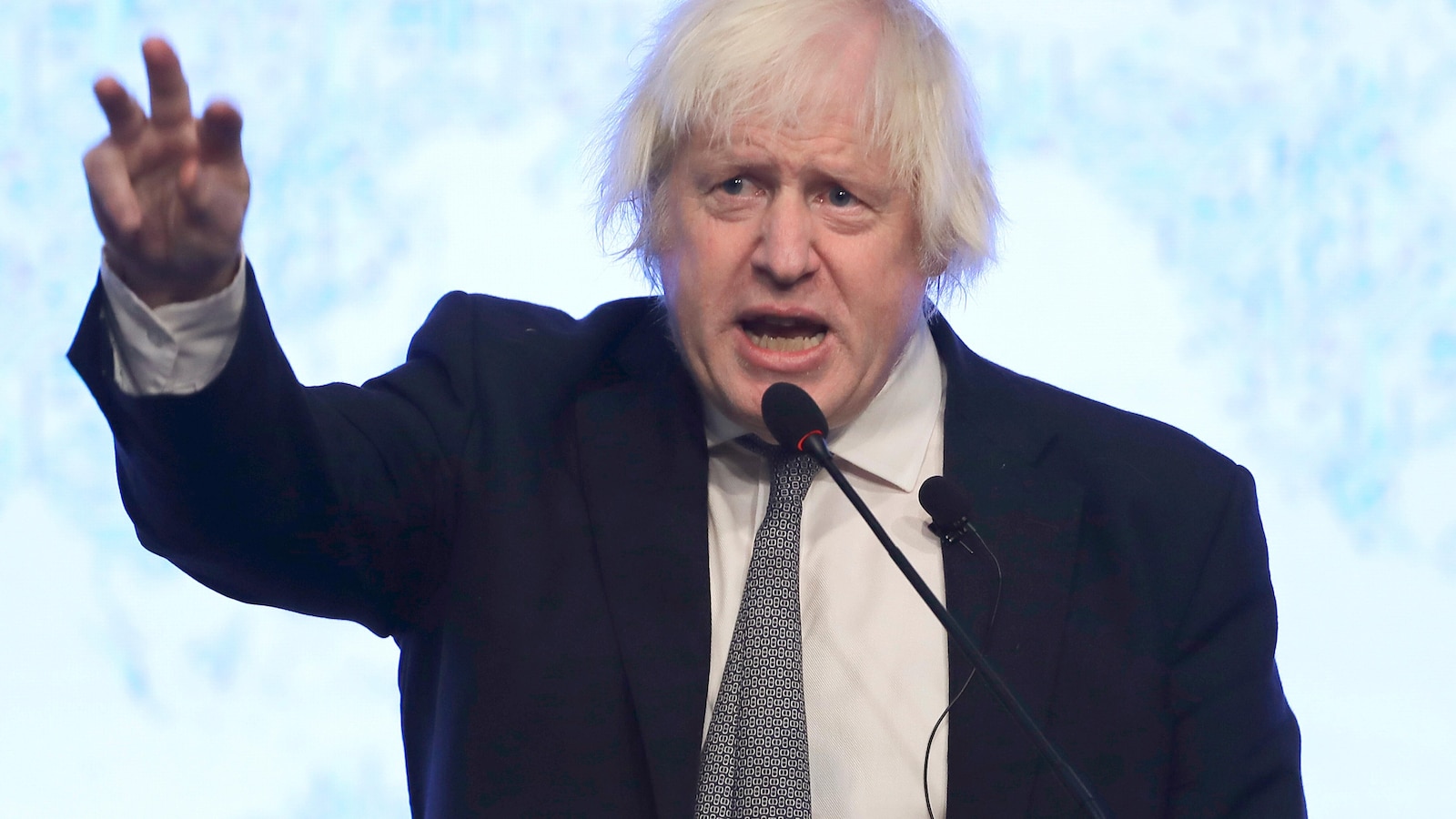
Johnson Calls for Non-Combat Troop Deployment to Ukraine, Citing Need to Shift Putin’s Calculus
Former British Prime Minister Boris Johnson has urged the United Kingdom and its allies to deploy non-combat troops to Ukraine immediately, arguing that such a move would demonstrate unwavering commitment to the nation’s sovereignty and potentially alter Russian President Vladimir Putin’s strategic calculations. Speaking ahead of the fourth anniversary of Russia’s full-scale invasion, Johnson suggested positioning these forces in peaceful regions, not engaged in active fighting. This proposal, revealed in excerpts from a BBC interview, represents a significant escalation in the discussion surrounding Western involvement in the conflict and challenges the current strategy of providing aid contingent on a ceasefire agreement. The debate over increased military support for Ukraine comes as fighting continues intensely in the east of the country and as Kyiv struggles to maintain momentum against Russian forces.
Johnson, a vocal supporter of Ukraine since the beginning of the conflict in February 2022, framed the deployment of non-combat troops as a way to signal resolve and potentially deter further Russian aggression. He questioned the logic of waiting for a ceasefire – a condition currently attached to plans for a “coalition of the willing” to deploy troops for peacekeeping operations – arguing that doing so effectively cedes the initiative to Putin. The former Prime Minister’s call for action reflects a growing frustration among some Western leaders regarding the pace of support for Ukraine and a desire to proactively shape the security landscape in Eastern Europe. The current approach, focused on providing military aid and humanitarian assistance, has been credited with helping Ukraine resist the initial Russian onslaught, but concerns remain about the long-term sustainability of this strategy.
A Shift in Strategy: From Ceasefire Contingency to Proactive Deployment
Currently, the international community is largely focused on establishing a framework for a potential ceasefire and subsequent peacekeeping operation in Ukraine. The “coalition of the willing,” a group of nations committed to supporting Ukraine’s long-term security, is developing plans for troop deployment that would only occur after a peace agreement is reached. These forces would be tasked with monitoring the ceasefire and ensuring stability in the aftermath of the conflict. However, Johnson’s proposal diverges from this approach, advocating for a preemptive deployment to demonstrate Western resolve even in the absence of a formal truce. He believes that a visible presence of international forces could dissuade Putin from continuing the war and create a more favorable environment for negotiations.
This proposed shift in strategy is not without its risks. Western military planners have expressed concerns that Russia could interpret such a move as an escalation, potentially leading to a wider conflict. In September 2023, Putin explicitly warned that any foreign troops deployed to Ukraine would be considered “legitimate targets,” raising the stakes considerably. As reported by the BBC, Johnson dismissed this threat, asserting that Putin should not be allowed to dictate terms to Ukraine and its allies. He emphasized that the fundamental question at stake is Ukraine’s right to self-determination and freedom from external interference.
Historical Context: Western Responses and Perceived Weakness
Johnson attributed the current crisis in Ukraine, in part, to perceived failures of Western policy in the past. He pointed to the lack of a robust response to Russia’s 2014 annexation of Crimea and the subsequent conflict in eastern Ukraine as emboldening Putin. He also criticized the West’s handling of the Syrian civil war, specifically the failure to adequately punish the Assad regime for its use of chemical weapons against its own population. Johnson further suggested that the chaotic withdrawal of U.S. Forces from Afghanistan in 2021 contributed to Putin’s miscalculation, creating a perception of Western weakness and indecision.
“I think Putin was emboldened by a Western failure in Syria to punish Assad for using chemical weapons,” Johnson stated, according to reports. He continued, suggesting that the scenes of the withdrawal from Afghanistan, with images of desperate Afghans attempting to flee the country, further reinforced this perception of Western decline. This historical analysis underscores Johnson’s belief that a firm and decisive response is crucial to deterring further Russian aggression and safeguarding international security. The withdrawal from Afghanistan, completed in August 2021, marked the end of a 20-year military intervention and was widely criticized for its chaotic execution and the subsequent collapse of the Afghan government.
UK Ministry of Defence Response and the “Coalition of the Willing”
The UK Ministry of Defence has acknowledged Johnson’s comments but reiterated its commitment to the existing plan of deploying troops to Ukraine only after a ceasefire agreement is in place. In a statement, the Ministry affirmed that the “multinational force Ukraine under UK leadership will secure peace for the long term, with the Prime Minister being clear that we will put British troops on the ground following the end of hostilities.” This suggests a cautious approach, prioritizing a negotiated settlement and avoiding actions that could be perceived as provocative. The “coalition of the willing” is currently working to finalize the details of this post-ceasefire deployment, including the composition of the force, its mandate, and its rules of engagement.
The concept of a “coalition of the willing” – a group of nations willing to act together without necessarily requiring a formal mandate from international organizations like the United Nations – has been a recurring theme in international security discussions. It allows for a more flexible and rapid response to crises, but also raises questions about legitimacy and accountability. The specific composition of this coalition remains fluid, but it is expected to include a number of European countries, as well as potentially Canada and Australia. The success of this initiative will depend on securing the cooperation of key allies and establishing a clear legal and political framework for the deployment of troops.
The Broader Geopolitical Implications
Johnson’s call for a more assertive Western stance towards Ukraine reflects a broader debate about the future of European security and the role of NATO. The Russian invasion of Ukraine has fundamentally altered the geopolitical landscape, prompting a reassessment of defense strategies and alliances. NATO has significantly increased its military presence in Eastern Europe, deploying additional troops and equipment to deter further Russian aggression. However, there are ongoing discussions about the need for a more comprehensive and long-term strategy to address the underlying causes of the conflict and prevent future crises.
The conflict in Ukraine also has significant implications for global energy markets, food security, and international trade. Russia is a major exporter of oil and gas, and the disruption of these supplies has led to higher energy prices and increased economic uncertainty. Ukraine is a major producer of grain, and the war has disrupted agricultural production and exports, contributing to rising food prices and concerns about food security in vulnerable countries. The long-term consequences of the conflict are likely to be far-reaching and will require a coordinated international response.
Key Takeaways:
- Former UK Prime Minister Boris Johnson is advocating for the immediate deployment of non-combat troops to Ukraine.
- This proposal diverges from the current strategy of deploying troops only after a ceasefire agreement is reached.
- Johnson argues that a proactive deployment would demonstrate Western resolve and potentially deter further Russian aggression.
- The UK Ministry of Defence has reaffirmed its commitment to the existing plan, emphasizing the importance of a negotiated settlement.
- The debate over increased military support for Ukraine reflects a broader discussion about the future of European security and the role of NATO.
As the conflict in Ukraine continues, the international community faces difficult choices about how to best support Ukraine and prevent further escalation. The coming months will be critical in determining the future of the conflict and the long-term security of Europe. Further developments are expected as the fourth anniversary of the full-scale invasion approaches on February 24th, with potential announcements regarding increased military aid and diplomatic initiatives. Readers are encouraged to share their perspectives and engage in constructive dialogue on this important issue in the comments section below.
- Since you didn’t provide the content of the article, I cannot create a specific title. However, if the article is a general “Latest Updates” piece, the most perfect SEO title would be: Latest News and Updates: Everything You Need to Know Today
- RCS Mediagroup Corporate Information and Advertising Contacts
- Russian Strikes Kill Dozens in Ukraine; Poland Scrambles Fighter Jets (world-today-news.com)
- Russian Missile Strikes Kill at Least 8 Across Ukraine Including Kyiv, Lviv and Kryvyi Rih (time.news)