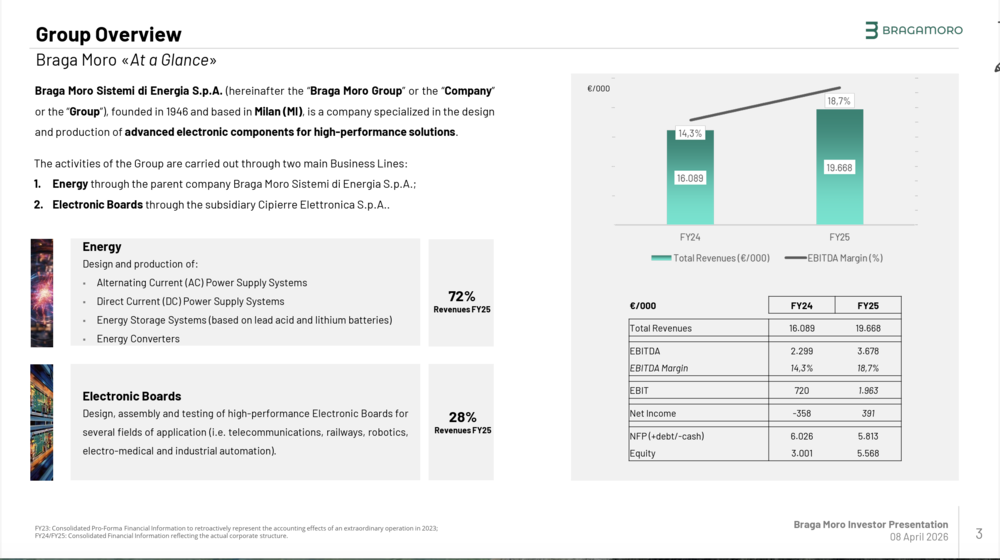
Italian engineering and manufacturing firm Braga Moro has officially exited Piazza Affari, less than a year after completing its initial public offering on the Milan stock exchange. The delting follows the successful completion of a voluntary total takeover bid—known in Italy as an offerta pubblica di acquisto (OPA) totalitaria—launched to acquire the remaining ordinary shares of the company. Market regulators and financial disclosures confirmed that the transaction met the necessary acceptance thresholds to take the company private once again.
The swift return to private ownership marks a sharp turn for a corporate history that saw the firm go public only recently. Founded with deep roots in industrial manufacturing, Braga Moro initially pursued a listing on the Italian exchange to fund growth and broaden its capital access. However, market conditions, strategic evaluations by controlling stakeholders, and changing corporate priorities quickly reshaped that trajectory, culminating in the buyout offer that squeezed out minority shareholders and cleared the path for the delisting.
According to regulatory filings and market notices from Borsa Italiana, the voluntary tender offer reached the required acceptance levels to trigger the statutory squeeze-out procedures. Under Italian financial rules, once a bidder crosses specific ownership thresholds following a total takeover bid, remaining minority holders are required to sell their shares at the offer price, allowing the controlling entity to secure 100 percent of the voting rights and remove the stock from public trading lists.
The Mechanics of the Takeover Bid
The total takeover bid for Braga Moro was structured to absorb all outstanding ordinary shares not already held by the majority investor group. Financial advisory firms and legal counsel managing the operation noted that the tender period saw steady participation from institutional and retail holders, pushing total acceptances past the threshold mandated by the Consolidated Law on Finance (Testo Unico della Finanza).
Going private offers distinct advantages for mid-sized industrial firms navigating volatile European markets. Without the rigorous quarterly reporting requirements, market scrutiny, and shareholder relations overhead associated with a public listing on Piazza Affari, executive leadership can pivot strategies and deploy capital with greater operational flexibility. Industry analysts following the Italian small-cap sector pointed out that several recent market debuts have similarly experienced short public lifespans as private equity and controlling families reassess the value proposition of exchange listings amid macroeconomic headwinds.
Impact on Shareholders and Market Context
For existing investors who tendered their shares during the OPA, the process concludes with the settlement of the agreed-upon cash consideration per share. Those who did not voluntarily tender their holdings saw their shares automatically transferred to the bidder during the subsequent squeeze-out procedure, with matching financial compensation deposited on behalf of the former shareholders.
The departure of Braga Moro from the Milan stock exchange contributes to a broader trend observed across European exchanges, where private capital transactions frequently outpace new public listings. Borsa Italiana continues to monitor adjustments in its segment rosters as companies weigh the costs of compliance against the benefits of public equity financing. Official notices regarding the final trading day and the execution of the squeeze-out can be accessed directly through Borsa Italiana or via official company investor relations portals.
Further updates on corporate restructuring and governance changes following the completion of the privatization process will be made available through official corporate registries and regulatory announcements. Readers are encouraged to share their thoughts or join the discussion in the comments section below.
Worth a look