The historic Chicago Tribune Building stands as a prominent fixture of American architectural history, housing physical fragments of global heritage embedded directly into its exterior masonry. Located at 435 North Michigan Avenue, the neo-Gothic skyscraper designed by architects John Mead Howells and Raymond Hood was completed in 1925 following an international design competition held by the media company.
According to historical records from the Chicago Architecture Center, the newspaper’s co-owners, Robert R. McCormick and Joseph Medill Patterson, directed correspondents and travellers to gather stone fragments from significant architectural sites around the world. Builders incorporated these recovered artifacts—ranging from the Parthenon and the Great Pyramid of Giza to Westminster Abbey and the Taj Mahal—into the lower stone facade of the tower.
While the structure remains an internationally recognized landmark and a designated Chicago architectural landmark since 1989, contemporary architectural historians note that its eclectic design faced initial skepticism. When the plans were first selected and constructed during the early 1920s, some critics and traditionalists dismissed the ornate Gothic detailing and soaring buttresses as excessively ostentatious for a commercial office building.
Architectural Origins and the 1922 Competition
The genesis of the tower dates back to a competition launched in 1922 to mark the 75th anniversary of the Chicago Tribune. The publication invited architects worldwide to submit designs for “the most beautiful office building in the world,” offering a $50,000 grand prize that drew more than 260 entries from across the globe, as documented by the Art Institute of Chicago.
Howells and Hood secured first place with a design featuring a dramatic crown modeled after the Tour de Beurre of the Rouen Cathedral in France. However, the runner-up submission by Finnish architect Eliel Saarinen gained widespread architectural acclaim among modernists like Louis Sullivan, who argued that Saarinen’s clean vertical lines represented the future of skyscraper design. Despite the critical debate surrounding its ornate styling, construction moved forward, and the building opened its doors in June 1925.
The Embedded Stones of World History
The most distinctive feature of the Tribune Tower exterior is its collection of 149 embedded stone fragments. Colonel Robert McCormick personally initiated the practice of collecting masonry from famous monuments, battlefields, and historic structures during his travels abroad, a tradition that continued for decades as reporters and foreign correspondents contributed pieces.
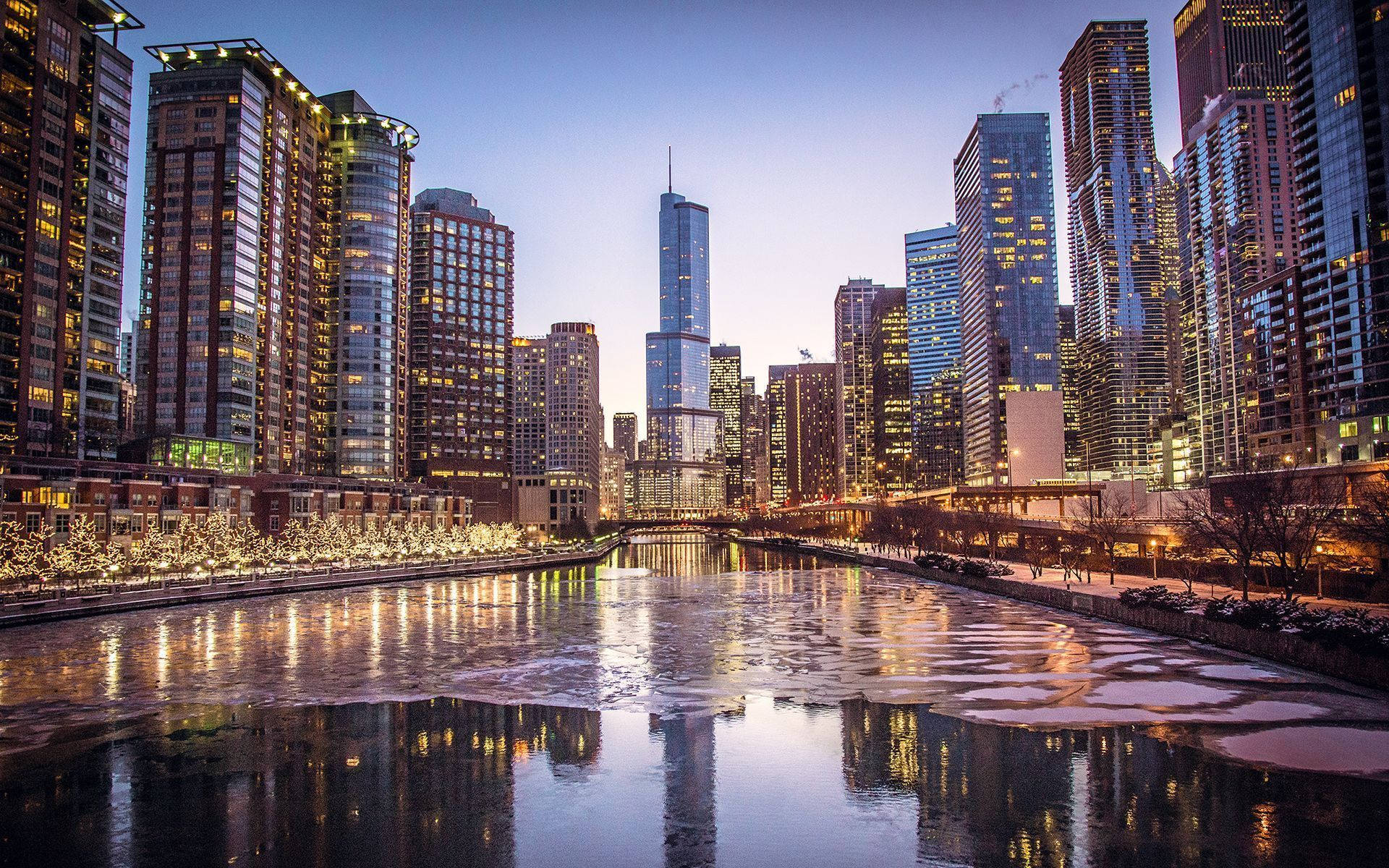
Notable fragments integrated into the exterior walls include stones from the Berlin Wall, the Cologne Cathedral, the Alamo, the Colosseum, and the tomb of Napoleon. Each stone is carved with a label identifying its origin, turning the base of the skyscraper into a public outdoor museum. Maintenance teams from the property’s current management routinely inspect the masonry to preserve both the historic artifacts and the limestone facade.
Conversion and Modern Status
The Tribune Tower underwent significant changes in the 21st century following the departure of its namesake newsroom. After Tribune Publishing relocated its offices, the skyscraper was acquired by developers CIM Group and Golub & Company in 2016 for $240 million, according to real estate filings documented by Reuters.
Developers subsequently converted the landmark tower into 162 luxury condominium residences alongside retail spaces, completing the major adaptive reuse project by 2021. Preservation covenants established by the City of Chicago protect the exterior facade and the embedded historic stones, ensuring that the collection remains accessible to pedestrians walking along Michigan Avenue.
Official updates regarding the preservation of the building’s exterior and public access policies can be monitored through the Chicago Department of Planning and Development. Visitors interested in architectural tours of the Magnificent Mile can consult schedules provided by the Chicago Architecture Center.