
Brazil stands as a global agricultural titan, a cornerstone of the world’s food security and the leading producer of soybeans. Yet, beneath the sprawling green canopies of the Cerrado and the southern plains lies a precarious vulnerability: the nation’s soil is largely dependent on chemicals produced thousands of miles away. This “fertilizer paradox” has placed Brazil in a volatile position, where geopolitical tremors in Eurasia or supply chain disruptions in North Africa can directly threaten the yields of the world’s most productive soybean harvests.
For decades, Brazil has relied on a strategy of importing the vast majority of its nutrients—specifically nitrogen, phosphorus and potassium (NPK)—to sustain its intensive agribusiness model. While this approach fueled a meteoric rise in export volumes, it created a strategic fragility. The risk is no longer theoretical; the volatility of global markets has forced the Brazilian government and agricultural sector to confront the reality that their reliance on a handful of dominant suppliers is a systemic risk to national economic stability.
The urgency of this situation is underscored by the sheer scale of Brazil’s dependence. The country typically imports approximately 85% of its fertilizer requirements, making it the world’s largest importer of these essential inputs. When supply lines are constricted or prices spike, the cost of production for soybean farmers skyrockets, squeezing margins and threatening the viability of the crops that drive a significant portion of Brazil’s GDP.
The Geopolitics of NPK: A Fragile Supply Chain
To understand why Brazil is at risk, one must seem at the chemical composition of soil fertility. Soybean production requires a precise balance of Nitrogen (N), Phosphorus (P), and Potassium (K). Each of these elements is concentrated in specific geographic regions, creating a map of dependence that mirrors global geopolitical fault lines.
Nitrogen is primarily derived from natural gas, and Russia has historically been one of Brazil’s most critical suppliers of nitrogenous fertilizers. The conflict in Ukraine and subsequent sanctions on Russian exports highlighted how quickly a primary supply artery can be throttled. While Brazil has sought to diversify, the sheer volume provided by Russian producers makes a sudden shift challenging and costly.
Phosphorus is dominated by Morocco, which holds some of the world’s largest phosphate reserves. Brazil’s reliance on Moroccan rock phosphate means that any instability in North Africa or changes in Moroccan export policies can lead to immediate shortages of the phosphorus necessary for root development and energy transfer in soybean plants.
Potassium (Potash) is largely sourced from Canada and Russia. Canada’s Nutrien and other major producers provide a stable alternative, but the logistics of transporting bulk potash across oceans to the heart of Brazil add significant costs and time to the supply chain. According to data from the World Bank, commodity price volatility in these sectors often correlates with geopolitical instability, leaving importing nations like Brazil exposed to “price shocks” that can destabilize local farming economies.
The Soybean Connection and Economic Stakes
Soybeans are more than just a crop in Brazil; they are a macroeconomic engine. As the top global producer and exporter, Brazil’s soybean shipments are vital for animal feed industries in China and Europe. However, the high-yield varieties used in Brazilian agriculture are “nutrient-hungry,” requiring heavy applications of NPK to maintain productivity in the naturally acidic soils of the Cerrado.
When the cost of fertilizer rises, the impact ripples through the entire value chain. Large-scale industrial farms may be able to absorb some of the cost or hedge their bets through futures markets, but small and medium-sized farmers often face a devastating choice: invest in expensive inputs and risk financial ruin if prices drop, or reduce fertilizer application and accept lower yields.
A reduction in fertilizer application doesn’t just lower the volume of the harvest; it degrades the soil over time. This creates a vicious cycle where the soil requires even more intensive supplementation in subsequent years to achieve the same results, further deepening the dependence on imports.
The National Fertilizer Plan: A Path to Sovereignty
Recognizing this existential threat, the Brazilian government, through the Ministry of Agriculture and Livestock (MAPA), launched the Plano Nacional de Fertilizantes (National Fertilizer Plan or PNF). The objective is clear: reduce the country’s dependence on foreign imports and increase domestic production by 2050.
The PNF is not a quick fix but a long-term structural overhaul. It focuses on several key pillars:
- Domestic Mining: Identifying and developing untapped phosphate and potash deposits within Brazilian territory to create a local supply of “P” and “K.”
- Diversification of Suppliers: Actively seeking new trade partnerships with countries like Jordan, Egypt, and other African nations to break the oligopoly of the current dominant suppliers.
- Investment in Bio-fertilizers: Promoting the use of “bio-inputs”—biological fertilizers and nitrogen-fixing bacteria—which can reduce the need for synthetic nitrogen, particularly in soybean crops which naturally fix nitrogen through symbiosis with Bradyrhizobium bacteria.
- Logistical Infrastructure: Improving ports and rail networks to reduce the “Brazil Cost” (Custo Brasil), ensuring that imports can be distributed more efficiently from the coast to the interior.
The transition toward biologicals is perhaps the most promising avenue for soybeans. By optimizing the use of inoculants, Brazilian farmers can significantly cut their reliance on synthetic nitrogen. However, phosphorus and potassium cannot be substituted by bacteria, meaning the mining and diversification goals of the PNF remain non-negotiable for long-term security.
The Risks of a Forced Reduction in Imports
While the goal is to strategically reduce imports, there is a danger in a forced reduction. If geopolitical tensions lead to an actual blockade or a refusal of suppliers to ship to Brazil, the result would not be a smooth transition to domestic production, but a production crash.
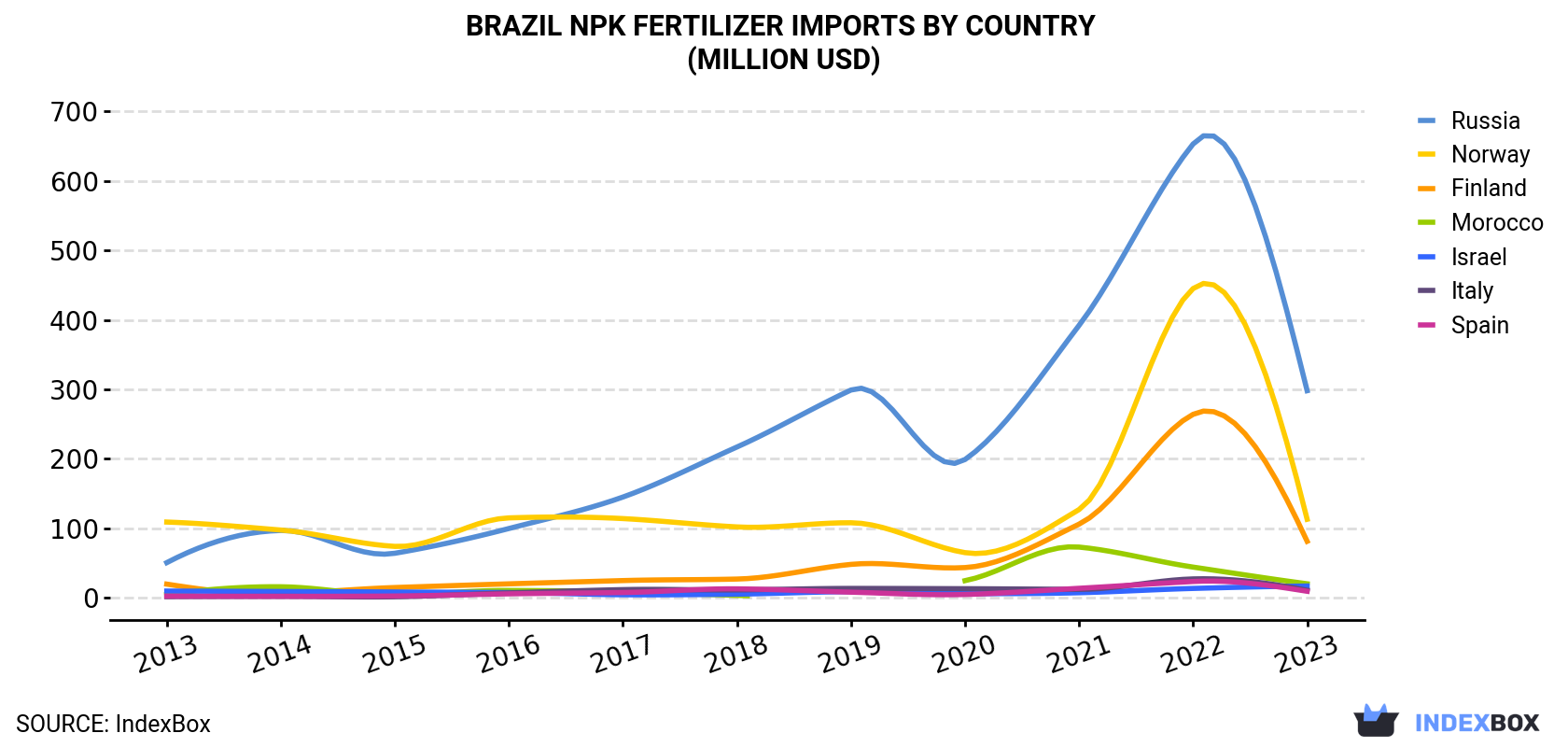
A forced reduction in fertilizer availability would likely lead to:
- Yield Gaps: A significant drop in bushels per hectare, reducing Brazil’s total export capacity.
- Price Inflation: Higher food prices globally, as the world relies on Brazilian soy for livestock feed.
- Economic Contraction: A decrease in the trade surplus that Brazil generates from its agricultural exports, potentially weakening the Brazilian Real.
The challenge for policymakers is to balance the immediate need for imports to keep the current economy running while aggressively funding the infrastructure for future independence. This is a high-stakes balancing act where a single diplomatic failure could jeopardize the nation’s most successful industry.
Key Takeaways: Brazil’s Fertilizer Vulnerability
| Nutrient | Primary Source | Strategic Risk | Mitigation Goal |
|---|---|---|---|
| Nitrogen (N) | Russia | Geopolitical conflict/Sanctions | Bio-inputs & diversification |
| Phosphorus (P) | Morocco | Regional instability/Export quotas | Domestic mining development |
| Potassium (K) | Canada, Russia | Logistical costs/Price volatility | New trade partners & domestic search |
Environmental Implications and the Future of Soil
The push for fertilizer independence also intersects with Brazil’s environmental commitments. The heavy use of synthetic fertilizers, if managed poorly, can lead to runoff that contaminates waterways and contributes to the eutrophication of lakes and rivers. As Brazil moves toward the goals of the PNF, there is an opportunity to integrate “regenerative agriculture” practices.

Precision agriculture—using GPS and soil sensors to apply nutrients only where they are needed—is becoming more common among Brazil’s top producers. By reducing waste, farmers can lower their import requirements without sacrificing yield. This “efficiency-first” approach complements the government’s goal of reducing foreign dependence while aligning with global trends toward sustainable farming.
the development of a domestic fertilizer industry must be weighed against the environmental cost of mining. The extraction of phosphate and potash requires significant land use and can lead to habitat loss. The Brazilian government faces the dual challenge of ensuring food security through mineral independence while adhering to its deforestation and conservation targets in the Amazon and Cerrado biomes.
Conclusion: The Road to 2050
Brazil’s journey from a dependent importer to a self-sufficient agricultural power is a marathon, not a sprint. The risks associated with importing key fertilizers for soybean production are a stark reminder that food security is inseparable from geopolitical security. While the National Fertilizer Plan provides a roadmap, the actual realization of these goals depends on consistent investment, diplomatic agility, and a willingness to innovate in the field of bio-inputs.
The next critical checkpoint for this strategy will be the upcoming annual review of the National Fertilizer Plan’s progress by the Ministry of Agriculture, where updated targets for domestic production and new trade agreements are expected to be announced. For the global market, Brazil’s success or failure in this endeavor will determine the stability of soybean prices for decades to come.
Do you believe Brazil can realistically achieve fertilizer independence by 2050, or will the global nature of mineral deposits always leave them vulnerable? Share your thoughts in the comments below.
Related reading