Brazilian courts have issued two landmark rulings affirming the land rights of Indigenous peoples and smallholder farmers in the Amazon, ordering federal authorities to remove illegal occupants from protected territories in Pará state. The decisions mark a significant legal victory for communities fighting decades of land grabs by cattle ranchers, which have driven deforestation and threatened livelihoods in the region.
In separate but equally consequential orders, a federal judge and the Supreme Federal Court have directed Brazil’s land reform agency (INCRA) and federal government to take immediate action against illegal occupants in the Cachoeira Seca Indigenous territory and the Terra Nossa sustainable development settlement. Both rulings require authorities to develop removal timelines and report progress, maintaining judicial oversight to prevent further obstruction.
The cases highlight systemic failures in land protection, with ranchers illegally occupying 78.5% of Terra Nossa and expanding cattle operations in Cachoeira Seca despite legal recognition of Indigenous land rights. Both territories have experienced severe deforestation, with Cachoeira Seca recording the largest deforested area among Amazon Indigenous territories in 2024. The rulings come as international pressure mounts on Brazil to address illegal deforestation linked to agricultural expansion.
Why These Rulings Matter: Legal Precedent and Environmental Impact
The court orders represent a turning point in Brazil’s long-standing struggle to protect Amazonian territories from illegal occupation. According to the Supreme Federal Court, Justice Edson Fachin’s May 31 ruling on Cachoeira Seca directly responds to a petition from the Articulation of Indigenous Peoples of Brazil (APIB), the country’s largest Indigenous rights coalition. The decision follows years of inaction by federal agencies despite clear legal obligations to remove non-Indigenous occupants from recognized Indigenous lands.
Legal experts say the rulings establish important precedents for future cases. “These decisions send a clear message that judicial delays will no longer be tolerated,” said Dr. Ana Cláudia Santos, a constitutional law professor at the University of Brasília. “The requirement for regular progress reports creates unprecedented accountability mechanisms that previous administrations have avoided.”
- Immediate removal of illegal occupants from both territories
- Development of detailed removal timelines
- Monthly progress reports to the courts
- Protection measures for community members during removal operations
The Land Grabs: How Illegal Occupation Transformed Amazon Territories
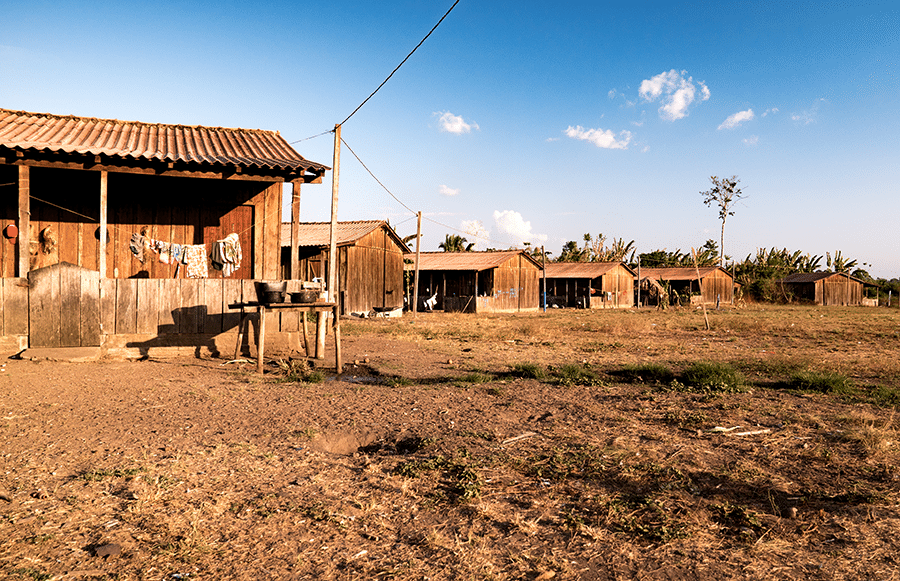
The Terra Nossa sustainable development settlement, created in 2006 by INCRA, was designed as a model for agroforestry and small-scale farming. Originally covering 150,000 hectares with 80% forest cover, the settlement was meant to support families growing fruits, nuts, and other forest products for local markets. However, according to INCRA’s own land use surveys, by 2023, 45.3% of the territory had been converted to pasture through illegal deforestation.
The situation in Cachoeira Seca is equally dire. Home to the Arara Indigenous people, this 733,000-hectare territory was formally recognized in 2016 after decades of struggle. Yet since recognition, ranchers have established numerous illegal cattle operations, leading to:
- A 30% reduction in available game species (according to ICMBio’s 2024 biodiversity report)
- Restricted movement within the territory due to land fragmentation
- Undermined cultural practices that depend on forest resources
- Record deforestation rates, making Cachoeira Seca the most deforested Indigenous territory in the Amazon in 2024
Who’s Behind the Land Grabs? The Cattle Industry’s Role
Investigations by environmental organizations reveal a direct link between illegal land occupation and Brazil’s cattle industry. According to Greenpeace Brazil’s 2025 report, cattle from illegal farms in both Cachoeira Seca and Terra Nossa were sold to direct suppliers of JBS, the world’s largest meatpacking company. JBS, which has previously faced criticism for its supply chain transparency, stated in January 2026 that it would require all direct suppliers to provide information about their sub-suppliers.
The company maintained in a public statement that it monitors supplier compliance with its procurement policies. However, JBS has not responded to follow-up inquiries about implementation progress, leaving unanswered questions about whether these new requirements are being effectively enforced.
Key Timeline of Events
What Happens Next? Implementation Challenges and Community Safety
While the rulings represent a legal victory, implementation remains the critical challenge. Both orders require federal authorities to develop removal timelines and report progress, but past experience shows that enforcement has often been delayed or obstructed. The Amazon Observatory reports that between 2019 and 2025, only 12% of court-ordered removals in the Amazon were successfully completed.
Community leaders express particular concern about safety during removal operations. “We’ve faced threats and violence for years when trying to defend our land,” said Sonnia Guajajara, APIB’s executive coordinator. “These rulings are a step forward, but we need guarantees that the government will protect us during these operations, not leave us vulnerable to retaliation.”
The federal government has not yet issued a public response to the rulings, but INCRA’s official website indicates that internal discussions are underway about operational plans. Environmental agencies are also preparing to monitor deforestation patterns post-removal to assess whether the operations achieve their conservation goals.
Broader Implications: Global Pressure and Domestic Politics
These rulings come at a pivotal moment for Brazil’s international reputation on environmental issues. With the COP28 climate summit approaching and increased scrutiny of Amazon deforestation, the court decisions may influence foreign investors’ perceptions of Brazil’s commitment to sustainability. The European Union’s deforestation regulation, which takes effect in 2025, could particularly impact Brazil’s agricultural exports if illegal deforestation links are proven.
Domestically, the cases have reignited debates about land reform and Indigenous rights. Opposition politicians have criticized the Bolsonaro administration’s weak enforcement of environmental laws, while Indigenous rights advocates argue the rulings demonstrate the need for stronger constitutional protections. The Brazilian Congress is currently considering several bills that would further restrict Indigenous land rights, creating potential conflicts with these judicial decisions.
Next Steps to Watch:
- Federal government’s response to the rulings (due within 30 days)
- Publication of removal timelines for both territories
- First progress reports to the courts (due July 2026)
- Implementation of safety measures for community members
- JBS’s response to follow-up inquiries about supply chain monitoring
As these landmark cases unfold, they offer a rare opportunity to address systemic failures in land protection that have plagued the Amazon for decades. The success of these rulings will depend not only on judicial enforcement but also on political will at the highest levels of government. For the communities of Cachoeira Seca and Terra Nossa, the rulings represent hope after years of struggle—but the real test will be whether Brazil’s institutions can finally deliver on their legal obligations.
What readers should know: These rulings affect not just local communities but also global markets, particularly the beef industry. Consumers and investors may want to monitor JBS’s implementation of its supplier transparency requirements and Brazil’s progress in protecting these critical Amazon territories.
Have questions about how these rulings might impact agricultural exports or Indigenous rights in Brazil? Share your thoughts in the comments below or contact our World Editor team for more analysis.
Keep reading