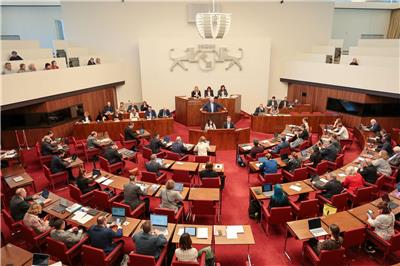
Bremen’s state parliament has approved a budget for 2026 and 2027, totaling approximately €13 billion, but the financial picture remains tight. The approval follows a lengthy debate, highlighting the challenges facing the city-state as it navigates economic headwinds and competing priorities. While the budget outlines significant investment in key areas like education, infrastructure and public safety, it too relies on reserves and borrowing to cover a shortfall between projected income and expenditure. This situation underscores the need for fiscal discipline and strategic allocation of resources, according to officials.
The approved budget reflects the priorities of Bremen’s governing coalition – a partnership between the Social Democratic Party (SPD), the Green Party, and The Left. These priorities center around bolstering social services, modernizing infrastructure, and fostering economic growth. Although, the opposition Christian Democratic Union (CDU) has criticized the plan, arguing that it misallocates funds and fails to adequately address core governmental functions. The debate over Bremen’s financial future is a microcosm of broader economic challenges facing German states, as they grapple with rising costs and uncertain revenue streams.
Bremen’s Budget: Key Investment Areas
The €13 billion budget allocates funds to a wide range of initiatives. A significant portion is earmarked for the renovation and expansion of essential public services, including childcare facilities (Kitas), schools, and sports halls. This investment reflects a commitment to improving educational opportunities and community resources for Bremen’s residents. Further funding is directed towards upgrading the region’s crucial port infrastructure and developing commercial areas around Bremen Airport, aiming to stimulate economic activity and job creation. According to reports from Die Zeit, the budget also prioritizes the modernization of bridges and transportation networks, expansion of public transportation, and strengthening scientific research.
Beyond infrastructure, the budget also addresses critical needs in public safety and healthcare. Increased funding is allocated to equip police and fire departments with modern resources, enhancing their ability to respond to emergencies and maintain public order. Investments in municipal clinics aim to improve healthcare access and quality for Bremen’s citizens. Recognizing the importance of technological advancement, the budget also supports digitalization initiatives and investments in climate protection measures, aligning with broader sustainability goals.
Opposition Criticism and Alternative Proposals
The CDU, as the largest opposition party, voiced strong concerns about the budget’s direction. Wiebke Winter, the CDU’s parliamentary group leader, argued that the governing coalition has failed to prioritize effectively and has struggled to adequately finance essential government services. As reported by Weser-Kurier, the CDU proposed an alternative budget that focused on streamlining administrative processes through a centralized “Bremen-App” for digital services and enhancing public safety through increased investment in law enforcement and prosecution.
The CDU’s proposal also included provisions for early language support for children needing assistance, suggesting a year of preschool focused on German language acquisition. The opposition party identified potential cost savings in areas such as drug policy, restructuring the hospital landscape, and limiting subsidies to the Gesundheit Nord (Geno) healthcare network. However, the CDU’s proposed amendments were ultimately rejected by the governing coalition in the parliamentary vote.
Financial Challenges and Reliance on Reserves
The approval of the budget doesn’t erase the underlying financial challenges facing Bremen. The state government acknowledges that anticipated revenues are slightly lower than projected expenditures, necessitating the apply of financial reserves and borrowing. This reliance on reserves highlights the precariousness of Bremen’s fiscal situation and the need for careful financial management. The Finanzressort, Bremen’s finance ministry, has emphasized the importance of budgetary discipline and clear prioritization in light of these constraints.
The situation reflects broader economic uncertainties impacting German states. Factors such as global economic slowdowns, geopolitical instability, and rising inflation contribute to revenue shortfalls and increased budgetary pressures. Bremen, with its specific economic structure and demographic challenges, is particularly vulnerable to these external factors. The state’s reliance on port-related industries and its aging population require strategic investments to ensure long-term economic sustainability.
Bremens Finanzsenator Björn Fecker steht vor Herausforderungen: In diesem und im kommenden Jahr wird die Regierung mehr Geld ausgeben als einnehmen. Focke Strangmann/dpa
© Focke Strangmann/dpa

Das Land Bremen muss sparen – die Ausgaben übersteigen die Einnahmen. Focke Strangmann/dpa
© Focke Strangmann/dpa
Looking Ahead: Fiscal Monitoring and Potential Adjustments
The approval of the 2026/2027 budget is not the end of the story. Ongoing monitoring of Bremen’s financial performance will be crucial to ensure the budget remains sustainable. The state government will need to closely track revenue collection, expenditure patterns, and economic indicators to identify potential risks and opportunities. Adjustments to the budget may be necessary if economic conditions deteriorate or if unforeseen events arise. The next major fiscal checkpoint will be the mid-year budget review, scheduled for September 2026, where officials will assess the budget’s performance and develop any necessary revisions.
The challenges facing Bremen’s finances are emblematic of broader fiscal pressures on German states. Balancing competing priorities, managing limited resources, and navigating economic uncertainty require careful planning, strategic investments, and a commitment to fiscal responsibility. The coming months will be critical in determining whether Bremen can successfully navigate these challenges and secure its long-term financial stability.
What are your thoughts on Bremen’s budget? Share your comments below and let us know how you perceive the state can best address its financial challenges. Don’t forget to share this article with your network!
Keep reading