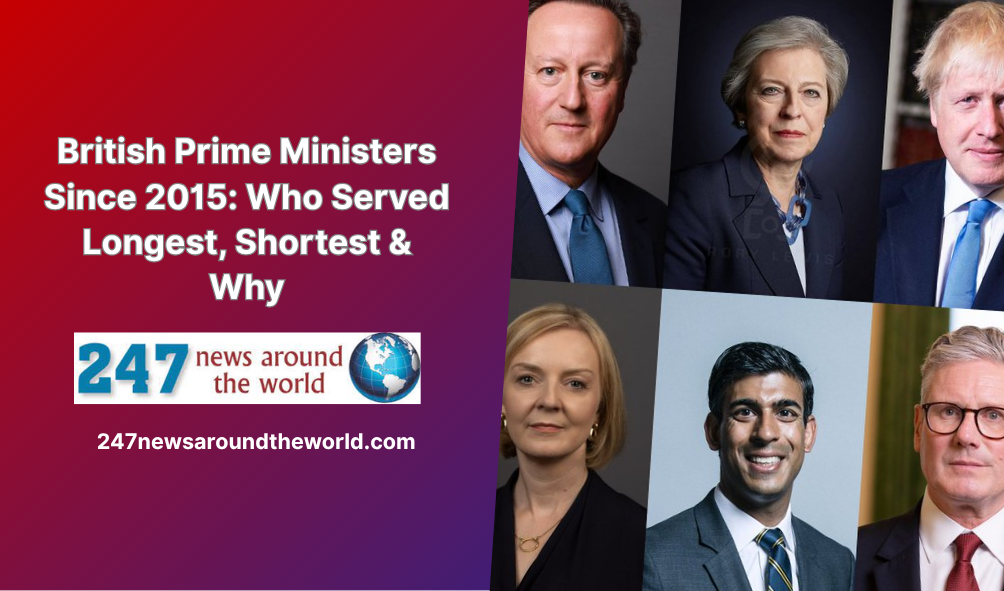
Since 2015, the United Kingdom has experienced a period of significant political volatility, resulting in six different individuals serving as prime minister. This rapid turnover—unprecedented in modern British history—reflects a decade defined by the 2016 Brexit referendum, the COVID-19 pandemic, and shifting economic landscapes. According to official UK Parliament records, the tenure of these leaders has varied drastically, ranging from just 49 days to over three years.
The six individuals who have held the office of Prime Minister since 2015 are David Cameron, Theresa May, Boris Johnson, Liz Truss, Rishi Sunak, and Keir Starmer. Understanding the trajectory of these leadership changes requires examining the specific circumstances—ranging from electoral mandates to internal party resignations—that necessitated each transition at 10 Downing Street.
The Longest and Shortest Tenures
Among the leaders of the last decade, Boris Johnson holds the longest tenure, serving as Prime Minister from July 2019 until September 2022. Johnson, who led the Conservative Party to a significant parliamentary majority in the 2019 general election, resigned following a series of internal party scandals and the mass resignation of his government ministers, as documented by the BBC.
Conversely, Liz Truss holds the record for the shortest term of any British prime minister in history. Her premiership lasted only 49 days in 2022. Truss resigned on October 20, 2022, after her “mini-budget” triggered market instability and faced severe criticism from both the financial sector and her own parliamentary colleagues, according to reporting by Reuters.
A Timeline of Leadership Transitions
The sequence of prime ministers since 2015 highlights the frequency of leadership changes within the Conservative Party, followed by the Labour Party victory in 2024. The following table outlines the approximate duration of each premiership:
| Prime Minister | Term Start | Term End |
|---|---|---|
| David Cameron | 2010 | 2016 |
| Theresa May | 2016 | 2019 |
| Boris Johnson | 2019 | 2022 |
| Liz Truss | 2022 | 2022 |
| Rishi Sunak | 2022 | 2024 |
| Keir Starmer | 2024 | Present |
David Cameron initiated the 2016 EU referendum and resigned shortly after the result favored leaving the European Union. He was succeeded by Theresa May, who faced persistent challenges in negotiating the terms of the UK’s withdrawal from the EU, ultimately leading to her resignation in 2019. Her successor, Boris Johnson, focused on “getting Brexit done” but faced scrutiny over his handling of the pandemic and ethical standards in office, as noted by the Financial Times.
Why Leadership Changed So Frequently
The high frequency of leadership changes is largely attributed to the internal mechanisms of the Conservative Party, which held power for the majority of the period between 2015 and 2024. When a sitting prime minister loses the confidence of their parliamentary party, they often face a leadership challenge or are pressured to resign to avoid a formal vote of no confidence.
Theresa May, for instance, survived a vote of no confidence in 2018 but resigned months later when she could not secure parliamentary support for her Brexit deal. Rishi Sunak, who succeeded Liz Truss in October 2022, aimed to restore economic stability. However, his government faced significant electoral challenges, culminating in the July 2024 general election where the Labour Party, led by Keir Starmer, secured a decisive victory, marking the first change in governing party since 2010 according to official election results.
What Happens Next
The current government, led by Keir Starmer, is now tasked with addressing the economic and social policy priorities outlined in the Labour Party’s 2024 manifesto. British prime ministers serve as long as they maintain the confidence of the House of Commons and remain the leader of their political party. The next general election is not constitutionally required until 2029, though political developments can influence the timing of parliamentary activity.
Citizens can track ongoing legislative updates and ministerial statements through the official UK Parliament website. As the new administration settles into office, the focus remains on domestic economic recovery and international relations. We encourage readers to share their thoughts on these political shifts in the comments section below.
Worth a look