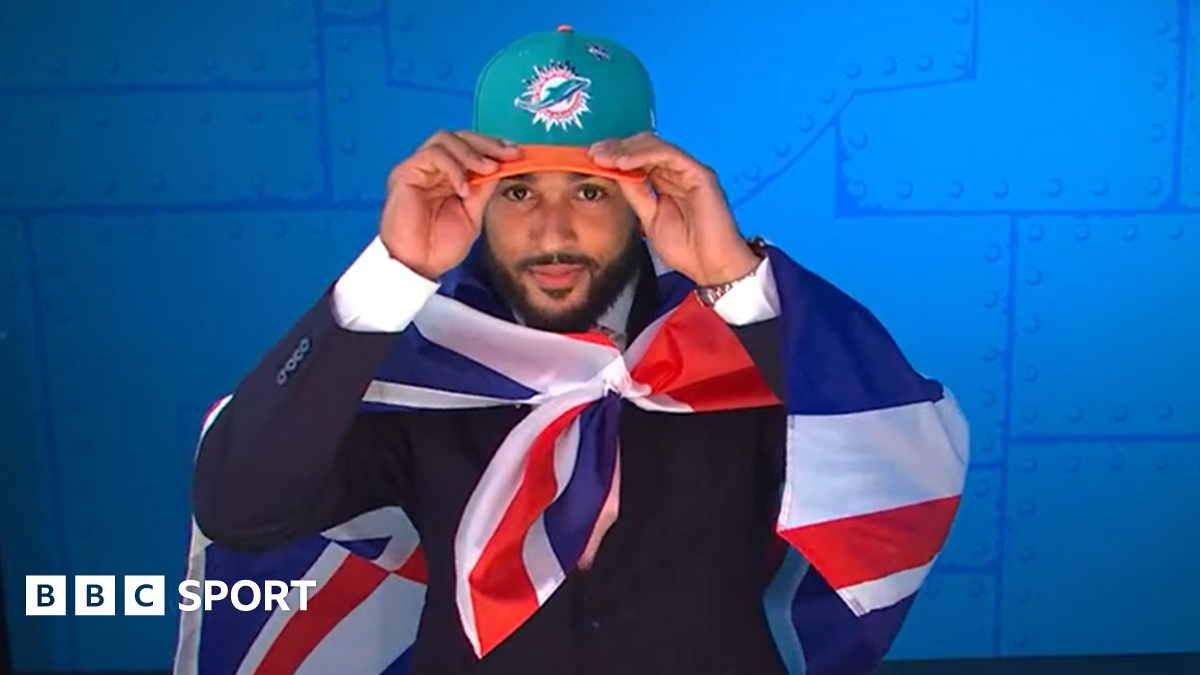
British tight end Seydou Traore has develop into the first graduate of the UK-based NFL Academy to be selected in an NFL Draft, joining Nigerian prospect Uar Bernard as international talents chosen in the 2026 NFL Draft.
The Miami Dolphins selected Traore with the 180th overall pick, acquired via trade with the Dallas Cowboys, marking a late fifth-round selection. This historic pick makes Traore the third International Player Pathway (IPP) product ever drafted, following Australia’s Jordan Mailata in 2018 and Britain’s Travis Clayton in 2024.
Traore, who is 23 years old and of French-Algerian and Ivorian heritage, was born and raised in London where he played for the London Warriors as a teenager. He joined the NFL Academy’s first intake in 2019 before spending five years in college football in the United States.
His college career began at Arkansas State in 2021 before transferring to Mississippi State in 2023. Across 48 college games, Traore recorded 131 receptions for 1,482 yards and 10 touchdowns, including five touchdowns in his final season.
Former London Warriors player and NFL veteran Efe Obada announced the Dolphins’ selection on stage in Pittsburgh during the draft proceedings. Obada, who was the first IPP product to play in the NFL, stated: “Pittsburgh, you are now witnessing history being made.”
The selection highlights the NFL’s continued efforts to develop international talent through programs like the IPP, which allows athletes from outside the traditional American football pipeline to showcase their skills to NFL teams.
Traore’s journey reflects the pathway available through the NFL Academy, which launched in London in 2019 and has since relocated to Loughborough. The program provides elite training, education, and exposure to American football techniques for young athletes in the United Kingdom.
Uar Bernard, the Nigerian prospect selected alongside Traore in the draft, has yet to play a game of American football, representing an even earlier stage of international development within the league’s global outreach initiatives.
The Dolphins’ general manager Jon-Eric Sullivan described Traore as “a raw, athletic ball of clay” who should continue to develop with proper coaching and experience at the professional level.
As a product of the NFL Academy’s inaugural class, Traore’s selection validates the program’s mission to identify and nurture football talent from regions where the sport is not traditionally dominant.
His background—combining West African heritage with a London upbringing—exemplifies the diverse pathways through which international athletes are now entering the NFL.
The 180th overall pick represents significant value for the Miami Dolphins, who acquired the selection through a trade that allowed them to address tight end depth while investing in a project player with unique physical attributes.
Traore joins a growing list of international players who have leveraged developmental programs like the IPP to earn NFL opportunities, including recent successes such as Jordan Mailata, who has become a starting offensive tackle for the Philadelphia Eagles.
The selection process for IPP participants differs from traditional draft prospects, as these athletes often lack extensive American football experience but possess exceptional athletic profiles that teams believe can be developed through NFL coaching systems.
For Traore, the transition from college football at Mississippi State to the professional level will require adaptation to the increased speed, complexity, and physical demands of NFL play, particularly in mastering the tight end position’s dual responsibilities in blocking and receiving.
His measurables—listed at 6 feet 4 inches and 244 pounds—provide the physical framework that attracted NFL scouts, though his relative inexperience in structured American football systems presents both opportunity and challenge for his development.
The NFL Academy’s role in Traore’s journey included academic support, athletic training, and exposure to American football concepts during his formative years in London before his transition to the U.S. Education and football systems.
As international scouting continues to expand, programs like the NFL Academy and IPP serve as critical bridges for athletes from non-traditional football markets to access the highest levels of the sport.
The 2026 NFL Draft marked another step in the league’s globalization strategy, with selections like Traore and Bernard demonstrating the NFL’s commitment to tapping into global athletic talent pools.
Moving forward, Traore’s progress will be monitored through offseason training programs, preseason camps, and potential practice squad assignments as he works to earn a roster spot with the Miami Dolphins.
His development timeline will likely follow the pattern of other IPP products, requiring patience from the organization as he adjusts to the nuances of professional American football.
The selection also brings attention to the London Warriors youth program, where Traore first began playing football as a teenager before advancing through the NFL Academy pathway.
For global audiences interested in the NFL’s international expansion, Traore’s story provides a concrete example of how developmental pathways are creating opportunities for athletes worldwide.
As the NFL continues to host regular-season games in London and other international markets, the pipeline of locally developed talent like Traore may grow increasingly significant to the league’s long-term global strategy.
Verified updates on Traore’s contract status, rookie minifold participation, and preseason performance can be found through the Miami Dolphins’ official team website and the NFL’s transaction log as the offseason progresses.
Readers are encouraged to share their thoughts on the NFL’s international development programs and the prospects of players like Seydou Traore in the comments section below.
Related reading