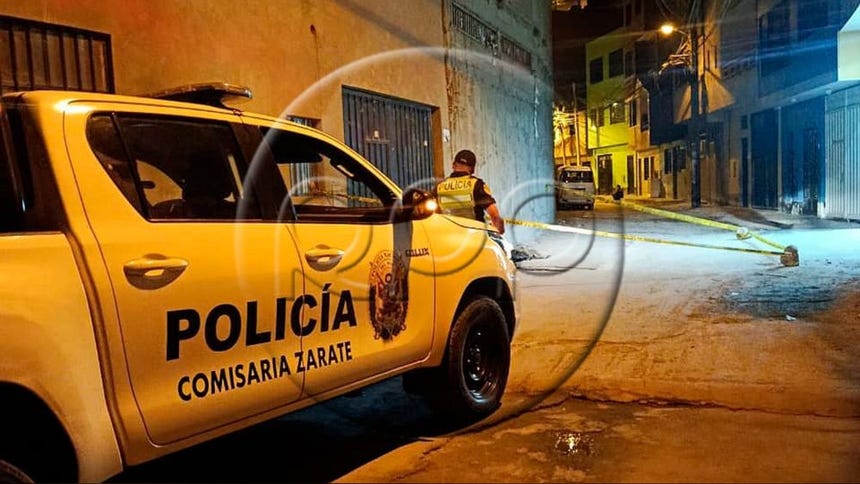
Brutal Shooting in Lima’s San Juan de Lurigancho Leaves One Dead
A brazen daylight execution in the Zárate district of San Juan de Lurigancho (SJL), Lima, has left residents reeling and authorities investigating a disturbing surge in violent crime. The victim, a man subjected to a barrage of over fifteen bullets, was discovered in the early hours of Friday, March 6, 2026, on Pasaje Santa Rosa. The incident underscores the ongoing security challenges facing the Peruvian capital, even as the government maintains a state of emergency aimed at curbing criminal activity.
According to initial reports, the man was transported to the location via mototaxi before being deliberately abandoned on the street. Witnesses described a swift and ruthless attack, with assailants opening fire repeatedly on the victim, who died at the scene. The proximity of the shooting to a local Serenazgo (security patrol) center has raised serious questions about response times and the effectiveness of existing security measures. The incident occurred amidst a broader context of escalating gang violence in Lima, prompting calls for increased police presence and more robust security strategies.
Investigation Underway, Victim Remains Unidentified
Peruvian National Police (Policía Nacional) swiftly cordoned off the crime scene upon arrival, initiating a forensic investigation to gather evidence and piece together the events leading up to the shooting. As of Friday morning, the victim remained unidentified, with local residents reporting they did not recognize the individual. This suggests the possibility that the man was brought to the location specifically to be targeted, potentially indicating a targeted hit or a settling of scores between criminal factions. The lack of identification complicates the investigation, hindering efforts to determine the victim’s background and potential motives for the attack.
Escalating Violence and the State of Emergency
The shooting in Zárate is the latest in a series of violent incidents plaguing Lima, prompting the Peruvian government to declare a 30-day state of emergency in Lima and Callao on February 28, 2026, in an attempt to address the rising tide of criminal activity. The decree grants increased powers to the police and military, including the ability to restrict freedom of movement and conduct searches without a warrant. However, the effectiveness of the state of emergency remains a subject of debate, with some critics arguing that it may not address the root causes of crime, such as poverty, inequality, and corruption.
Residents of San Juan de Lurigancho have expressed growing concern over the lack of security in their neighborhoods, demanding increased police patrols and a more visible presence of law enforcement. The fact that this brutal attack occurred so close to a Serenazgo center has fueled anxieties about the ability of authorities to protect citizens. The incident highlights the challenges faced by Peruvian security forces in combating organized crime and maintaining public order in densely populated urban areas. The ongoing state of emergency is intended to provide the necessary tools and resources to address these challenges, but its long-term impact remains to be seen.
The Role of Criminal Gangs in Lima
Peruvian authorities have identified a number of criminal gangs operating in Lima, often involved in drug trafficking, extortion, and contract killings. These gangs frequently target rival groups or individuals perceived as threats to their operations. The brazen nature of the shooting in Zárate suggests a possible escalation of violence between competing criminal factions. While the identity of the victim remains unknown, investigators are exploring the possibility that the attack was a targeted hit carried out by a rival gang. The proliferation of firearms and the easy availability of illicit drugs contribute to the escalating violence in the city.
The situation is further complicated by the presence of organized crime networks that operate across national borders, facilitating the flow of drugs and weapons into Peru. International cooperation is essential to disrupt these networks and address the underlying causes of crime. The Peruvian government has been working with neighboring countries and international organizations to strengthen law enforcement cooperation and combat transnational crime. However, significant challenges remain, including limited resources, corruption, and a lack of coordination between different agencies.
What Happens Next?
The investigation into the shooting in Zárate is ongoing, with police focusing on identifying the victim and tracking down the perpetrators. Authorities are reviewing security camera footage from the area and interviewing witnesses in an effort to gather more information about the incident. The results of the forensic investigation are expected to provide crucial clues about the type of weapon used and the identity of the attackers. The Peruvian government is too expected to announce further measures to address the rising tide of crime in Lima, potentially including increased funding for law enforcement and stricter penalties for criminal offenses.
The state of emergency in Lima and Callao is scheduled to expire on March 28, 2026, but could be extended depending on the security situation. The government will likely assess the effectiveness of the current measures and consider additional steps to address the root causes of crime. The long-term solution to the problem of violence in Lima requires a comprehensive approach that addresses not only law enforcement but also social and economic factors. This includes investing in education, job creation, and social programs to provide opportunities for vulnerable populations and reduce the appeal of criminal activity.
This incident serves as a stark reminder of the challenges facing Peru in its fight against crime and the urgent require for effective security measures to protect its citizens. The investigation is ongoing, and further updates will be provided as they become available.
We encourage readers to share their thoughts and experiences in the comments section below. Your insights are valuable as we continue to report on this critical issue.