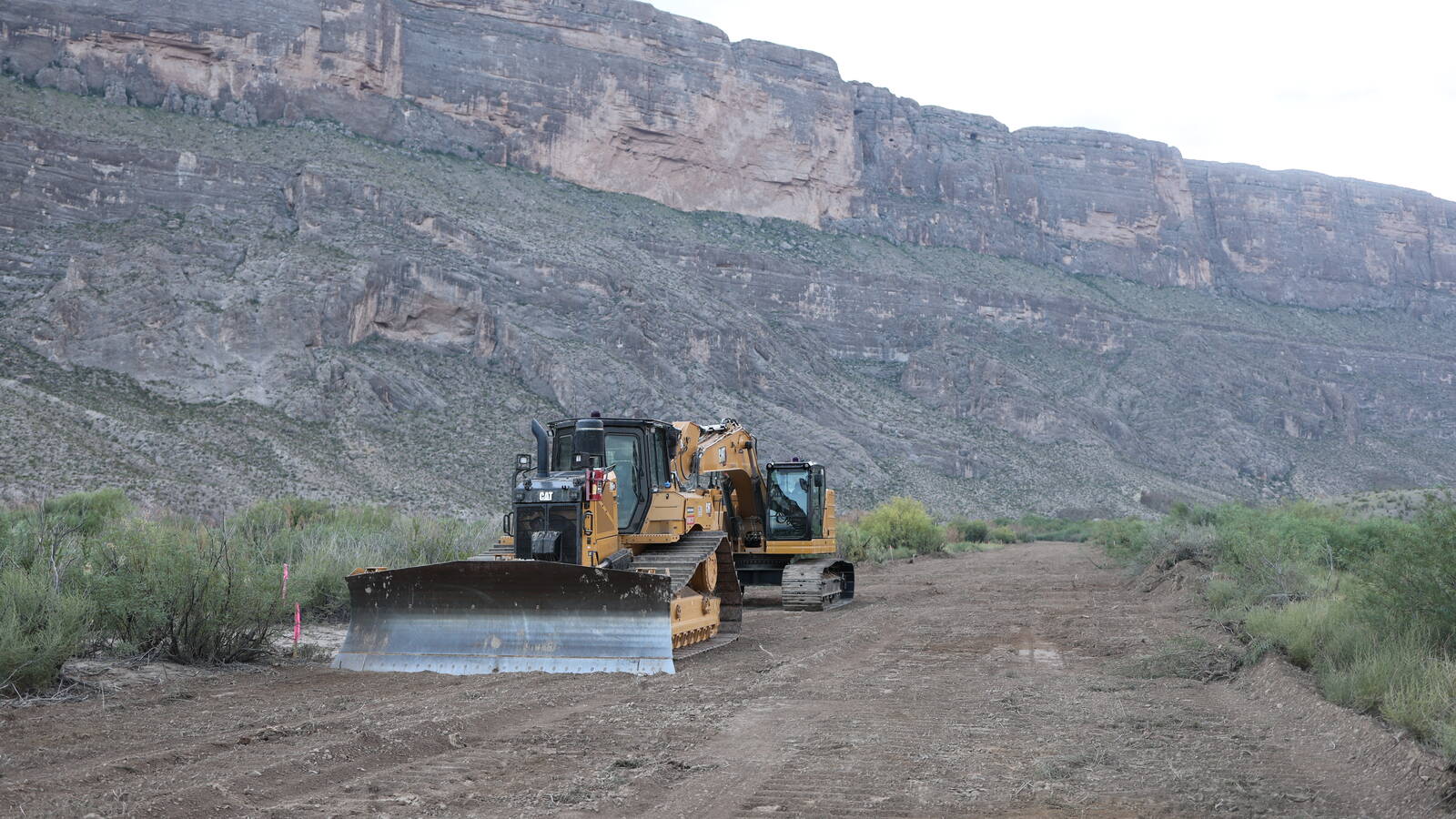
Federal contractors authorized by Customs and Border Protection have begun bulldozing miles of sensitive habitat near Santa Elena Canyon in Big Bend National Park, sparking sharp condemnation from local residents, environmental advocates, and lawmakers. The construction marks the active deployment of border wall infrastructure through the wild West Texas landscape, a project superintended by federal officials who waived dozens of environmental regulations in June to accelerate the work.
According to the National Parks Conservation Association, five border security infrastructure projects are currently underway in the Big Bend region. These developments impact not only Big Bend National Park itself, but also the nearby Amistad National Recreation Area and Big Bend Ranch State Park. The sweeping initiative follows Congress’s allocation of $46.5 billion in funding last summer to supercharge southwest border wall construction, according to USA Today.
The construction activity has transformed a remote stretch of the United States-Mexico border into an active industrial zone. Contractors have moved heavy machinery into the park to clear paths, a process that critics warn will cause irreparable damage to fragile ecosystems. Park advocates point out that the region consistently ranks lowest in unauthorized border crossings compared to other sections of the U.S.-Mexico border, largely due to its unforgiving desert elements and rugged terrain.
“It is horrifying. An invasion. Occupation,” said Mike Davidson, a Rio Grande river guide who has lived in the area for nearly 50 years, in an interview reported by USA Today.
The National Parks Conservation Association sharply condemned the project as contractors moved in over the weekend. Tiernan Sittenfeld, the organization’s president and CEO, called the initiative an unconscionable attack on one of America’s greatest treasures, noting that the clearing threatens recreation access and sensitive wildlife habitats.
Environmental Waivers and Legal Challenges
To fast-track the barrier installation, federal officials utilized authority to bypass dozens of environmental regulations that would normally mandate rigorous reviews for major infrastructure projects inside national parks. The Department of Homeland Security maintains that the wall’s path will vary, with some remote or highly rugged locations slated for vehicle bollards designed to allow wildlife to pass through unimpeded, while other zones receive more intensive physical barriers.

Environmental groups, including the National Parks Conservation Association and the Center for Biological Diversity, have filed lawsuits seeking to halt the construction. However, local observers remain skeptical that judicial intervention will stop the work in time. Davidson noted to USA Today that he believes the administration is pushing to finish as much construction as possible ahead of the midterm elections and the possibility that Democrats could retake Congress and halt progress, leaving little immediate recourse through the courts.
The controversy in Big Bend is part of a broader wave of border infrastructure disputes across the Southwest. In Arizona, conservationists demonstrated in July after contractors felled a group of cottonwood trees believed to be more than 100 years old near Lochiel to clear space for the barrier. Meanwhile, in New Mexico, the Roman Catholic Diocese of Las Cruces asked a federal judge in May to block government acquisition of land on Mount Christo Rey, an ongoing legal battle over a religious site.
Local Economic and Recreational Concerns
Big Bend National Park, formally established in 1944, spans approximately 801,000 acres of mountains and desert along the Rio Grande corridor. Its southern boundary forms roughly 118 miles of the international border. Gateway communities like Terlingua rely on the park’s remote wilderness.
Local leaders and business owners have expressed deep frustration over the lack of responsiveness from federal agencies regarding the full scope of the project. While Department of Homeland Security officials have indicated that physical barriers will not blanket every single mile of the park due to unfavorable terrain or remoteness of location, residents argue that blasting new roads for Border Patrol access represents an environmental catastrophe in its own right.
Opponents of the wall have consistently advocated for alternative security measures, arguing that investing in advanced remote surveillance technology and additional cameras would secure the border effectively without scarring a protected national park. Despite these appeals, heavy equipment continues to reshape the landscape as the administration presses forward with its regional security projects.
Keep reading