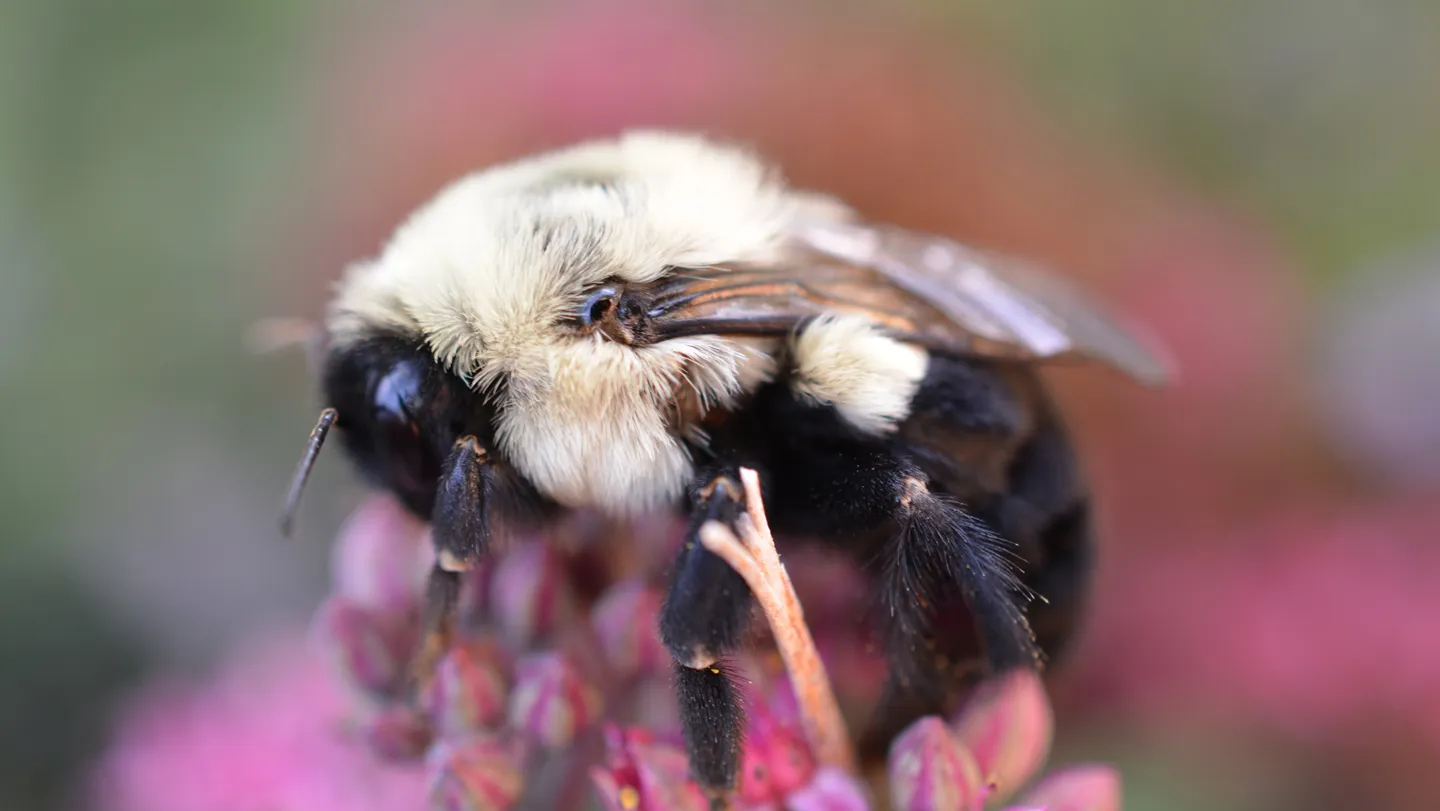
The resilience of the natural world continues to surprise, and recent research has revealed a remarkable ability in a familiar pollinator: the bumblebee. Specifically, hibernating bumblebee queens possess an extraordinary capacity to survive prolonged submersion in water, effectively “breathing” underwater for days. This discovery, initially sparked by an accidental lab flood, has prompted scientists to investigate the physiological mechanisms behind this unusual adaptation and consider its implications in a world increasingly impacted by extreme weather events.
Foraging bees are vital to our ecosystems, and their decline is a growing concern. Understanding how these insects cope with environmental challenges, such as flooding, is crucial for conservation efforts. The ability of bumblebee queens to withstand prolonged underwater periods isn’t simply a curious biological quirk; it’s a potential survival strategy in the face of increasingly frequent and intense rainfall events linked to climate change. Researchers at the University of Ottawa, Canada, have been at the forefront of this investigation, uncovering details about how these insects manage to remain alive when deprived of access to air.
The initial clue came in 2024, when vials containing hibernating eastern bumblebee queens (Bombus impatiens) were inadvertently flooded in a laboratory setting. Instead of succumbing to drowning, the queens survived for up to a week underwater. This unexpected resilience prompted a more controlled investigation led by Sabrina Rondeau, Charles Darveau, and Skyelar Rojas. Their findings, published March 10, 2026, in Proceedings of the Royal Society B: Biological Sciences, detail the physiological processes that allow these queens to endure such extreme conditions.
How Bumblebees Breathe Underwater
The research team meticulously recreated the accidental flooding scenario, placing hibernating queens in vials filled with cold water for up to eight days. They carefully monitored oxygen levels in the water, carbon dioxide release from the bees, and the buildup of lactic acid – a byproduct of anaerobic metabolism. Their observations revealed that the queens weren’t simply holding their breath. Oxygen levels in the water demonstrably decreased over time, while the bees continued to release carbon dioxide, indicating ongoing respiration. Crucially, the accumulation of lactic acid confirmed that the queens were switching to a metabolic strategy that doesn’t rely on oxygen.
“One bumblebee queen roughly one milliliter in volume would need 20 milliliters of oxygen,” explained ecological physiologist Charles Darveau, highlighting the impossibility of the queens surviving for so long on stored oxygen alone. The team’s findings suggest that the queens are able to extract oxygen directly from the water, a remarkable feat for a terrestrial insect. While the exact mechanism remains unclear, researchers speculate that the bees may be trapping a thin layer of air around their bodies, similar to what is observed in some aquatic insects.
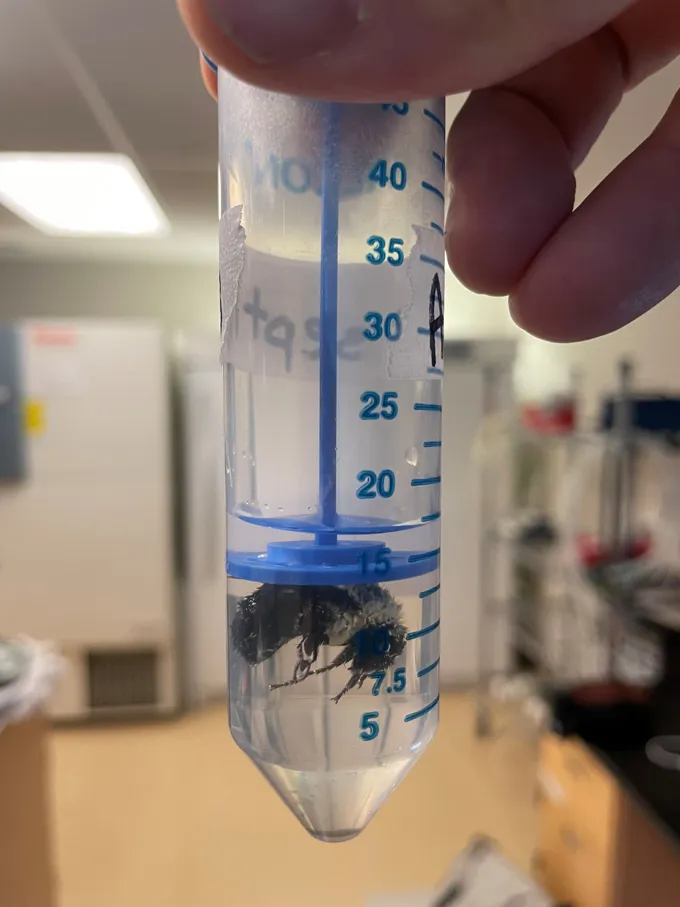
Researchers submerged hibernating bumblebee queens in plastic vials for eight days. They took measurements to see how much oxygen the bees inhaled and how much carbon dioxide they exhaled.
Charles DarveauThe Impact of Climate Change
This remarkable adaptation takes on added significance in the context of a changing climate. As rainfall patterns become more erratic and extreme flooding events become more frequent, the ability of bumblebee queens to survive prolonged submersion could be critical for the long-term health of bee populations. Bumblebees play a vital role in pollinating a wide range of crops and wild plants, and their decline could have significant ecological and economic consequences. According to the National Oceanic and Atmospheric Administration (NOAA), heavy precipitation events have increased in frequency and intensity across much of the United States over the past several decades.
Darveau and his team are now investigating the limits of this underwater survival capability. They are exploring how repeated or prolonged submersion might impact the queens’ energy reserves and overall health. “If repeated submersions set a dent in the bees’ energy reserves, there might be some point of no return,” Darveau cautioned. The queens rely on stored energy to survive the winter and initiate colony growth in the spring, and any significant depletion of these reserves could jeopardize their reproductive success.
Bumblebee Hibernation and Vulnerability
Bumblebees, unlike honeybees, do not form permanent colonies. Each spring, a single queen emerges from hibernation and establishes a recent colony. These queens typically overwinter in underground nests, which are unfortunately susceptible to flooding, particularly during periods of heavy rainfall or snowmelt. The queens enter a state of diapause, a period of dormancy characterized by reduced metabolic activity, to conserve energy during the winter months. However, this reduced metabolic rate also means they are less able to respond quickly to environmental changes, such as sudden inundation.
The discovery of this underwater breathing ability highlights the incredible adaptability of insects and the importance of continued research into their physiological mechanisms. Further investigation is needed to fully understand how bumblebee queens are able to extract oxygen from the water and to assess the long-term consequences of repeated submersion. This knowledge will be crucial for developing effective conservation strategies to protect these vital pollinators in a rapidly changing world.
Researchers are also exploring whether other bumblebee species exhibit similar underwater survival capabilities. The current study focused on the eastern bumblebee (Bombus impatiens), but other species may have evolved similar adaptations to cope with flooding risks. Understanding the distribution of this trait across different bumblebee species will be essential for prioritizing conservation efforts.
The University of Ottawa research team, led by Charles Darveau, continues to monitor the effects of climate change on pollinator populations. Their ongoing work is providing valuable insights into the challenges facing these essential insects and informing the development of strategies to mitigate the impacts of environmental change. The next phase of research will focus on field studies to assess the prevalence of flooding in bumblebee nesting habitats and to determine the extent to which this phenomenon is impacting bee populations in the wild.
This remarkable ability of bumblebee queens to survive underwater offers a glimmer of hope in the face of growing environmental challenges. It underscores the importance of protecting and restoring natural habitats to provide these pollinators with the resources they need to thrive.
What do you think about this fascinating discovery? Share your thoughts in the comments below, and please share this article with anyone interested in the resilience of nature and the importance of protecting our pollinators.
Keep reading