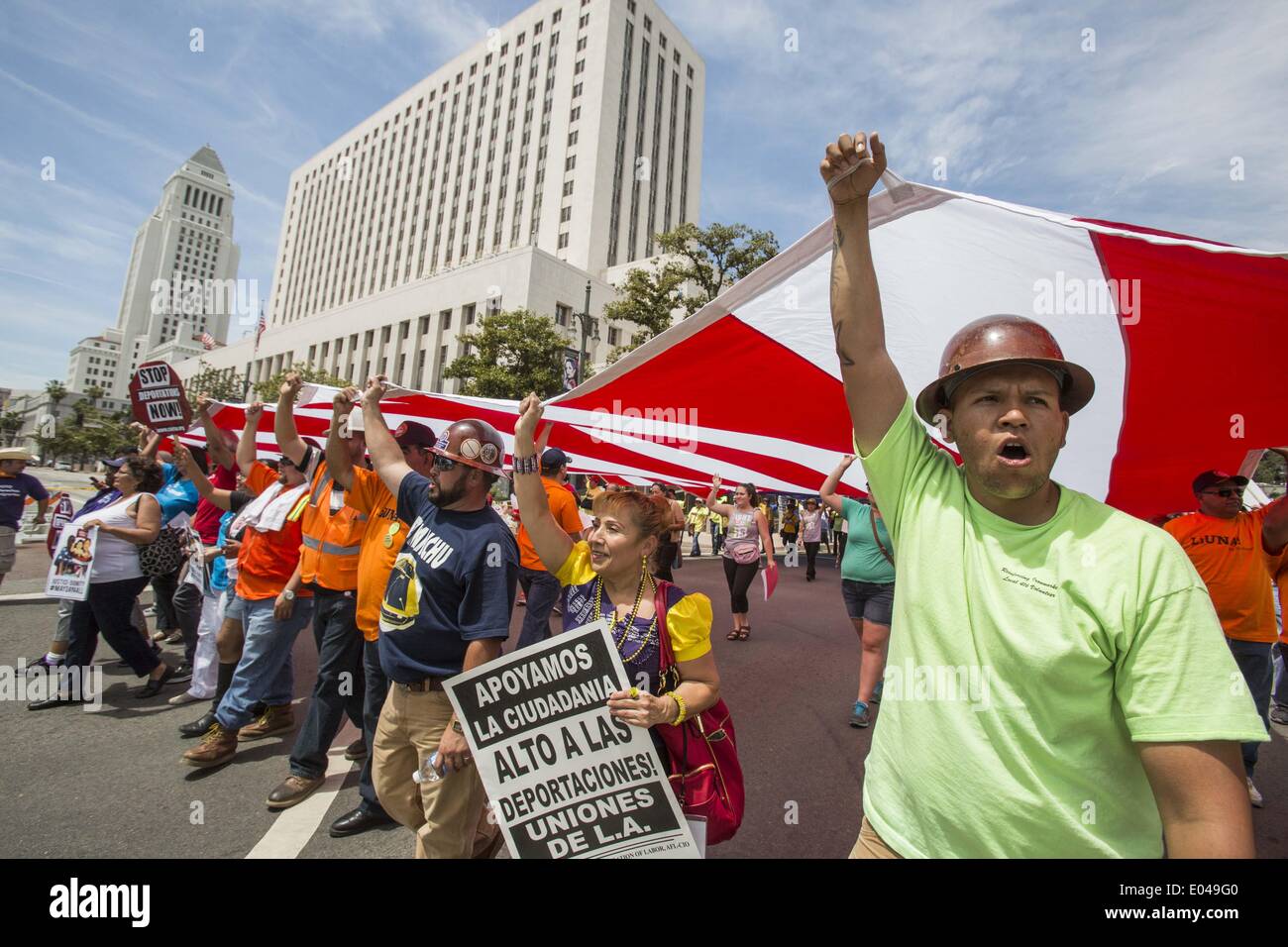
LOS ANGELES — Thousands of activists, labor unions, and faith leaders are converging on downtown Los Angeles today, Friday, May 1, 2026, to protest the current migration crisis and a surge in federal immigration enforcement. The demonstrations, organized by a broad coalition of community groups, aim to signal a systemic rejection of the Trump administration’s immigration policies and economic inequality.
The centerpiece of the day’s activity is a massive rally and march starting at MacArthur Park and proceeding toward downtown Los Angeles. Organizers have called for an economic blackout
, urging the public to abstain from work, school, and shopping to demonstrate the essential role of immigrant labor in the American economy. This tactic of a general strike is being mirrored in other major U.S. Cities, including Minneapolis, where similar surges in U.S. Immigration and Customs Enforcement (ICE) activity have sparked protests.
The momentum for today’s action is driven by the Los Angeles May Day Coalition, which includes a diverse array of nonprofit organizations and labor unions. The coalition’s theme for 2026, solo el pueblo shuts it down
, reflects a growing sentiment among advocates that grassroots mobilization is the only effective countermeasure to the current administration’s enforcement strategies.
A Coalition Against Enforcement
The scale of the mobilization is significant, with reporting indicating that more than 120 organizations, unions, and faith groups across California have coordinated efforts for the May Day marches. In Los Angeles, the push for labor and immigrant protections has intensified following what advocates describe as a surge in immigration enforcement and the reported shooting deaths of two U.S. Citizens, which have further galvanized the movement.
Francisco Moreno, the executive director of the Council of Mexican Federations in North America, is among the key leaders steering the Los Angeles rally. The coalition’s goals extend beyond immediate immigration relief, calling for broader labor protections and an end to what they characterize as the criminalization of undocumented residents.
The protests also carry a deep historical weight. Organizers have explicitly linked today’s events to the anniversary of the massive Day Without an Immigrant
marches of 2006, which saw millions of people across the U.S. Walk off their jobs to demand comprehensive immigration reform. By invoking this precedent, leaders hope to remind the public and policymakers of the economic leverage held by the immigrant workforce.
The ‘Economic Blackout’ Strategy
The call for an economic blackout
is not merely a symbolic gesture but a strategic attempt to disrupt commercial activity. According to reports from LAist, the movement encourages a total cessation of daily economic activities—no work, no school, no shopping—to highlight the fragility of the economy without immigrant contributions.
This strategy is part of a wider national trend. In the Bay Area and Minneapolis, similar slogans and tactics have been adopted to fight against the Trump administration’s immigration agenda. The goal is to demonstrate worker power as the United States approaches the mid-term elections, signaling to business leaders and politicians that the workforce is prepared to take drastic action to protect vulnerable communities.
For many in Los Angeles—a city with one of the largest populations of undocumented residents in the country—the stakes are personal. The rally serves as both a protest and a support network, providing a space for families affected by recent deportations and enforcement raids to find solidarity.
Event Logistics and Impact
The scheduled events for May 1, 2026, in Los Angeles are structured to maximize visibility and disruption:
- Start Time: 10:00 AM
- End Time: 1:30 PM
- Primary Gathering Point: MacArthur Park
- March Route: From MacArthur Park toward Downtown LA (routes may vary based on crowd size and police guidance)
Organizations such as SEIU Local 1000 have been instrumental in mobilizing workers, coordinating with other unions to ensure a high turnout of professional and service-sector employees alongside agricultural and industrial workers.
What This Means for the Migration Crisis
The migration crisis in the U.S. Has reached a critical juncture, with the current administration pursuing a policy of aggressive enforcement and deterrence. For the participants of the May Day march, the crisis is not just one of border security, but of human rights. The coalition argues that the current approach ignores the systemic causes of migration—such as violence and economic instability in home countries—and instead focuses on punitive measures.
By uniting faith leaders, union representatives, and nonprofit directors, the movement seeks to frame the migration crisis as a moral and economic issue rather than a purely legal one. The involvement of faith-based organizations, in particular, underscores the argument that providing sanctuary and protection to migrants is a humanitarian imperative.
As the marches conclude, the coalition intends to transition from street protests to legislative advocacy. The demand for a comprehensive immigration reform package remains the primary long-term goal, with a focus on pathways to citizenship and the cessation of mass deportation campaigns.
Key Takeaways from the May Day Mobilization
- Broad Coalition: Over 120 organizations across California are participating, indicating a high level of cross-sectoral unity between labor, faith, and civic groups.
- Economic Pressure: The use of an
economic blackout
aims to translate social grievance into economic impact, targeting the commercial sector to force political concessions. - Historical Continuity: The 2026 protests are consciously modeled after the 2006
Day Without an Immigrant
movement to emphasize the enduring nature of the struggle. - Political Timing: The protests are strategically timed to influence the political landscape leading up to the mid-term elections.
The immediate next checkpoint for the movement will be the monitoring of federal enforcement responses following today’s demonstrations and the subsequent legislative filings in Congress regarding immigration reform. Activists are expected to maintain a presence in downtown Los Angeles throughout the weekend to ensure their demands remain in the public eye.
We invite our readers to share their perspectives on the current migration crisis and the impact of today’s marches in the comments section below.
Keep reading