
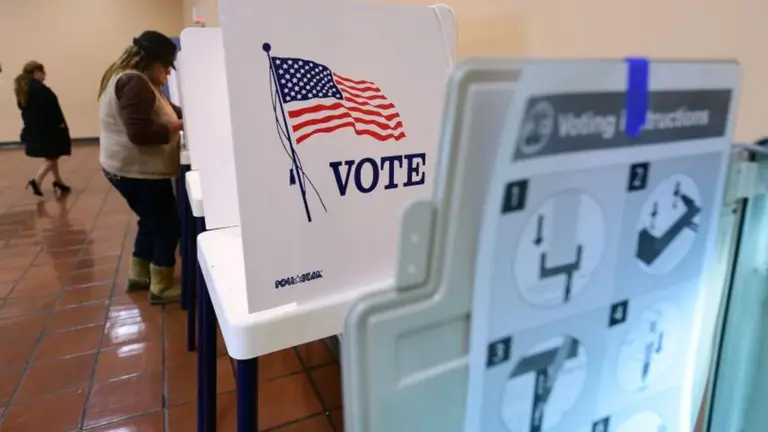
California is moving toward a potential overhaul of its election laws that would introduce strict new requirements for voter identification and citizenship verification. A proposed initiative constitutional amendment, which has been cleared for the November 2026 general election ballot, seeks to shift the state away from its current flexible identification standards toward a more rigid system of verification for both in-person and mail-in voting.
The measure, announced by California Secretary of State Shirley N. Weber, Ph.D.
, would mandate that individuals provide proof of citizenship upon registration and present government-issued identification when voting at polling places. This represents a significant departure from the state’s current electoral framework, where the vast majority of voters cast their ballots via mail and identification requirements for most voters are minimal.
The proposal arrives amid a broader national debate over election security and voter access. Proponents of the measure argue that these safeguards are necessary to ensure the integrity of the electoral process, whereas critics contend that such requirements could disenfranchise millions of eligible voters, particularly those in marginalized communities who may lack current government-issued IDs.
Because California is one of the largest voting blocs in the United States, any fundamental change to its voting procedures carries substantial implications for national election trends and the legal landscape of voter rights. The initiative is currently categorized as an initiated constitutional amendment, meaning that if passed, it would alter the state’s governing document rather than simply changing a statutory law.
The Core Requirements of the 2026 Voter ID Initiative
The proposed measure aims to implement a multi-layered verification process designed to prevent non-citizens from voting and to eliminate potential identity fraud at the polls. According to the California Secretary of State’s office, the initiative focuses on two primary pillars: registration and casting the ballot.
First, the initiative would require the state to verify proof of citizenship at the time a person registers to vote. Under current laws, registration often relies on a self-attestation of citizenship under penalty of perjury. The new proposal would move toward a documentary evidence standard, requiring tangible proof of citizenship before a voter is added to the rolls.
Second, the measure would require voters to provide identification at polling places. This shift would impact the millions of Californians who choose to vote in person, requiring them to present a valid government-issued ID to receive a ballot. For those utilizing the state’s robust mail-in system, the initiative also seeks to tighten the verification of signatures and identification details associated with the return of postal ballots.
The initiative is formally tracked as the California Voter Identification and Voter List Maintenance Requirements Initiative (2026). In addition to ID requirements, the measure includes provisions for more aggressive voter list maintenance to ensure that deceased individuals or those who have moved out of state are removed from the active registries more efficiently.
Impact on Mail-In Voting and Accessibility
California has transitioned toward a “universal mail-in” model, where every active registered voter is mailed a ballot. This system has historically seen high participation rates due to its convenience. Though, the proposed changes could introduce new friction into this process.
While the primary focus of the ID requirement is on in-person voting, the broader goal of the initiative is to ensure that the identity of every voter—regardless of the method used—is verified against government records. This could lead to an increase in “provisional” ballots if a voter’s identification cannot be immediately verified, potentially slowing down the counting process in a state that already takes weeks to finalize its totals.
Civil rights organizations have expressed concern that these requirements may disproportionately affect low-income voters, the elderly, and students, who may not possess the specific forms of government ID required by the new law. The debate centers on the balance between election integrity
and voter accessibility
, a tension that has defined legislative battles in several other U.S. States over the last few years.
Comparison of Current vs. Proposed Systems
| Feature | Current System (2026) | Proposed Initiative (Post-2026) |
|---|---|---|
| Registration | Self-attestation of citizenship | Documentary proof of citizenship |
| In-Person Voting | ID generally not required for most | Government-issued ID mandatory |
| Mail-In Ballots | Signature verification | Enhanced ID/Citizenship verification |
| List Maintenance | Standard periodic cleaning | Aggressive, mandated maintenance |
Legal Path and Timeline to the Ballot
The road to the November 2026 election has been a multi-stage legal process. The initiative first entered circulation on September 19, 2025, after proponents were cleared by the Secretary of State to begin collecting the necessary number of petition signatures. This process is a requirement for any citizen-led effort to place a constitutional amendment on the ballot in California.
Following the successful collection and verification of signatures, the measure was officially announced as eligible for the November 2026 General Election ballot on April 24, 2026. This means the proposal has passed the initial procedural hurdles and will now be subject to a statewide vote by the citizens of California.
Parallel to the citizen-led initiative, there have been legislative attempts to achieve similar goals through the state assembly. For instance, the AB-25 California Voter ID and Election Integrity Act of 2025 was introduced to codify similar identification requirements into law. While legislative bills can be vetoed by the governor or blocked by the legislature, a constitutional amendment passed by voters is much more difficult to overturn and carries higher legal authority.
What This Means for California Voters
For the average Californian, the immediate impact is minimal until the election occurs in November 2026. However, the potential for change is significant. If the measure passes, the state will need to implement a massive infrastructure update to verify citizenship for millions of residents and provide a mechanism for those without IDs to obtain them without undue burden.

The outcome of this vote will likely be decided by whether voters perceive the current system as “secure enough” or if they believe the risk of fraud justifies the potential for lower voter turnout. In a state with a diverse population and a complex registration system, the implementation of a strict ID law would be one of the most significant shifts in California’s electoral history since the adoption of universal mail-in voting.
Voters are encouraged to monitor official updates from the California Secretary of State to understand which forms of identification will be accepted and how the citizenship verification process will be administered if the initiative is approved.
The next critical checkpoint for this measure will be the formal publication of the ballot title and summary, which will provide voters with the exact wording of the amendment and a neutral analysis of its impact before they head to the polls on November 3, 2026.
We invite our readers to share their perspectives on voter identification laws in the comments below. How do you balance the need for security with the need for accessibility?