
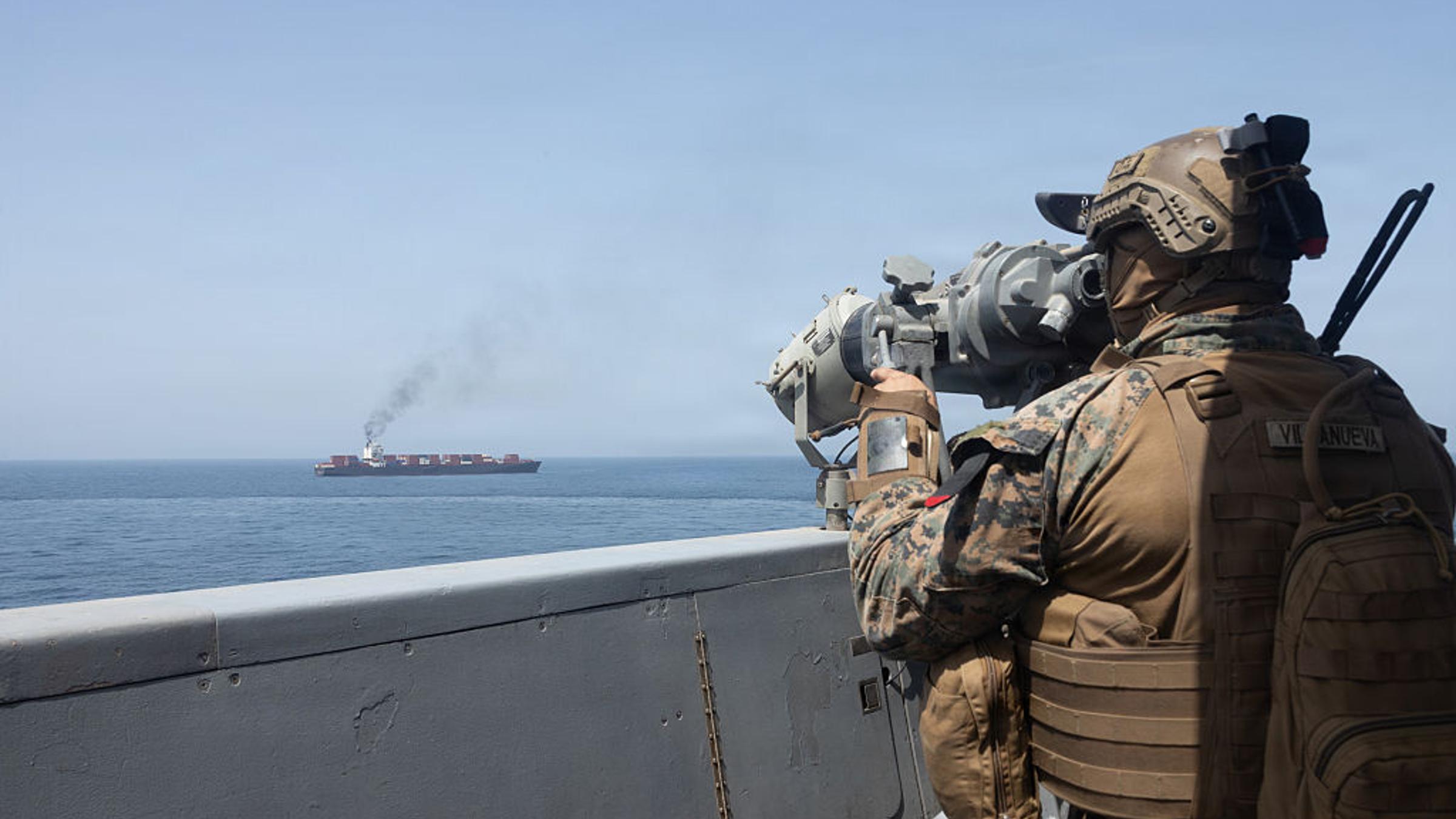
President Donald Trump has described the U.S. Navy’s enforcement of a sea blockade against Iran as being sort of like pirates
, characterizing the seizure of Iranian vessels and cargo as a profitable business
. The remarks, made on the evening of Friday, May 1, 2026, come amid a rapidly escalating maritime conflict in the Strait of Hormuz that has disrupted global energy markets and triggered severe economic volatility.
The U.S. Naval blockade of Iranian ports, which officially began on April 13, 2026, was implemented following the collapse of peace talks between Washington and Tehran. The move was a direct response to Iran’s closure of the Strait of Hormuz, a critical energy transit route. According to the administration, the blockade will remain in effect until Iran opens the Strait to all maritime traffic.
The conflict follows a surprise attack launched by the U.S. And Israel against Iran on February 28, 2026, which ignited a broader war that has resulted in the deaths of thousands of civilians. In the wake of that attack, Iran blocked all maritime traffic through the Strait, though it has recently allowed some non-combatant nations and allies to pass upon payment of a toll. The U.S. Blockade specifically targets Iranian vessels and any other ships that have paid these tolls to the Iranian regime.
Economic Impact and Global Energy Crisis
The disruption of the Strait of Hormuz—a passage through which one-fifth of the world’s oil and liquefied natural gas typically flows—has caused oil prices to spike and led to fuel rationing in multiple countries. The economic ripple effects have hit the U.S. Domestic market sharply; according to AAA, the average price of gasoline reached $4.39 per gallon on Friday, May 1, 2026.
The aviation sector has seen immediate casualties due to the surge in operating costs. Spirit Airlines became the first U.S. Carrier to cease operations on Saturday, May 2, 2026, citing unsustainable fuel costs linked to the Iran war. Reports indicate that jet fuel prices have doubled since the conflict began two months ago.
CENTCOM Reports on Blockade Enforcement
U.S. Central Command (CENTCOM) has maintained a rigorous enforcement posture to ensure the blockade’s effectiveness. On April 29, 2026, CENTCOM Commander Adm. Brad Cooper stated that U.S. Forces had redirected more than 40 commercial vessels attempting to violate the blockade.
“Right now there are 41 tankers with 69 million barrels of oil that the Iranian regime can’t sell. That’s an estimated $6 billion-plus from which Iran’s leadership cannot financially benefit. The blockade is highly effective and U.S. Forces remain fully committed to total enforcement.” Adm. Brad Cooper, Commander, U.S. Central Command
Following that statement, CENTCOM confirmed the redirection of four additional vessels, bringing the total number of redirected ships to 45 since the blockade’s inception on April 13.
Legal and Political Challenges
The administration’s approach to the conflict has drawn scrutiny from domestic political opponents. Members of the Democratic party are reportedly exploring legal avenues to sue President Trump if he continues to pursue the war without explicit authorization from Congress.
The legal debate centers on the nature of the blockade and the executive’s authority to engage in such high-stakes maritime interdiction without legislative approval. The administration maintains that the actions are necessary for national security and the restoration of free navigation in the Strait of Hormuz.
For those seeking official updates on the status of the blockade and maritime advisories, the U.S. Central Command official website provides the latest operational reports and security notices for commercial shipping.
The international community continues to monitor the situation as the U.S. Maintains its position that the blockade will persist until the Strait of Hormuz is fully reopened to all international traffic. We will provide updates as further official statements are released by the White House or the Department of Defense.
Do you believe the current naval strategy will force Iran to reopen the Strait, or is the economic cost to the West too high? Share your thoughts in the comments below.