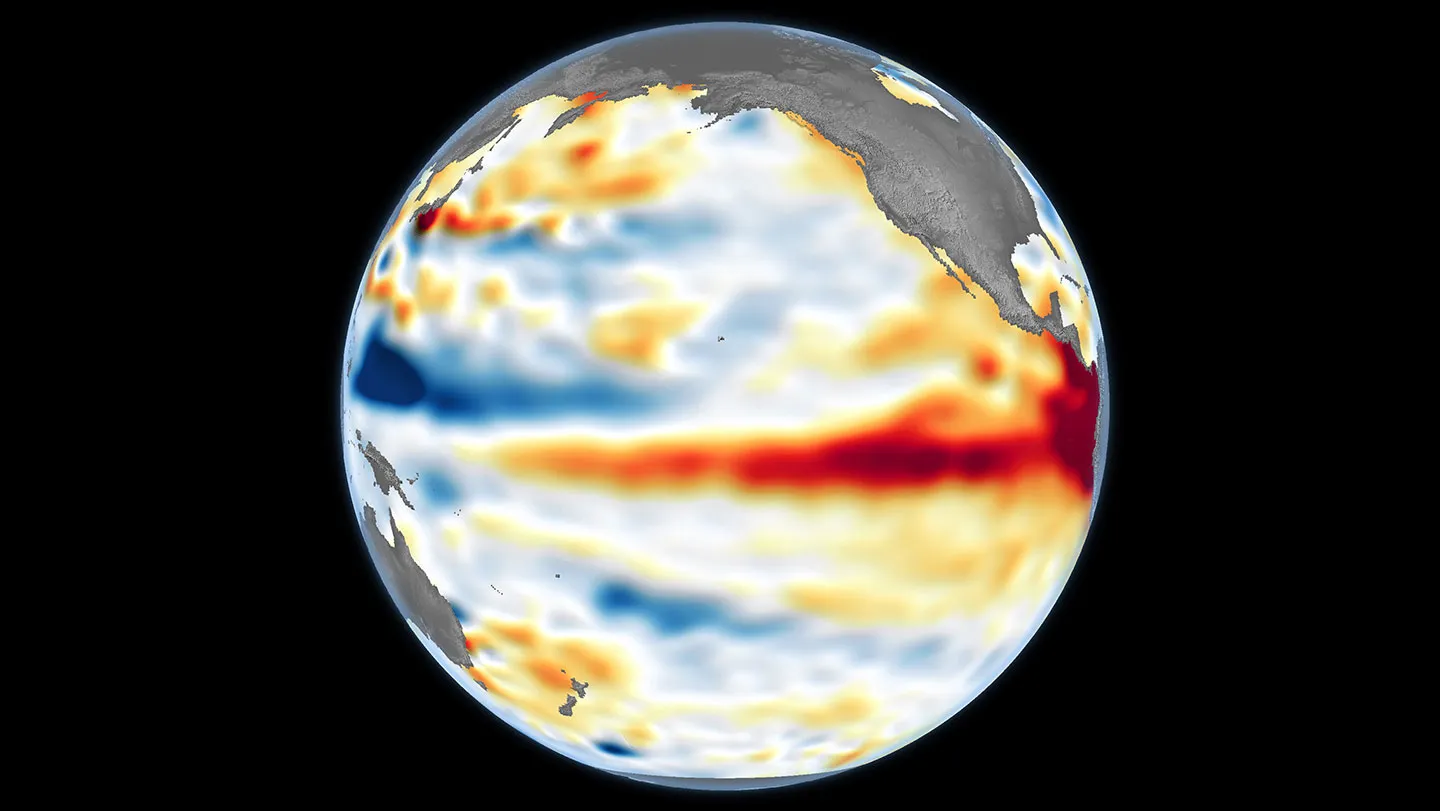
Marine cloud brightening is emerging as a potential, albeit controversial, strategy to mitigate the intensity of extreme El Niño events by cooling sea surface temperatures in the tropical Pacific. Recent climate modeling suggests that by increasing the reflectivity of low-lying clouds, scientists could theoretically dampen the thermal anomalies that drive global weather disruptions. However, the deployment of such geoengineering techniques remains a subject of intense scientific debate, with experts warning of significant ecological risks, unpredictable regional climate shifts, and the lack of a global regulatory framework to manage atmospheric intervention.
The concept, often referred to as marine cloud brightening (MCB), involves spraying a fine mist of sea salt particles into the marine boundary layer. These aerosols act as cloud condensation nuclei, increasing the concentration of droplets within existing clouds. This process, known as the Twomey effect, makes the clouds whiter and more reflective, thereby bouncing more incoming solar radiation back into space. According to research published by the National Center for Atmospheric Research (NCAR), localized application of this technology in the Pacific could potentially reduce the sea surface temperature warming associated with the most severe El Niño cycles.
Mechanics of Marine Cloud Brightening
At its core, marine cloud brightening aims to artificially boost the Earth’s planetary albedo. El Niño events are characterized by a periodic warming of the central and eastern tropical Pacific, which triggers a cascade of weather extremes, including droughts in Australia and Southeast Asia and heavy rainfall in parts of the Americas. By targeting the specific regions where these warming patterns originate, researchers hypothesize that cooling the ocean surface could disrupt the positive feedback loops that allow El Niño to reach extreme intensity.
The National Oceanic and Atmospheric Administration (NOAA) has noted that while small-scale field trials have taken place—such as the 2024 experiment conducted by the University of Washington in Alameda, California—these tests are designed to study aerosol behavior rather than manipulate regional climate. The challenge for researchers lies in the scale; cooling the Pacific sufficiently to blunt an El Niño would require a massive, sustained deployment of aerosol-spraying vessels or autonomous platforms across vast swathes of the ocean. Current simulations indicate that the efficacy of the method is highly dependent on the precise placement of the clouds and the timing of the aerosol injection relative to the development of the El Niño phase.
Ecological and Geopolitical Risks
The prospect of intentional climate intervention raises significant concerns regarding unintended consequences. Climate models cited by the Intergovernmental Panel on Climate Change (IPCC) emphasize that altering the reflectivity of the Pacific could shift precipitation patterns in ways that are difficult to predict. A cooling effect in one region might inadvertently cause drought or flooding in another, potentially destabilizing agricultural systems in nations far removed from the Pacific.
Furthermore, the environmental impact of depositing large quantities of sea salt into the marine atmosphere remains under-researched. Marine ecosystems, particularly coral reefs and plankton populations, are sensitive to changes in light and water chemistry. Critics of geoengineering argue that focusing on technical fixes like cloud brightening may divert attention and funding from the primary necessity of reducing global greenhouse gas emissions. The United Nations Environment Programme (UNEP) has repeatedly called for a precautionary approach, noting that the governance of solar radiation modification is currently nonexistent, leaving the international community without a mechanism to adjudicate disputes if one nation’s geoengineering project adversely affects another’s climate.
The Path Forward for Research
Scientific consensus currently views marine cloud brightening as a high-risk, high-uncertainty proposal. Future research is expected to focus on high-fidelity modeling to better understand the systemic responses of the atmosphere to localized cooling. As of 2024, there are no international laws specifically governing the use of solar radiation modification technologies, though the World Meteorological Organization (WMO) continues to track developments in weather modification research to ensure transparency and safety standards.
The next major checkpoint for the field will likely be the publication of comprehensive risk assessment frameworks currently being discussed in academic and policy forums. These frameworks are intended to establish baseline ethical standards for any outdoor testing. As the scientific community continues to analyze the feasibility of these interventions, the focus remains on whether human-engineered cloud cover can ever be a safe or reliable substitute for long-term climate stabilization. Readers interested in the latest official updates on climate policy and geoengineering ethics can monitor reports from the Royal Society, which provides ongoing analysis of emerging climate technologies.
The dialogue surrounding geoengineering is evolving rapidly. Whether this technology will ever move from simulation to deployment depends not only on technical success but on the ability of the international community to reach a consensus on the governance of the global commons. We invite our readers to share their perspectives on the balance between innovation and environmental caution in the comments section below.