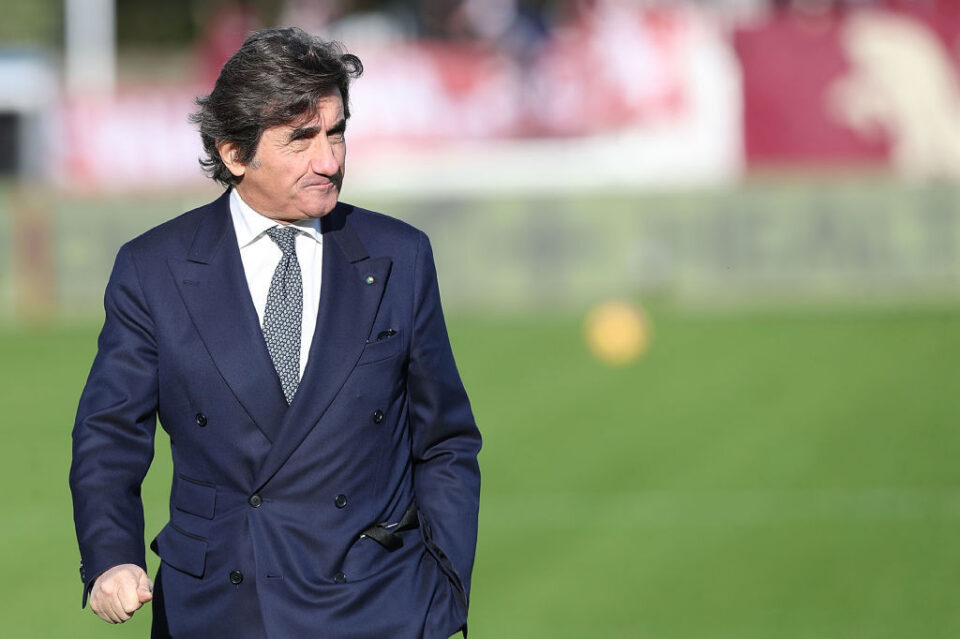
Torino FC faces a critical financial balancing act as club president Urbano Cairo weighs the economic measures necessary to keep 2007-born prospect Alessio Cacciamani in Turin, according to recent club financial disclosures and statements reported by Italian sports outlets. Amid a backdrop of fan demonstrations encapsulated by the slogan “Cacciamani non si vende”, club leadership must navigate a negative net financial position and a multi-million-euro deficit projected for the upcoming fiscal cycle. Cairo acknowledged the club’s delicate economic realities, noting that management must execute decisive player exits to offset recent spending and secure the young talent’s long-term future in granata colors.
The financial foundation for these decisions stems from Torino’s official balance sheet closed on December 31, 2025. According to the financial report, the club recorded a net loss of 13,1 milioni di euro for the year. While Torino generated a positive EBITDA (Gross Operating Margin) of 26,5 milioni, that figure marked a significant drop of 26,1 milioni compared to the 52,6 milioni recorded in 2024. Operating pressures intensified after factoring in 39 milioni in depreciation, provisions, and write-downs—with 34,5 milioni directly tied to player asset management—resulting in an EBIT (Net Operating Margin) deficit of 12,5 milioni.
Personnel expenses further strained the club’s ledger, totaling 68,9 milioni overall, of which approximately 63,7 milioni represented gross payroll. First-team player salaries accounted for roughly 50 milioni before bonuses, while the book value of multi-year player registration rights stood at 58,6 milioni at the close of 2025. Player trading remained vital to mitigating losses, with the club generating 42,98 milioni in capital gains through sales such as Samuele Ricci and Vanja Milinkovic-Savic, though that total fell short of the 58,46 milioni achieved in 2024.
Looking ahead to the projections for the fiscal period ending December 31, 2026, financial models indicate a pre-tax deficit of approximately 10 million euros. Projections factor in a gross player wage bill of roughly 48 million euros, more than 26 million euros in annual depreciation expenses, and anticipated total revenues approaching 100 million euros when combining ordinary operational production, realized capital gains, and broadcasting inflows such as the Lega Serie A’s resolution regarding international media rights involving IMG. To bridge this gap and fund planned squad additions—including a goalkeeper, a left-sided central defender, a wide player, and a defensive midfielder—sporting director Davide Petrachi must optimize the transfer market.
Club planning indicates that player departures will dictate whether retention targets like Cacciamani remain feasible. Outgoing operations focus on designated squad redundancies and departures, notably Cristiano Biraghi, Ivan Ilić, and Gvidas Gineitis. Financial projections highlight that moving Biraghi, who carries a minimal residual book value, alongside Ilić and youth product Gineitis, could yield immediate savings on amortization and wages while generating crucial capital gains. Successfully executing these targeted sales would produce a net financial improvement exceeding 16 milioni, wiping out the projected deficit and empowering management to resist outside pressure to part with Cacciamani.
As the final weeks of the transfer window unfold, Torino’s ability to retain its standout youth prospect depends entirely on disciplined financial execution and precise squad management. Club officials will continue monitoring fiscal markers ahead of the next formal reporting deadlines as the team prepares for competitive fixtures under manager Moreno Longo.
Related reading