Europe’s aerial firefighting capacity faces an operational squeeze driven by extreme climate conditions, simultaneous multi-region blazes, and complex maintenance demands on aging aircraft fleets. According to reports from Le Monde, Le Figaro, and Les Echos, firefighting agencies across the continent are confronting a structural bottleneck. The crisis stems not merely from a shortage of water-bombing planes, but from the intensity of modern wildfires, the logistical nightmare of maintaining specialized fleets like Canadair aircraft, and the strain placed on public safety services.
As summer temperatures soar and prolonged droughts dry out vegetation, fire management has shifted from localized containment to a daily triage. Civil protection authorities find themselves forced to divide limited aerial assets across multiple countries and regions simultaneously. This dynamic exposes vulnerabilities in European civil defense infrastructure, triggering political debates in countries like France over fleet modernization, equipment procurement timelines, and the industrial realities of aircraft production.
Maintenance Realities and Fleet Pressures for Canadair Aircraft
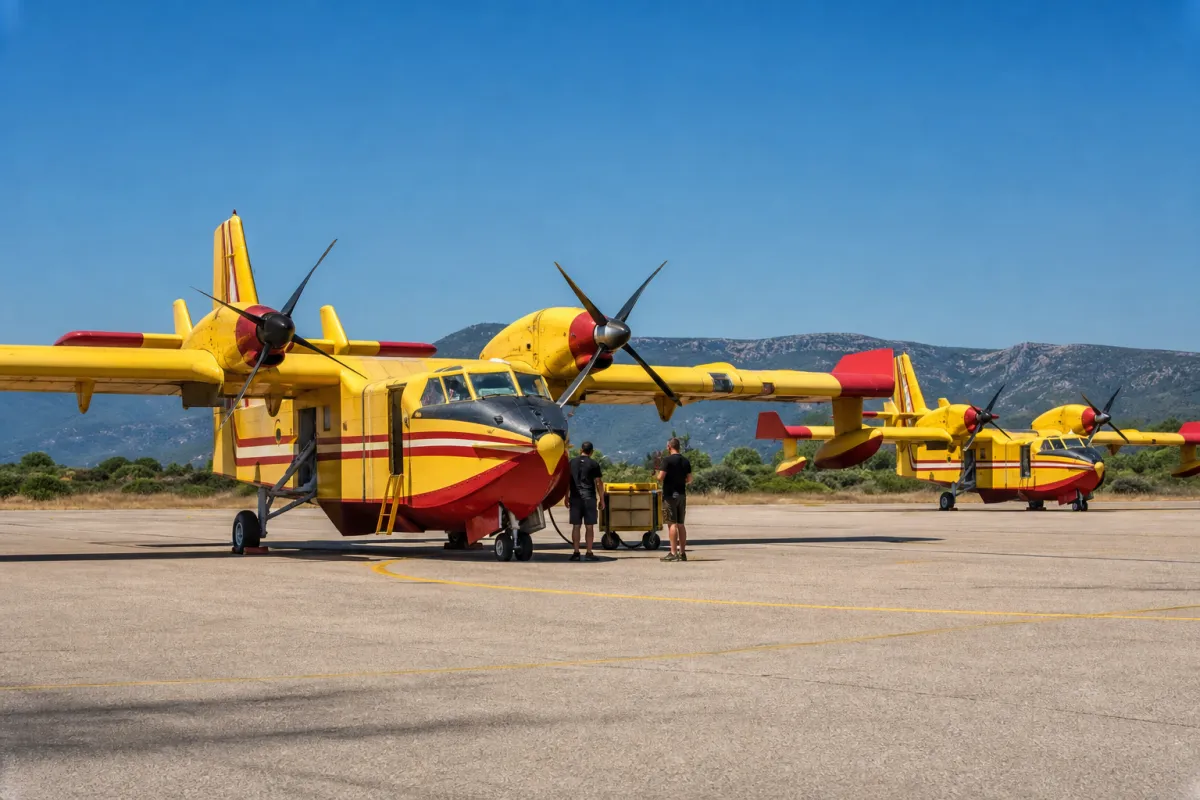
At the center of the operational debate is the maintenance and upkeep of the Canadair water-bomber. Servicing these specialized amphibious aircraft requires intricate engineering, specialized parts, and lengthy turnaround times. Maintenance providers face intense scrutiny during peak fire seasons when every grounded plane reduces tactical options on the front lines.
Responding to public and political criticism regarding maintenance delays, maintenance contractor Sabena Technics stated that the firm has successfully delivered the objectives outlined in its contractual roadmap, according to coverage by Le Figaro. Aging airframes demand increasingly complex structural checks, turning routine maintenance into prolonged overhauls that keep critical firefighting assets out of the sky precisely when they are needed most.
Compounding the maintenance bottleneck is a broader manufacturing shortfall. Production lines for water-bombers have faced long lead times, leaving European governments waiting years for new deliveries. Financial and industrial hurdles have stalled rapid fleet expansion, forcing nations to stretch existing aircraft beyond historical operational limits.
Political Scrutiny and Public Service Pressures
The strain on firefighting fleets has triggered intense political friction. In France, opposition lawmakers and investigative reports have questioned past procurement decisions, examining whether previous administrations—including the government of former Prime Minister Gabriel Attal—missed critical windows to order new Canadair aircraft, as detailed by Le Dauphiné Libéré. Government defenders argue that procurement schedules are bound by international manufacturing availability and multi-year defense budgeting cycles rather than political oversight alone.
Simultaneously, investigative reporting by outlets like Mediapart highlights broader systemic questions regarding the state of public services. Critics argue that decades of budgetary restraint have left civil protection agencies under-resourced in the face of escalating climate risks.
The convergence of simultaneous fires across the Mediterranean basin means neighboring countries can no longer easily share surplus aircraft during peak crises, as each nation needs its own fleet at home. This zero-sum dynamic has forced European Union civil protection mechanisms to mediate frantic negotiations over resource sharing.
Next Steps and Operational Outlook
European Union transport and civil defense committees continue to evaluate long-term joint procurement initiatives aimed at stabilizing the continent’s aerial firefighting capacity.
Readers seeking official updates, civil safety advisories, and procurement disclosures can monitor announcements published through the European Commission Directorate-General for European Civil Protection and Humanitarian Aid Operations (ECHO).
What are your thoughts on how European nations should modernize their emergency response infrastructure? Share your perspective in the comments below.
Worth a look