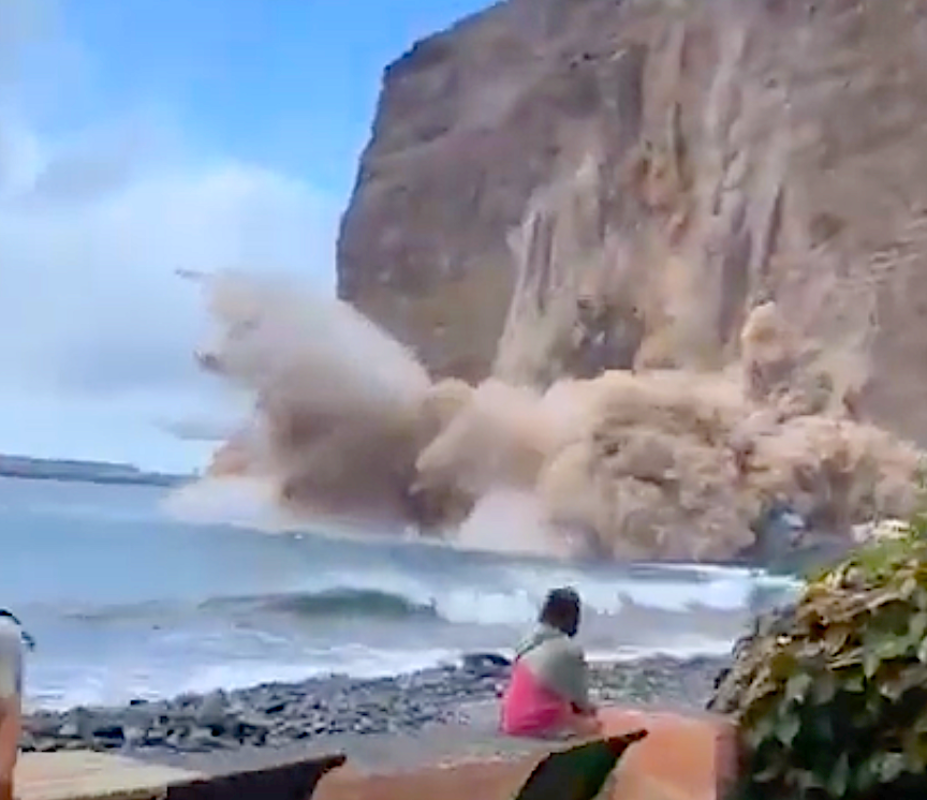
La Gomera, Canary Islands – Dramatic footage circulating online shows a significant rockslide cascading into the ocean off the coast of La Gomera, one of the Canary Islands, a Spanish archipelago known for its rugged volcanic landscapes. The incident, which occurred in 2020 but recently resurfaced on social media, prompted a wave of reactions as it narrowly missed impacting nearby campers. The event underscores the inherent geological risks present in this region and highlights the importance of hazard assessment in coastal areas.
The Canary Islands, a popular destination for European tourists, are formed by volcanic activity and are prone to landslides and other geological events. Often referred to as “the Hawaii of Europe,” the islands offer a unique blend of dramatic scenery and Atlantic swell, attracting surfers and nature enthusiasts alike. However, this volcanic origin also means the islands are susceptible to instability, as evidenced by the recent rockslide and, tragically, by a series of dangerous wave events in recent years.
The video, originally captured in 2020, depicts a substantial portion of a cliff face collapsing into the sea, sending a plume of dust and debris into the air. Remarkably, the slide occurred near a coastal road where several vehicles were parked and fortunately, no injuries or casualties were reported. The incident prompted discussion online about the potential for similar events and the need for careful planning and risk mitigation in areas prone to landslides. The caption accompanying the reposted video, translated from Spanish, emphasizes the importance of assessing geological hazards at infrastructure sites, noting that the camping area was “clearly a very high hazard site.”
Geological Hazards in the Canary Islands
The Canary Islands’ geological instability stems from their volcanic origins and ongoing tectonic activity. The islands are situated on the African Plate, near a hotspot that has fueled volcanic eruptions for millions of years. This geological activity creates steep slopes and unstable rock formations, making landslides a recurring hazard. According to research published by the Instituto Geológico y Minero de España (IGME), the Canary Islands are subject to various types of landslides, including rockfalls, debris flows, and large-scale slope failures. IGME actively monitors geological risks across the archipelago.
The risk is not limited to landslides. The islands are also vulnerable to tsunamis, both locally generated by underwater landslides and those originating from distant earthquakes. The potential for a large-scale flank collapse on one of the islands, triggering a massive tsunami, has been a subject of scientific debate for decades. Even as the probability of such an event is considered low, the potential consequences are significant, prompting ongoing research and monitoring efforts.
Recent Dangerous Wave Activity and Fatalities
The recent rockslide incident serves as a stark reminder of the natural hazards present in the Canary Islands, particularly in light of other recent events. In December 2023, a rogue wave struck a natural pool on the island of Tenerife, tragically resulting in the deaths of four people. Surfer Magazine reported on the incident, highlighting the unpredictable nature of these waves and the dangers they pose to swimmers and beachgoers. The wave, described as unusually large and powerful, swept several individuals out to sea, despite warnings about hazardous conditions.
Following the Tenerife tragedy, there have been multiple reports of dangerous wave sightings and encounters across the islands. These incidents have raised concerns about the increasing frequency and intensity of such events, potentially linked to changing weather patterns and ocean conditions. Local authorities have issued warnings to the public, urging caution and advising against swimming or engaging in water activities in exposed coastal areas. The increased attention to wave safety also comes amid reports of tensions between local surfers and tourists, with some instances of aggression reported. Surfer Magazine detailed reports of altercations between local surfers and tourists, highlighting the issue of “localism” in popular surf spots.
Understanding Rogue Waves
Rogue waves, also known as freak waves, are unusually large and unexpected waves that can pose a significant threat to maritime activities. They are often several times larger than the surrounding waves and can appear seemingly out of nowhere. While the exact mechanisms behind rogue wave formation are still being studied, they are believed to be caused by a combination of factors, including constructive interference of multiple wave systems, focusing of wave energy by currents, and nonlinear effects. The 2020 La Gomera rockslide also generated a tiny wave, reminiscent of the massive wave at Lituya Bay, Alaska, in 1958, which reached a height of approximately 1,720 feet. Surfer Magazine provides details on the Lituya Bay tsunami, illustrating the potential for landslides to generate significant wave events.
Risk Management and Safety Measures
Given the inherent geological hazards in the Canary Islands, effective risk management and safety measures are crucial for protecting both residents and tourists. Local authorities are responsible for monitoring geological activity, issuing warnings, and implementing land-apply planning regulations to minimize exposure to risk. This includes conducting geological surveys, installing early warning systems, and establishing evacuation plans. The European Union also plays a role in supporting risk management efforts in the outermost regions, including the Canary Islands, through initiatives aimed at enhancing resilience and promoting sustainable development. The European Commission’s Inforegio program provides information on EU support for outermost regions.
For tourists visiting the Canary Islands, We see essential to be aware of the potential hazards and to follow the advice of local authorities. This includes checking weather forecasts, heeding warning signs, and avoiding exposed coastal areas during periods of rough seas. It is also advisable to familiarize oneself with emergency procedures and to have a plan in place in case of a natural disaster. The recent incidents serve as a sobering reminder of the power of nature and the importance of respecting the environment.
Key Takeaways
- The Canary Islands are prone to geological hazards due to their volcanic origins and ongoing tectonic activity.
- Recent events, including a rockslide in La Gomera and a fatal rogue wave in Tenerife, highlight the risks to both residents and tourists.
- Effective risk management and safety measures are crucial for mitigating the impact of these hazards.
- Tourists should be aware of the potential dangers and follow the advice of local authorities.
Authorities continue to monitor the geological stability of the Canary Islands and assess the risks associated with landslides and wave activity. Further updates and safety advisories will be issued as needed. Readers are encouraged to stay informed and to share this information with others planning to visit the region. Please share your thoughts and experiences in the comments below.
Related reading
- Chelsea Fined £10m by FA for Agent Payment Rule Breaches (2009-2022)
- India Enters Neeraj Chopra Javelin Final and Ten Boxing Semifinals
- Evangelion: 1.0 Ichiban Kuji Generates Massive Buzz for Rei Ayanami Prize (world-today-news.com)
- Audi Unveils the Massive New Q9: Its Biggest and Heaviest SUV Yet (news-usa.today)