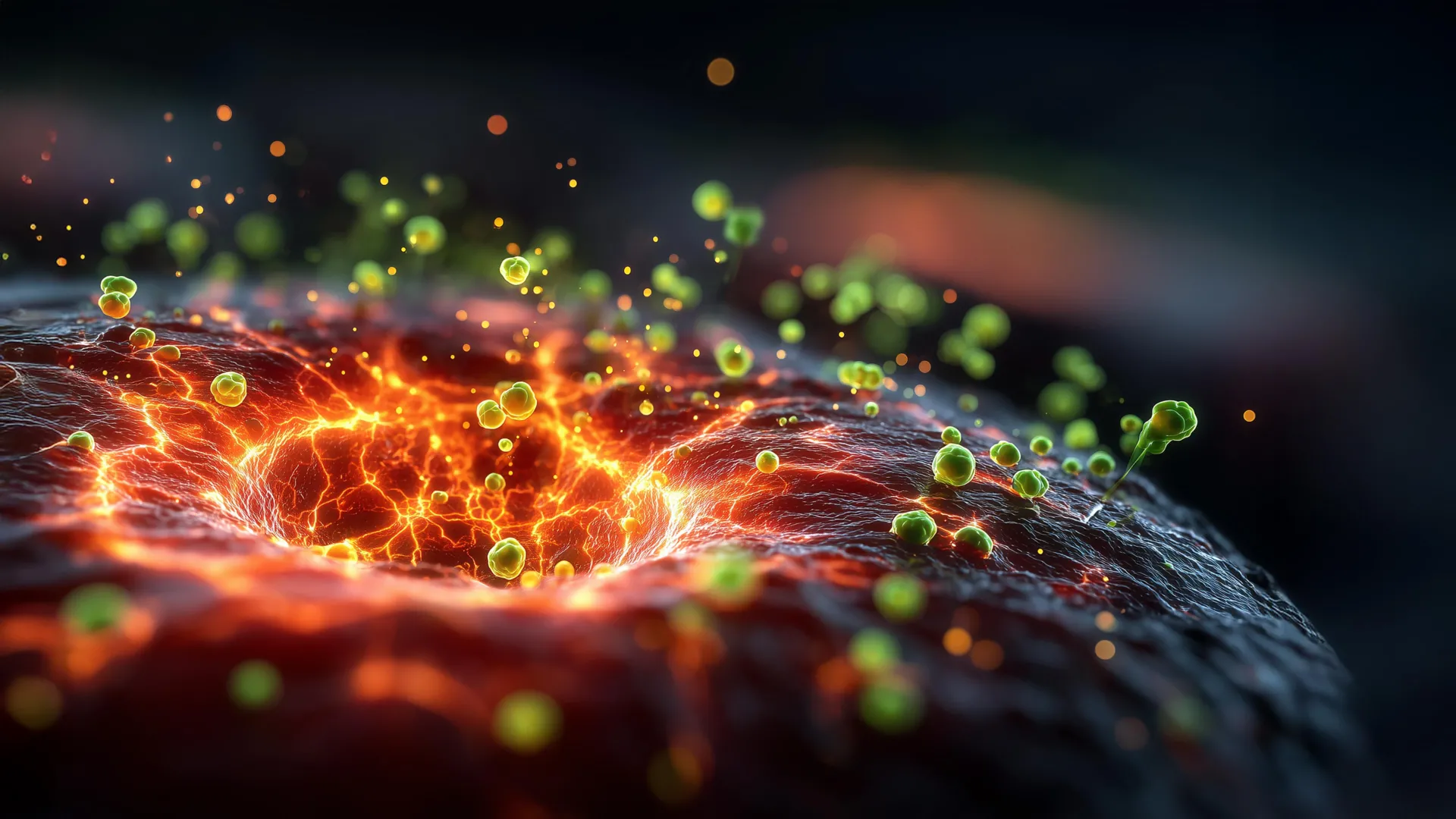
Engineering Bacteria to Fight Cancer From Within: A Novel Approach
The fight against cancer is constantly evolving, with researchers exploring increasingly innovative strategies. A team at the University of Waterloo is pioneering a particularly intriguing approach: engineering bacteria to actively seek out and destroy tumors from the inside. This groundbreaking research, focused on harnessing the natural abilities of microbes, offers a potentially transformative new avenue in cancer treatment. The core concept revolves around utilizing bacteria that thrive in the oxygen-deprived environments characteristic of solid tumors, effectively turning these microorganisms into targeted therapeutic agents.
Traditional cancer treatments, such as chemotherapy and radiation, often affect both cancerous and healthy cells, leading to debilitating side effects. This new strategy aims for greater precision, minimizing harm to healthy tissue. By exploiting the unique microenvironment within tumors, scientists hope to deliver a potent anti-cancer therapy directly to the source, offering a more effective and less toxic treatment option. The potential impact on patients battling various forms of cancer is significant, and the ongoing research represents a crucial step towards realizing this promise.
The research builds on the understanding that the interior of solid tumors often lacks oxygen – a condition known as hypoxia. This creates a niche environment where certain bacteria, specifically those that don’t require oxygen to survive, can flourish. Researchers are capitalizing on this natural phenomenon, genetically modifying these bacteria to enhance their tumor-targeting capabilities and ensure they remain contained within the cancerous mass. This targeted approach represents a significant departure from conventional cancer therapies, offering a glimmer of hope for more effective and personalized treatments.
Harnessing the Power of Clostridium sporogenes
At the heart of this innovative treatment lies Clostridium sporogenes, a bacterium commonly found in soil. The University of Waterloo team selected this bacterium due to its unique ability to survive and proliferate exclusively in the absence of oxygen. The inner core of solid tumors, often composed of dead cells, provides the ideal anaerobic conditions for C. Sporogenes to multiply and spread, effectively colonizing the tumor’s interior. “Bacteria spores enter the tumor, finding an environment where there are lots of nutrients and no oxygen, which this organism prefers, and so it starts eating those nutrients and growing in size,” explained Dr. Marc Aucoin, a chemical engineering professor at Waterloo, as reported by Google News. “So, we are now colonizing that central space, and the bacterium is essentially ridding the body of the tumor.”
Yet, simply introducing the bacteria isn’t enough. As the bacteria expand outwards, they encounter areas of the tumor with limited oxygen exposure, which can be lethal to them. To overcome this challenge, the researchers employed synthetic biology techniques to enhance the bacteria’s resilience. They inserted a gene from a related bacterium known for its greater tolerance to oxygen, allowing the engineered microbes to survive for longer periods in the tumor’s outer regions. This genetic modification is crucial for ensuring the bacteria can effectively eliminate the entire tumor mass, not just the oxygen-deprived core.
Controlling Bacterial Growth with Quorum Sensing
A critical safety concern with introducing genetically modified bacteria into the body is preventing their uncontrolled growth, particularly in oxygen-rich environments like the bloodstream. To address this, the Waterloo team implemented a sophisticated control mechanism based on a natural bacterial communication process called quorum sensing. This system relies on bacteria releasing chemical signals that increase in strength as their population density grows. Only when a sufficient number of bacteria have accumulated within the tumor does the signal reach a threshold that activates the oxygen-tolerance gene.
This ingenious timing mechanism ensures that the bacteria only turn into resistant to oxygen when they are safely contained within the tumor’s microenvironment. “Using synthetic biology, we built something like an electrical circuit, but instead of wires we used pieces of DNA,” said Dr. Brian Ingalls, a professor of applied mathematics at Waterloo. “Each piece has its job. When assembled correctly, they form a system that works in a predictable way.” This approach minimizes the risk of the bacteria spreading beyond the tumor and causing unintended consequences. The team previously demonstrated the functionality of this quorum sensing design by programming the bacteria to produce a green fluorescent protein, confirming that the system activated at the intended moment.
Synthetic Biology and the Future of Cancer Treatment
The research at the University of Waterloo exemplifies the power of synthetic biology – a field that involves designing and constructing new biological parts, devices, and systems. By applying engineering principles to biological systems, scientists are creating innovative solutions to complex medical challenges. In this case, synthetic biology has enabled the creation of a highly targeted cancer therapy with the potential to overcome the limitations of traditional treatments. The team’s operate highlights the growing importance of interdisciplinary collaboration, bringing together experts in engineering, mathematics, and life sciences to translate scientific discoveries into real-world medical solutions.
The project began with the work of PhD student Bahram Zargar, under the supervision of Dr. Ingalls and Dr. Pu Chen, a retired professor of chemical engineering at Waterloo. The team is now collaborating with the Center for Research on Environmental Microbiology (CREM Co Labs), a Toronto-based company co-founded by Dr. Zargar, and includes Dr. Sara Sadr, a former Waterloo doctoral student. This partnership underscores the importance of bridging the gap between academic research and commercial development to accelerate the translation of scientific breakthroughs into clinical applications.
Next Steps and Pre-Clinical Trials
The next crucial step for the Waterloo team is to combine the oxygen-tolerance gene and the quorum-sensing control system into a single bacterium. Following this integration, they plan to rigorously evaluate the engineered microbe’s effectiveness against tumors in pre-clinical trials. These trials will involve testing the treatment in laboratory models and, potentially, in animal studies to assess its safety and efficacy. Successful pre-clinical results will pave the way for human clinical trials, bringing this innovative cancer therapy closer to becoming a reality for patients in need.
Although the research is still in its early stages, the potential benefits are immense. This novel approach to cancer treatment offers a targeted, less toxic alternative to conventional therapies, with the promise of improved outcomes for patients battling a wide range of cancers. The ongoing work at the University of Waterloo represents a significant advancement in the field of cancer research and a beacon of hope for the future of cancer treatment.
Researchers will continue to monitor the progress of pre-clinical trials and anticipate sharing further updates as the study progresses. For more information on cancer research and treatment options, please consult with your healthcare provider or visit the website of the National Cancer Institute.
Do you have questions about this innovative cancer treatment? Share your thoughts and comments below.
Related reading
- Effectiveness of Non-Medicinal Measures in Preventing COVID-19 in Long-Term Care Facilities: A Review
- How Old Can Humans Actually Get? The Theoretical Limit of Human Lifespan
- Rothamsted Research Studies World’s Oldest Permanent Grassland Experiment (archyworldys.com)
- Rectal Cancer Surgery: Good Radiation Therapy Response May Allow Omission of Lateral Lymph Node Dissection (world-today-news.com)