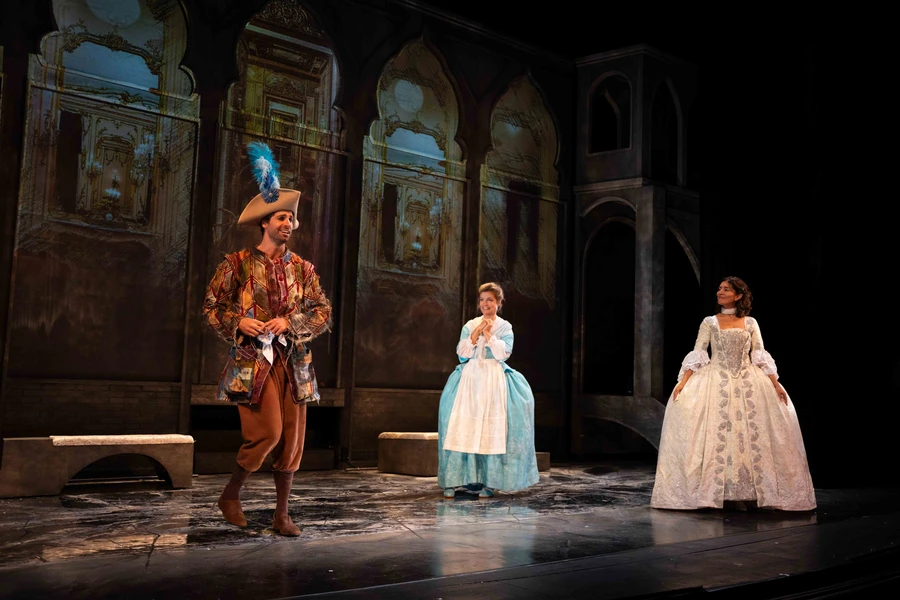
Monaco’s cultural calendar welcomes a timeless Italian classic this spring as The Cunning Widow (La Veuve rusée) takes the stage at the Grimaldi Forum on April 29. Written by the celebrated Venetian playwright Carlo Goldoni in the 18th century, the comedy continues to delight audiences with its sharp wit, romantic entanglements, and satirical take on societal expectations surrounding marriage and widowhood. Presented in French as part of the Principality’s ongoing commitment to international theatre, the production offers both locals and visitors a chance to engage with a work that remains remarkably relevant over two and a half centuries after its debut.
The Grimaldi Forum, Monaco’s premier venue for exhibitions, conferences, and performing arts, has become a cornerstone of the city-state’s cultural identity since its opening in 2000. Known for hosting world-class events ranging from art biennales to international congresses, the forum’s decision to stage Goldoni’s work underscores its dedication to blending contemporary programming with enduring literary treasures. For this performance, audiences can expect a faithful yet accessible interpretation of the original Italian text, adapted for a Francophone audience while preserving the play’s original spirit and comedic timing.
Carlo Goldoni, often referred to as the “Molière of Italy,” revolutionized Italian theatre by moving away from the improvised masks of commedia dell’arte toward scripted realism and social commentary. The Cunning Widow, first performed in Venice in 1748, exemplifies this shift. The story centers on Rosaura, a young widow who, despite her vow of mourning, finds herself pursued by suitors from various nations — each representing different stereotypes and national traits. Through a series of misunderstandings, disguises, and clever manipulations, Rosaura navigates their advances with intelligence and charm, ultimately asserting control over her own fate in a society that sought to define her by her marital status.
This thematic focus on female agency resonates strongly with modern audiences, particularly in discussions about gender roles, autonomy, and the societal pressures placed on women following bereavement. While Goldoni wrote within the constraints of his era, his portrayal of Rosaura as neither a passive victim nor a manipulative villain — but as a woman using wit to navigate limited options — offers a nuanced perspective that continues to spark scholarly and artistic interpretation. Directors and actors performing the play today often highlight these layers, using humor not just to entertain but to invite reflection on how far attitudes have evolved — and where they have not.
The choice to stage The Cunning Widow in Monaco also reflects the Principality’s longstanding appreciation for the arts, particularly those rooted in European traditions. Monaco has historically attracted artists, writers, and performers drawn to its blend of Mediterranean charm and international sophistication. Events like the Monte-Carlo Television Festival, the International Circus Festival, and the Opera season at Salle Garnier demonstrate a sustained investment in cultural excellence. By presenting Goldoni’s work, the Grimaldi Forum contributes to this legacy, offering a platform where historical theatre can be experienced not as a museum piece, but as a living dialogue with contemporary values.
For attendees, the April 29 performance represents more than an evening at the theatre — it is an opportunity to engage with a foundational work of Western comedy in a setting that values both artistic integrity and accessibility. Tickets are expected to be available through the Grimaldi Forum’s official box office and online portal, with pricing tiers designed to accommodate a range of audiences, including students and seniors. As with all events at the venue, health and safety protocols will align with current Monegasque public health guidelines, ensuring a comfortable experience for all guests.
As the date approaches, cultural commentators and theatre enthusiasts alike are anticipating how this production will balance historical fidelity with modern sensibilities. Whether through minimalist set design, contemporary costumes, or subtle directorial choices, the staging will likely aim to highlight the universality of Goldoni’s themes: the pursuit of autonomy, the performance of identity, and the enduring power of laughter to reveal truth. In a world still grappling with questions of gender, expectation, and self-determination, The Cunning Widow remains not just a relic of the past, but a mirror held up to the present.
For readers interested in exploring Goldoni’s broader influence, his extensive body of work — which includes over 150 plays — helped lay the groundwork for modern Italian theatre and inspired later dramatists across Europe. His emphasis on everyday life, regional dialects, and authentic human behavior marked a departure from the exaggerated archetypes that dominated the stage before him. Scholars often cite his reforms as pivotal in the evolution of European comedy, bridging the gap between Renaissance farce and the realist dramas of the 19th and 20th centuries.
Those wishing to delve deeper into the context of The Cunning Widow can consult academic resources such as the Journal of Italian Translation or publications from the Académie Française, which have examined Goldoni’s linguistic innovations and cultural impact. The Grimaldi Forum’s website typically provides program notes, artist bios, and behind-the-scenes insights for major productions, offering audiences a richer understanding of the work they are about to witness.
The performance on April 29 will be presented in French, with no simultaneous translation advertised, suggesting that a working knowledge of the language is recommended for full appreciation. However, the physical comedy, facial expressions, and situational humor inherent in Goldoni’s writing often transcend linguistic barriers, allowing even non-Francophone viewers to follow the narrative through gesture and timing — a testament to the playwright’s mastery of universal theatrical language.
As Monaco continues to position itself as a hub for international culture, events like this serve a dual purpose: entertaining audiences while reinforcing the Principality’s role as a steward of artistic heritage. By inviting global audiences to experience works like The Cunning Widow, the Grimaldi Forum affirms that great theatre knows no borders — and that the questions it raises about love, freedom, and identity are as vital today as they were in Goldoni’s Venice.
Looking ahead, the Grimaldi Forum has not announced any additional performances of The Cunning Widow beyond the April 29 showing, nor has it released details about potential tours or future stagings of Goldoni’s works. Audiences interested in similar programming are encouraged to monitor the venue’s official calendar for updates on upcoming theatre, dance, and musical events throughout the spring and summer seasons.
For those planning to attend, the Grimaldi Forum recommends arriving at least 20 minutes before curtain time to allow for seating and venue orientation. The complex is fully accessible, with accommodations for guests with reduced mobility, and offers a range of dining options on-site for pre- or post-show refreshments. Public transportation access is available via Monaco’s bus network, and limited parking is provided in adjacent facilities.
In an age where streaming and digital media dominate leisure time, live theatre offers something irreplaceable: the shared, immediate connection between performer and audience. Productions like The Cunning Widow at the Grimaldi Forum remind us why that connection endures — not because they offer escape, but because they hold up a mirror, inviting us to laugh, reflect, and perhaps spot ourselves a little more clearly in the folly and wisdom of others.
As the lights dim and the actors take the stage on April 29, Monaco will once again prove that culture is not merely preserved — it is lived, debated, and renewed, one performance at a time.
We invite our readers to share their thoughts on the performance, whether you’ve seen it or are planning to attend. What does The Cunning Widow mean to you in today’s world? Join the conversation in the comments below and help keep the dialogue alive.
Keep reading